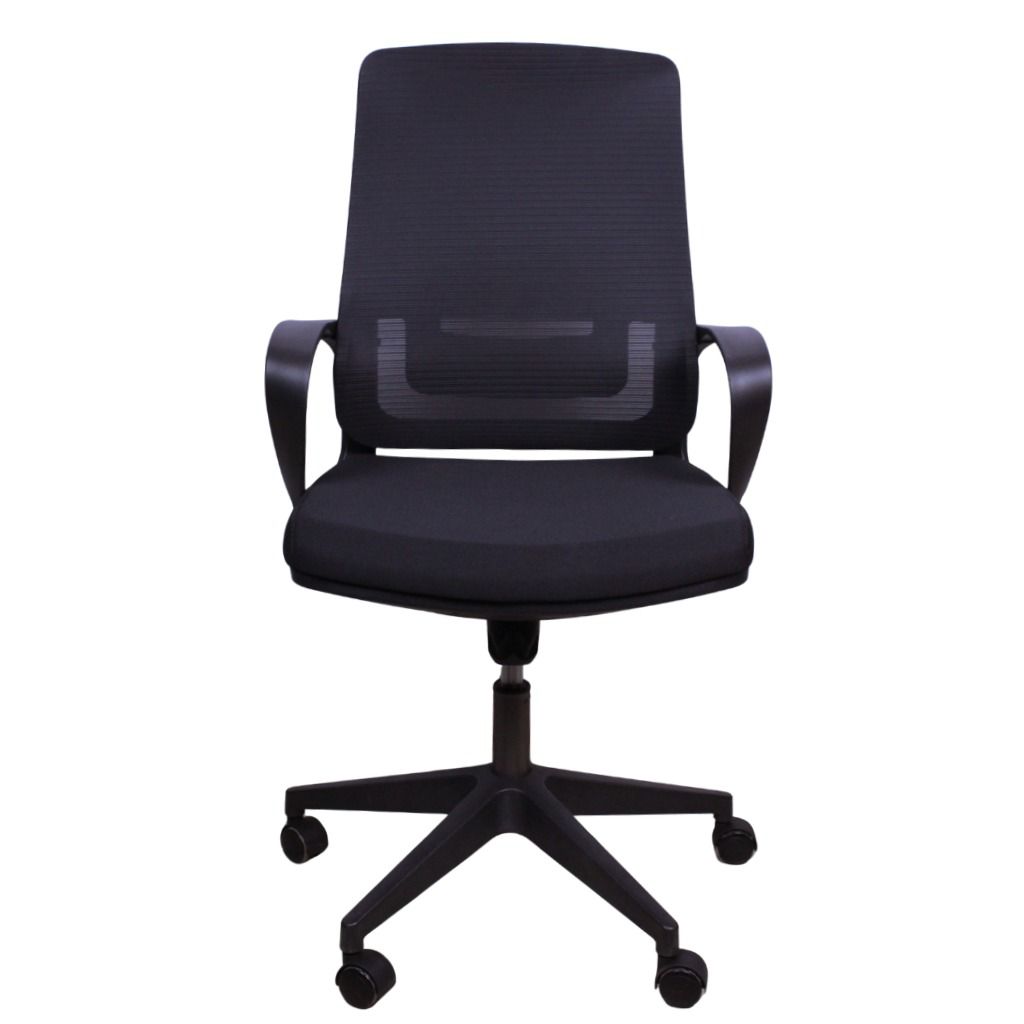
The best office chair for a short person has a minimum seat height that adjusts down to 40cm or lower. This allows your feet to rest flat on the floor. This critical adjustment prevents the front edge of the seat from cutting off circulation behind your knees, a frequent cause of numbness, fatigue, and long-term postural problems for petite office workers in Kenya. When selecting from our online office chair shop, checking this specific measurement is essential.
Understanding Petite Ergonomics and Health Risks
For an individual with a smaller stature, a standard office chair can be a source of constant physical stress. When your feet dangle without proper support, your body's stability is compromised. This instability causes you to slide forward onto the edge of the seat to find balance. This forward position completely negates any lumbar support and forces your lower back into a stressful, unsupported curve. Additionally, the pressure from the seat edge on the soft tissue behind your knees can impede blood flow, leading to tingling in your lower legs and increasing the risk of circulatory issues over time.
Essential Adjustments for Petite-Friendly Ergonomic Chairs
Finding a chair that fits a petite frame is about specific, measurable adjustments, not just aesthetics. A truly suitable chair must offer customisation across several key dimensions to provide genuine support and prevent physical strain throughout the workday. Many of the best ergonomic office chairs provide these necessary features.
Seat Height Range
The most crucial specification is a seat height range that accommodates your leg length. A non-negotiable feature is a gas lift mechanism that allows the seat's minimum height to drop to 40cm or slightly lower. This adjustment allows you to plant your feet firmly on the ground, which is the foundation of good ergonomic posture. A grounded posture stabilises your pelvis, engages your core muscles correctly, and allows your spine to align naturally against the backrest without strain.
Seat Depth Adjustment
A seat pan that is too deep is a common problem for shorter users. It either forces you to sit forward and away from the back support, or it presses uncomfortably into the back of your calves. An adjustable seat depth, often called a 'seat slide', is essential. This feature lets you shorten the seat pan, ensuring you can sit fully back against the lumbar support while maintaining a comfortable gap of two-to-three fingers' width between the edge of the seat and the back of your knees. This provides full thigh support without restricting leg movement.
Lumbar Support and Backrest
The curve of a standard chair's backrest is often positioned too high for a shorter spine. This can push the mid-back forward instead of supporting the crucial lower back area. Look for chairs with height-adjustable lumbar support, allowing you to position the curve precisely in the small of your back. The support should provide a firm foundation for your lower back's natural curve. A chair with a smaller overall backrest, such as some mesh task chairs, can also be more suitable as it will not push your shoulders forward.
Armrest Adjustments
Armrests that are too high or too wide force you to shrug your shoulders, creating tension in the neck and upper back. Highly adjustable armrests are vital for aligning your posture correctly with your desk. At a minimum, seek height and width adjustability. This lets you position the armrests so your elbows rest at a natural 90-degree angle, with your shoulders relaxed and level with your work surface. This alignment significantly reduces the strain of typing and using a mouse.
Recommended Ergonomic Office Chair Models for Petite Users
Evaluating chair models requires looking past generic labels and focusing on specific measurements. Below is a comparison of chair archetypes designed with the needs of smaller users in mind, reflecting options available in the Kenyan market.
| Chair Model Type | Key Petite Feature | Typical Price Level | Best For |
|---|---|---|---|
| Specialist Petite Task Chair | Seat height from 39cm; short seat depth | Mid-Range | Dedicated home offices and individual corporate use. |
| Premium Brand Petite Model (e.g., Herman Miller Size A) | Specifically engineered for smaller frames | Premium | Long-term investment for intensive daily use. |
| Compact Mesh Back Chair | Shorter backrest and adjustable lumbar | Budget | General office use and flexible workspaces. |
| Customisable Ergonomic Chair | Choice of smaller seat pan and gas lift | Mid-Range to Premium | Users with very specific postural requirements. |
Using Footrests and Desk Accessories for Petite Posture
A footrest becomes an essential tool if your preferred chair still does not allow your feet to rest flat, or if you use a fixed-height desk. An ergonomic footrest provides a stable platform for your feet, maintains the correct angle at your knees and hips, and prevents circulation issues. If a chair with a seat height below 40cm is unavailable, an angled, height-adjustable ergonomic footrest is a necessary purchase to complete your postural foundation.
Purchasing and Budgeting for Petite Ergonomic Chairs in Kenya
Investing in a properly fitting chair is an investment in your health and productivity. When purchasing, always check the technical specification sheet online for the exact seat height and depth measurement ranges. Do not rely on vague descriptions like 'fully adjustable'. We recommend visiting a specialist showroom, like our Kaapoa Furniture Ngara location, where you can physically test different models. The sensation of a chair that fits your frame correctly is the best guide for your purchase decision.
Optimal Setup Guide for Your Petite Ergonomic Chair
Once you have your chair, correct setup is key to unlocking its ergonomic benefits. Follow this simple process to tailor it to your body:
- Set Height First: Adjust the seat height until your feet are flat on the floor or footrest, with your thighs roughly parallel to the ground.
- Adjust Seat Depth: Sit back fully into the chair. Adjust the seat depth to leave that two-to-three finger gap behind your knees.
- Position Lumbar Support: Move the lumbar support up or down until it fits perfectly into the natural curve of your lower back. Many dedicated orthopedic chairs excel at this.
- Align Armrests: Set the armrest height so your arms form a 90-degree angle with your shoulders relaxed when your hands are on the keyboard.
Specialist Options and Customisation
For users with very specific needs, some suppliers offer customisation services. This can be an excellent route for ensuring a perfect fit when standard models fall short. Options can include fitting a shorter gas stem to lower the entire seat height range or ordering a chair with a smaller seat pan. Such modifications can provide a truly bespoke seating solution. You can always contact us to discuss custom needs or specific office chair spare parts.
Making the Best Choice for Your Body
Your search for the right ergonomic chair should be guided by measurements, not just brand names or styles. The goal is to find a chair that adapts to your body, rather than forcing your body to adapt to an ill-fitting chair. Prioritise a low minimum seat height and adjustable seat depth above all other features. These two adjustments form the bedrock of proper ergonomic support for any petite user, directly impacting comfort, health, and focus. A well-chosen chair is a vital component of any productive home office setup.
Office Furniture Specialist's Recommendation
For petite users in Kenya, the single most impactful feature is a low minimum seat height. Prioritise a chair that meets the 40cm threshold. If your budget forces a compromise, allocate funds to a quality adjustable chair and a separate ergonomic footrest rather than a feature-rich chair that is fundamentally too large for your frame. You can browse our full range of products at the Office Chairs Market Kenya homepage.