Matching Your Furniture Palace Desk with the Correct Height Adjustable Chair
A successful workspace pairing depends on one critical detail: the chair’s armrests must drop low enough to slide under the desk. This prevents the user from hunching forward. This crucial alignment is the foundation of workplace ergonomics, ensuring your investment in quality furniture from our online office chair shop translates into genuine, day-long comfort and productivity for your team.
The Ergonomic Imperative: Desk and Chair Compatibility in Kenyan Workplaces
A mismatched desk and chair setup is more than an inconvenience; it is a direct cause of physical strain. When a chair cannot get close enough to the desk, employees are forced to lean forward, rounding their shoulders and putting immense pressure on their spine and neck.
This poor posture leads to chronic back pain, reduced focus, and a drop in productivity. In the modern Kenyan office, where long hours at a desk are standard, providing an ergonomically sound workstation is a critical investment in employee well-being and business efficiency.
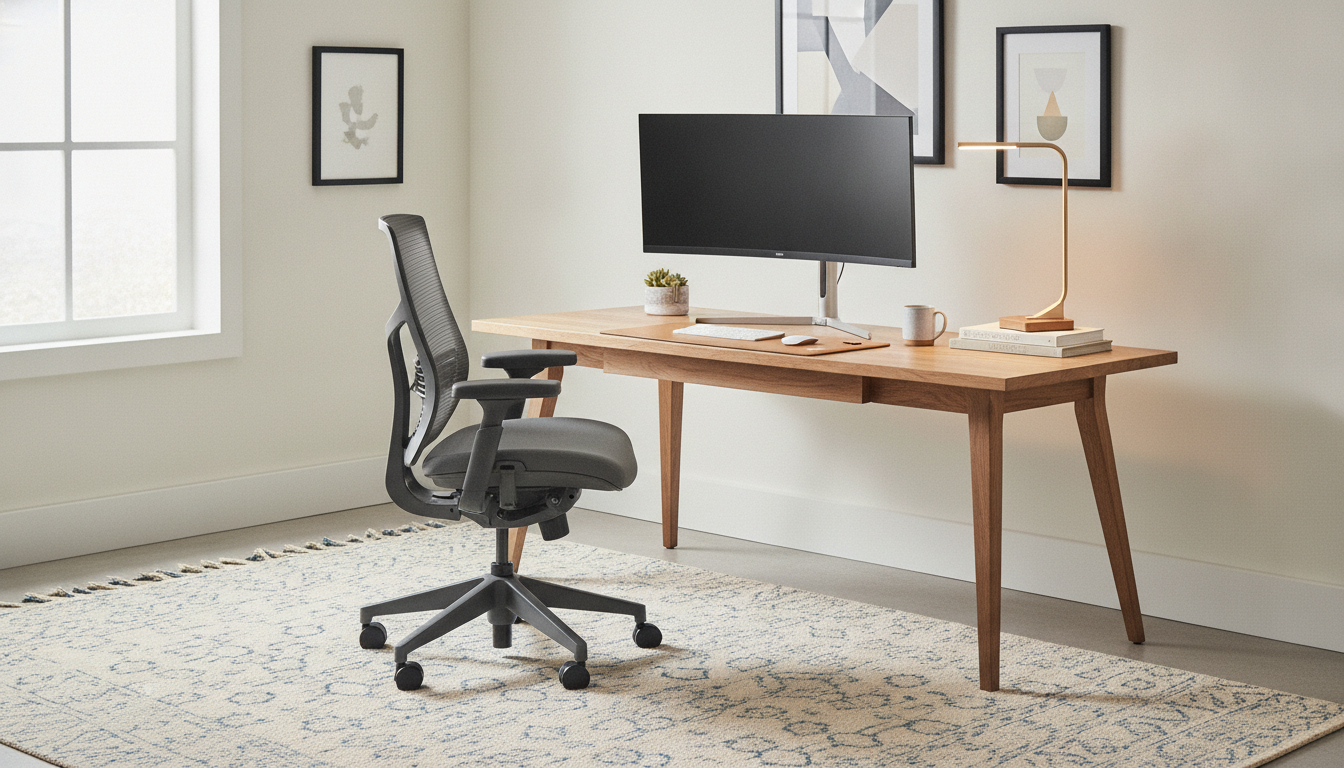
Key Adjustable Features for Optimal Posture
True ergonomic support comes from a chair's ability to adapt to an individual's unique body shape. While a gas lift for height adjustment is standard, the most effective chairs offer a suite of customisable features. These features work together to support a healthy posture throughout the workday.
Lumbar Support Mechanisms
Effective lumbar support provides a gentle, constant pressure against the small of your back, encouraging the natural S-curve of your spine. Many chairs feature a fixed curve, while more advanced models offer height-adjustable or depth-adjustable pads. This allows you to position the support precisely where your body needs it, a key feature in quality orthopedic chairs.
This single adjustment is often the most significant factor in preventing lower back fatigue during prolonged sitting. It actively works to stop you from slumping, which is the primary cause of discomfort.
Seat Depth and Tilt Functions
Seat depth adjustment allows you to change the length of the seat pan. The ideal position leaves about a three-finger gap between the front edge of the seat and the back of your knees. This ensures your thighs are fully supported without restricting blood flow to your lower legs.
A seat tilt mechanism allows you to rock or lock the chair in a reclined position. This feature encourages micro-movements, which are vital for stimulating circulation and reducing the stiffness that comes from sitting in one position for too long.
Armrest Functionality for Desk Compatibility
Modern ergonomic armrests offer multi-directional adjustments, including up/down, forward/back, and in/out. Their purpose is to support your forearms, taking the weight off your shoulders and neck muscles while you type or use a mouse.
Properly adjusted armrests should allow your shoulders to remain relaxed and your elbows to rest at a comfortable 90-degree angle, level with your desk surface. This small detail prevents the common issue of tense, elevated shoulders.
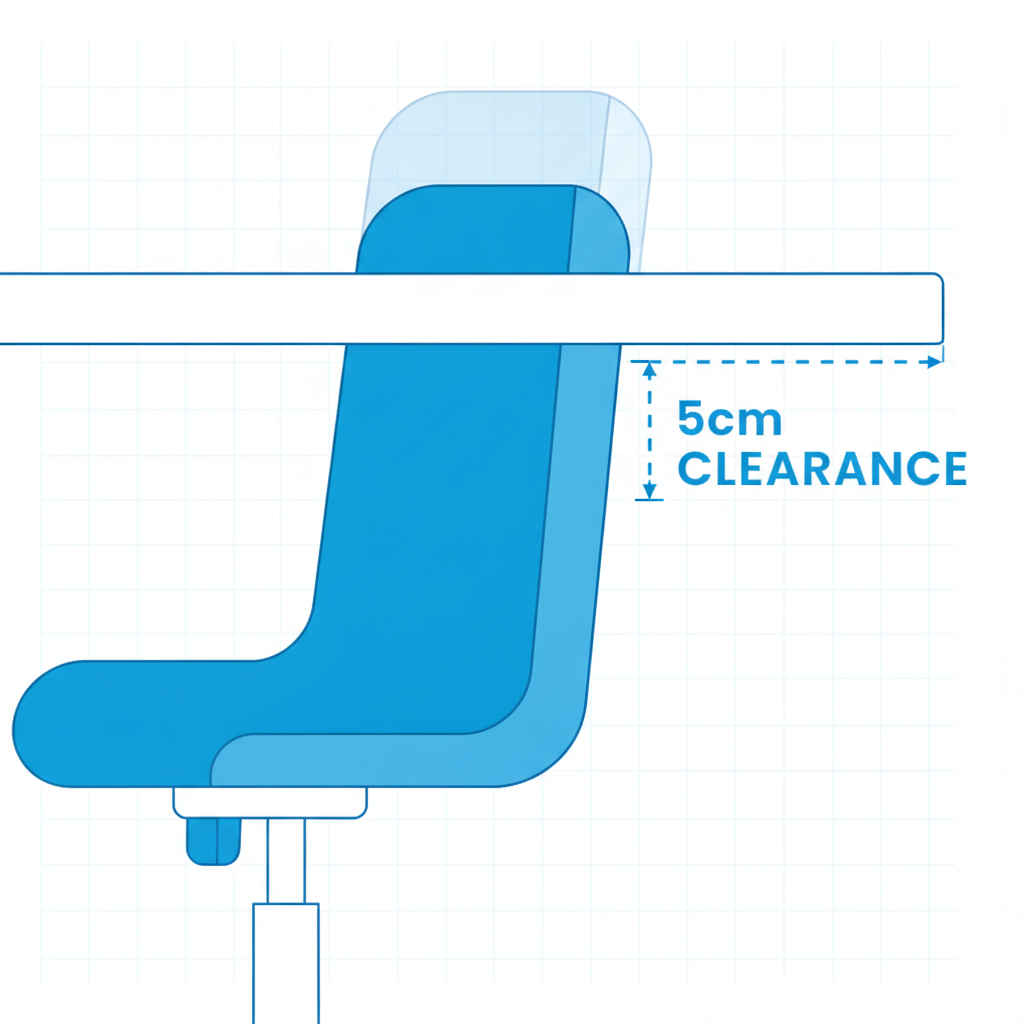
The Critical Armrest Clearance: Sliding Under Your Desk
The most common ergonomic mistake is pairing a high-quality chair with a desk it cannot fit under. This is especially true for premium, solid desks, such as a heavy mahogany executive desk, which often have a thicker top or a deeper 'apron' (the vertical panel below the desktop).
Standard office desks in Kenya typically stand at a height of 75 cm. However, the critical measurement is the clearance underneath, from the floor to the bottom of the desk apron, which is often between 68-70 cm. To ensure your chair can slide fully underneath, its armrests must be able to lower to a maximum height of 65 cm. This provides at least 3-5 cm of clearance.
This space is non-negotiable. Without it, the user is perpetually kept at a distance, forcing a forward lean that negates all other ergonomic features of the chair.
Material and Aesthetics: Chair Selection for Your Office Decor
The material of your office chair affects both its comfort and its visual integration into your workspace. Each option offers a distinct sensory experience and suits different office environments.
| Material | Primary Benefit | Best For | Considerations |
|---|---|---|---|
| Mesh | Superior airflow and breathability. | Warmer climates like Nairobi; open-plan offices. | Can feel less cushioned than fabric or leather. |
| Fabric | Soft, comfortable feel and wide colour variety. | General office use; call centres. | Can be more difficult to clean than other materials. |
| Leather (Genuine/PU) | Premium, executive aesthetic and easy to wipe clean. | Boardrooms, executive offices, client-facing areas. | Less breathable, can feel warm after long periods. |
Chair Construction: Base, Wheels, and Weight Capacity
A chair's foundation determines its lifespan and safety. Look for bases made from reinforced nylon for good durability or polished metal (aluminium or steel) for maximum strength and a premium finish. These materials are built to withstand the daily demands of a busy office.
Ensure the caster wheels are appropriate for your flooring. Hard casters work for carpeted floors, while soft, rubberised casters for hard surfaces like tile or wood prevent scratching. Always check the chair's specified weight capacity to ensure it can safely support all your team members, opting for heavy duty chairs when necessary.
Budget and Value: An Investment in Employee Health
Viewing an ergonomic chair as only an expense overlooks its long-term benefits. It is an investment in your company's most valuable asset: its people. A properly supportive chair reduces absenteeism caused by back and neck pain and increases focus and efficiency during work hours.
The initial cost may be higher than a basic task chair. However, the return on investment through improved productivity and reduced health complaints provides significant long-term value. Our range of ergonomic office chairs offers options across various price points to suit different departmental budgets without compromising on core ergonomic principles.
Chair Maintenance and Upkeep
Proper care extends the life of your office chairs and keeps them looking professional. For mesh and fabric, regular vacuuming with an upholstery attachment removes dust and debris. Leather or PU surfaces should be wiped with a damp cloth and treated with a suitable conditioner periodically to prevent cracking.
Encourage staff to periodically check that bolts and screws on the armrests and mechanism are tight. A simple maintenance routine, with occasional orders of office chair spare parts when needed, ensures your chairs remain safe, functional, and comfortable for years.
Intuitive Adjustments for Nairobi's Flexible Workspaces
As workplaces in Nairobi and across Kenya adopt more flexible arrangements like hot-desking and agile seating, the need for intuitive chair controls becomes paramount. A chair that is difficult to adjust will be used incorrectly by the next person.
Look for chairs with clearly labelled, easy-to-reach levers and paddles. A chair that can be fully customised to a new user in under a minute is essential for shared workspaces. This ensures every employee, permanent or temporary, receives the full ergonomic benefit.
The Final Selection: A Strategic Ergonomic Investment
Choosing the right office chair is a strategic decision that directly impacts employee health and business output. By prioritising key adjustable features and, most critically, ensuring compatibility with your existing office desks, you create a workspace that supports your team.
This focus on practical ergonomics creates a foundation for sustained productivity and employee well-being. Browse our product categories to find the ideal seating solution for your business.
Shop Office Chairs in Kenya
Browse our collection of office chairs at competitive prices. Same-day delivery within Nairobi and nearby areas, and delivery across Kenya.