Breathable Mesh Office Chair vs Sponge: Why Mesh Wins in Kenya
For Kenyan businesses, a high-tensile breathable mesh office chair is a superior long-term investment compared to a cheap sponge-back alternative. This material difference is critical for any manager aiming to reduce employee discomfort and boost focus, particularly given the demands of a full workday in Kenya's warm climate. You can browse our online office chair shop to see the available models.
Mesh vs. Sponge: A Practical Guide to Office Chair Backrests
The choice between a mesh or a sponge backrest is more than an aesthetic decision. It is a fundamental factor in your team's daily comfort and long-term health. A subpar chair creates constant distractions, from an employee shifting to relieve pressure points to feeling overheated by midday.
This guide details the tangible experience of using these two different types of office chairs. We will examine how the materials directly impact spinal support, thermal comfort, and your business's bottom line.
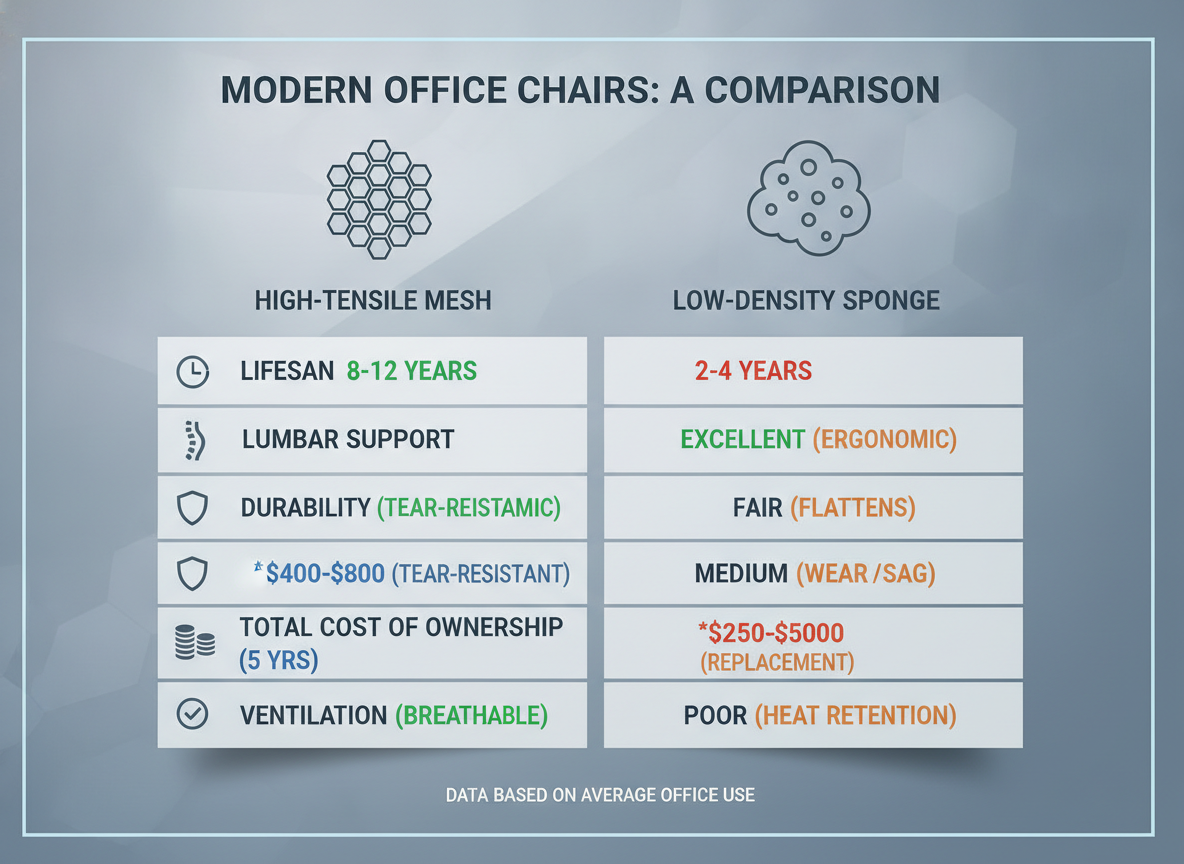
The Ergonomic Advantages of Mesh Backrests
The primary function of a backrest is to provide consistent, dynamic support. High-quality mesh provides this support more effectively than foam. It conforms to the user's unique spinal curve without creating the pressure points common with padded backrests.
Consistent Spinal Support
A well-engineered mesh backrest acts like a suspension system for your spine. It distributes your weight evenly across its surface, preventing any single area from bearing too much load. This dynamic support cradles the lumbar region, encouraging the natural S-curve of the spine and reducing the strain that leads to lower back pain. These are key features of quality ergonomic office chairs.
The user feels held and supported while moving, rather than being pushed forward by a rigid foam block. This design allows for micro-movements throughout the day, which is crucial for spinal health.
Posture Correction and Feedback
Quality mesh chairs encourage an open and upright posture. The material is both flexible and firm, so it provides responsive feedback. When a user starts to slouch, the tension in the mesh subtly prompts them to sit up straight. This helps to train better postural habits over time without conscious effort.

Material Durability: High-Tensile Mesh vs. Low-Density Foam
The material composition of a chair backrest dictates its performance and lifespan. The difference in quality and engineering between premium mesh and low-density foam is vast and has direct consequences for the user experience and your budget.
The Engineering of High-Tensile Mesh
Premium office chairs utilise a high-tensile elastomeric mesh, often sourced from specialist manufacturers in Korea or Taiwan. This material is a precisely woven blend of polymers designed for both strength and flexibility. This advanced material distributes weight perfectly and possesses high elasticity.
After a full day's use, it returns to its original, taut form. Users will not experience the sagging that plagues cheaper, single-layer nylon mesh task chairs, which eventually stretch out and leave the user resting uncomfortably against the hard plastic frame.
Degradation of Low-Density Foam
Low-density sponge or foam backrests offer initial softness but degrade quickly. The foam cells break down under the repeated pressure of daily use in a process known as compression set. The backrest develops permanent indentations and loses its ability to provide meaningful support.
This degradation forces the user's spine into unnatural positions, leading to discomfort and fatigue. The chair that felt plush in the showroom quickly becomes a source of daily ergonomic pain.
Breathability and Thermal Comfort in Kenya's Climate
Maintaining a comfortable body temperature is essential for concentration. The material of your chair's backrest plays a significant role in this, especially in the warmer environments found across Kenya.
Air Circulation in Mesh Backrests
The most immediate benefit of breathable mesh seating is its superior thermal regulation. The open-weave construction allows air to circulate freely around the user's back, dissipating body heat and preventing moisture build-up. This keeps staff feeling cool, dry, and focused, even during long tasks or in non-air-conditioned offices.
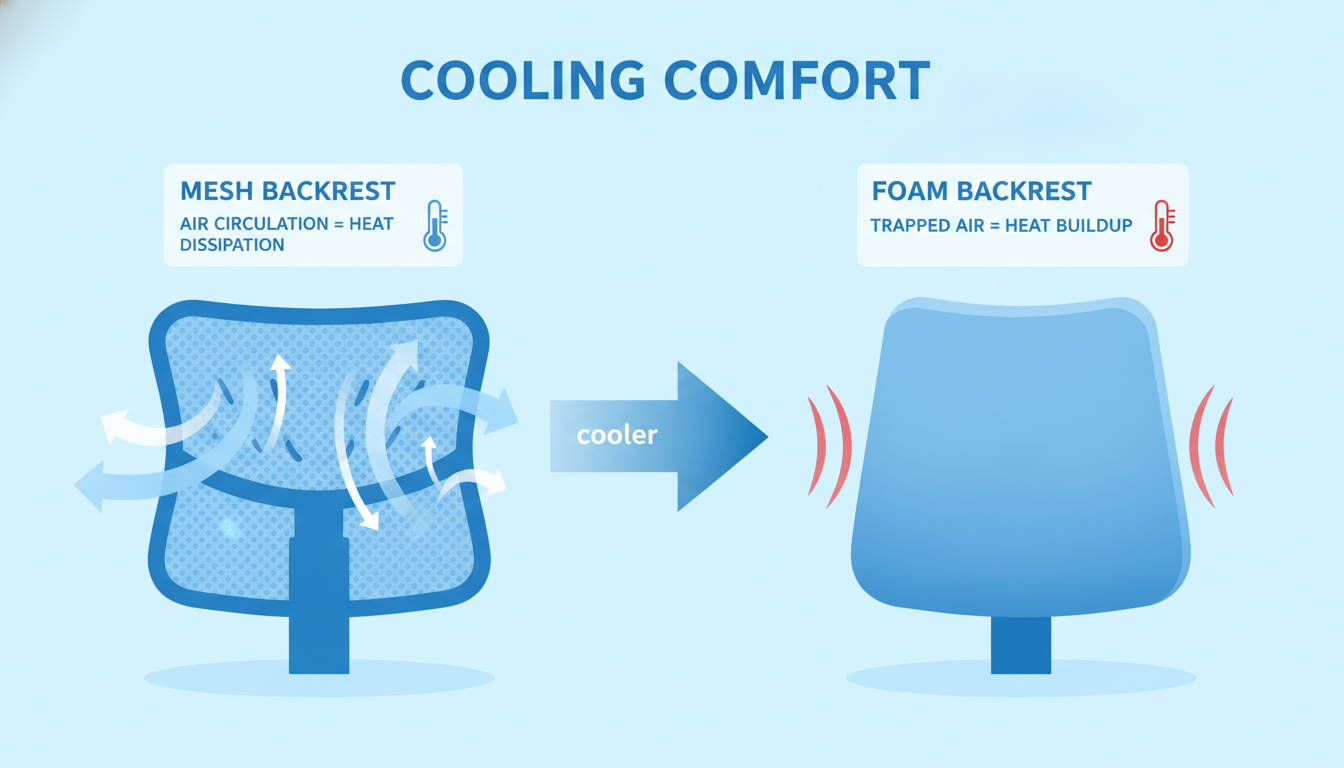
Heat Retention in Foam Backrests
Sponge and foam are natural insulators. A solid foam backrest traps body heat against the user, creating a pocket of warm, stagnant air. This often leads to a sweaty, uncomfortable back, forcing employees to constantly shift and readjust to find relief. This activity breaks concentration and reduces productivity.
Investment Analysis: Long-Term Value
Viewing an office chair purchase through the lens of total cost of ownership, rather than just the initial price, reveals the true value of investing in quality materials. A cheap chair is rarely a cost-effective one.
Total Cost of Ownership
The initial saving on a low-cost sponge chair is quickly lost to the need for frequent replacement. A high-tensile mesh chair, while more expensive upfront, provides consistent ergonomic support for many years. This longevity eliminates replacement costs and reduces productivity losses associated with employee discomfort. If a component does fail, you can often find office chair spare parts to extend its life further.
Longevity and Performance vs. Initial Price
Here is a practical comparison of the long-term financial implications of choosing mesh over sponge.
| Metric | High-Tensile Mesh Chair | Low-Density Sponge Chair |
|---|---|---|
| Average Lifespan | 5-10 Years | 1-2 Years |
| Support Degradation | Minimal; retains elasticity | Rapid; foam compresses and sags |
| Replacements in 5 Years | 0-1 | 2-4 |
| Long-Term Cost | Higher initial cost, lower total cost | Lower initial cost, higher total cost |
The Link Between Chair Quality and Productivity
The quality of office seating is directly linked to the well-being and output of your staff. An ergonomic chair is not a luxury; it is a fundamental tool for performance.
Consequences of Inadequate Seating
Poor seating is a leading cause of musculoskeletal issues, including chronic back pain and neck strain. These conditions can lead to increased absenteeism, reduced morale, and a tangible drop in work quality. For staff with pre-existing conditions, specialized orthopedic chairs are a necessary consideration.
How Ergonomic Backrests Improve Focus
Providing a chair with a supportive, breathable backrest eliminates a major source of physical distraction. When an employee is not subconsciously battling discomfort, they can achieve deeper levels of focus and maintain high performance for longer periods. It is a direct investment in your team's ability to perform at their best.
Sourcing and Quality Control for Mesh Chairs
Not all mesh is created equal. As a buyer, it is important to know how to distinguish high-performance materials from cheap imitations to ensure you are getting the durability you are paying for.
How to Identify High-Tensile Mesh
Ask your supplier about the origin of their mesh. Reputable manufacturers are transparent about sourcing from established mills in Korea, Taiwan, or Germany. Feel the mesh yourself. Quality elastomeric mesh feels strong, taut, and has a smooth, consistent weave. Cheap nylon mesh often feels thin, rough, and lacks responsive tension.
Backrest Construction and Frame Integration
Beyond the mesh itself, inspect how it is attached to the frame. In premium chairs, the mesh is expertly bonded or woven directly into the frame for maximum durability. In cheaper models, it might be simply stapled or poorly glued, creating weak points that are prone to failure.
Maintenance and Hygiene Comparison
Keeping office seating clean is essential for a healthy workplace. The material of the backrest significantly impacts how easy this task is.
Cleaning a Mesh Backrest
Mesh backrests are exceptionally easy to maintain. Dust and debris pass through the weave rather than accumulating. For cleaning, a simple wipe with a damp cloth or a light vacuum is usually all that is required to keep the chair looking and feeling fresh.
Challenges with Sponge Backrest Hygiene
Sponge and fabric-covered backrests are porous, absorbing dust, spills, and sweat over time. This can lead to odours and create a habitat for bacteria. Deep cleaning often requires specialised upholstery cleaners and significant drying time, making regular maintenance a more involved and disruptive process.
The Shift in Kenyan Office Seating Preferences
Preferences in the Kenyan corporate world are shifting. Businesses increasingly recognise that short-term savings on office furniture lead to long-term costs in productivity and employee turnover.
The Importance of Thermal Comfort in Kenya
In a climate that is warm for much of the year, thermal comfort is a necessity. The superior airflow of a breathable mesh office chair is a decisive advantage. It has become the default choice for forward-thinking Kenyan companies aiming to create a comfortable and productive work environment.
Nairobi's Focus on Long-Term Value
As Nairobi's business landscape matures, facility managers and business owners are adopting a more strategic approach to procurement. The focus is moving from the cheapest available option to the one that offers the best long-term value, durability, and a positive impact on employee well-being. Quality mesh and high-end executive office chairs fit perfectly into this modern, value-driven strategy.
A Procurement Guide for Office Chairs
Procuring the right office chairs requires looking beyond the price and considering the supplier's reliability and the true value the product delivers over its lifespan.
Supplier Credibility and Product Warranties
Choose a supplier who stands behind their product with a comprehensive warranty of at least 3-5 years on components like the mesh and mechanism. A strong warranty is a clear indicator of the manufacturer's confidence in the chair's durability and material quality, as detailed in our return policy.
The Real Value of a Quality Chair
The true value of a great office chair is measured in reduced sick days, increased focus, and a workplace culture that prioritises employee health. It is an investment that pays daily dividends in the form of a more comfortable, engaged, and productive team. This applies to both corporate settings and dedicated home office chairs.
Procurement Checklist for Mesh Office Chairs
When you are ready to procure chairs, use this checklist to ensure you are selecting a truly ergonomic and durable model. A good supplier at Office Chairs Market Kenya should be able to provide clear answers for each point.
- Lumbar Support: Is the lumbar support integrated, or is it adjustable in height and depth? Adjustable support provides a far more personalised and effective fit.
- Mesh Tension & Origin: Ask about the mesh origin. Can you test the chair to feel the tension? It should feel firm and supportive, not soft and saggy.
- Frame Construction: Is the mesh integrated into the frame or simply stretched over it? An integrated design offers superior longevity.
- Adjustability Features: Check for essential adjustments beyond height, such as seat depth, armrest height and width, and a synchro-tilt mechanism that allows the backrest and seat to move together.
- Warranty Period: What is the warranty length, and what does it cover? A minimum 3-year warranty on all moving parts is a good benchmark for a commercial-grade chair.
- Weight Capacity: Confirm the chair's maximum weight rating to ensure it is suitable for all your employees. A standard commercial chair should support at least 120kg.
Need Office Chairs?
Browse our collection of office chairs at competitive prices. Fast delivery anywhere in Kenya.