Nylon vs Aluminium Bases for Heavy Duty Chairs
An office chair's load rating is determined by the complete system of its base, gas lift, casters, and mechanism, not just one component. Aluminium bases provide rigidity for high-load scenarios, while nylon bases are a lighter, lower-cost alternative for standard use. A Kenya Medical Supplies Authority (KEMSA) specification, for example, requires a Class 4 gas lift with a 350 mm aluminium base to support a 155 kg capacity. Understanding this system-wide approach is the foundation for a safe and durable procurement decision in Kenya.
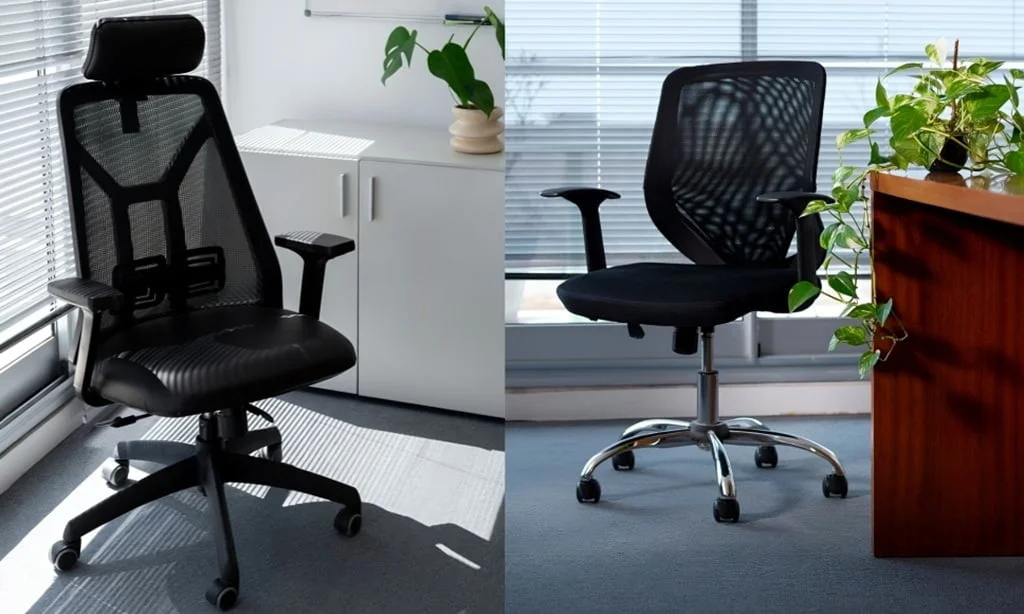
What is the Load Capacity and Durability of Nylon vs Aluminium Bases?
When evaluating a heavy-duty office chair base, the material directly influences its performance under stress. Aluminium's inherent strength makes it the standard for high-capacity applications. Reinforced nylon serves as a reliable option for moderate to standard commercial use. The following table breaks down the key differences for procurement teams in Kenya.
| Attribute | Nylon Base (Polyamide) | Aluminium Base (Cast/Polished) |
|---|---|---|
| Typical Load Capacity | Up to 115-135 kg | 135 kg to over 200 kg |
| Durability & Lifespan | Good. Can become brittle or crack under extreme, repeated impact or high UV exposure. | Excellent. Highly resistant to fatigue and cracking. Prone to cosmetic scratches but maintains structural integrity. |
| Rigidity | Moderate. Can exhibit some flex under maximum load, which can feel less stable. | High. Provides a very firm and stable foundation with minimal to no flex. |
| Heavy-Duty Use Case | Suitable for standard 8-hour office use and for users within the standard weight range. | Recommended for 24/7 use, call centres, heavier users, and executive chairs where stability is a priority. |
An office chair's stated weight capacity is not determined by the base alone. The system-wide rating is dictated by the weakest component in the assembly. A strong aluminium base paired with a low-grade gas lift will not deliver a high load rating. All core support elements must be specified to a high standard for a chair to be genuinely heavy-duty.
The Chair Base
The base is the foundation that distributes weight across the floor. An aluminium base provides a more rigid foundation than a nylon base, which prevents flex and reduces stress on other components like the gas lift and mechanism.
The Gas Lift
The gas lift is a pneumatic cylinder that controls the chair's height and absorbs shock. A Class 4 gas lift is the industry standard for heavy-duty use. This class is designed for higher loads and greater durability than the common Class 2 or 3 lifts found on standard office chairs.
The Chair Mechanism
The chair mechanism connects the base, gas lift, seat, and backrest. A heavy-duty mechanism is constructed with thicker steel plates and stronger welds. These features allow the mechanism to handle increased torque and weight without failing over time.
The Casters (Wheels)
Heavy-duty casters often feature dual-wheel designs and stronger axles. This construction ensures smooth movement under a high load without the risk of breaking or seizing, which is a common failure point on standard chairs.
KEMSA Specifications for Heavy-Duty Chair Components
The Kenya Medical Supplies Authority (KEMSA) sets procurement standards that serve as a quality benchmark for office furniture in Kenya. KEMSA's specifications for high-capacity seating provide a clear example of a properly engineered system. A common KEMSA tender requires a complete system designed to support a user weight of 155 kg.
This capacity is achieved by mandating a specific combination of components: a 350 mm radius cast aluminium base paired with a Class 4 gas lift. This standard ensures chairs for demanding environments like hospitals are built for longevity. Procurement managers in Kenya can reference these specifications to vet supplier claims and confirm they are purchasing a genuinely strong product.
Which Base Offers Better Value Nylon or Aluminium for Office Procurement in Kenya?
A chair with a nylon base has a lower initial purchase price, making it a common choice for large-scale deployments with tight budgets. This upfront saving is a primary driver for procurement teams focusing on immediate expenditure.
An aluminium base provides a lower Total Cost of Ownership (TCO) for intensive-use or high-load environments. The higher initial cost is offset by a longer service life and fewer replacements compared to nylon bases, which can fail prematurely under strain. This durability makes aluminium a better long-term investment for a 5-7 year furniture lifecycle in a busy Kenyan office.
How Do Nylon and Aluminium Bases Compare in Maintenance and Lifespan?
Maintenance for both nylon and aluminium bases is minimal and typically limited to cleaning. The primary difference is their expected lifespan and failure patterns under stress. A nylon base is susceptible to material fatigue over time, especially if consistently used near its maximum load capacity. This fatigue can manifest as stress cracks near the gas lift housing or caster sockets, leading to failure.
An aluminium base is far more resistant to material fatigue. Failure of an aluminium base is typically due to extreme shock, such as being dropped, rather than from cumulative use. A cast aluminium base is expected to last the entire lifetime of the chair's other components, like its upholstery. This makes an aluminium base a fit-and-forget component in a high-traffic Kenyan office.
Which Heavy-Duty Office Chair Models in Kenya Feature Strong Bases?
Sourcing heavy-duty chairs in the Kenyan market requires verifying the actual components beyond marketing terms. Procurement teams can identify chairs with genuinely strong bases by asking suppliers for specific details about the materials and parts used.
First, request confirmation that the base is 'cast aluminium' or 'polished aluminium', not 'aluminium-finish' plastic. A solid metal base has a distinct weight and feel. Second, inquire about the gas lift classification; any chair marketed as heavy-duty should have a Class 4 gas lift. A supplier unable to confirm these details may be selling a standard chair unsuitable for high-load applications.
What is the Environmental Impact of Nylon vs Aluminium Chair Bases?
The material choice between nylon and aluminium has different environmental implications for organisations in Kenya with sustainability goals. Aluminium production is energy-intensive, giving it a high initial carbon footprint. However, aluminium is also highly recyclable and can be re-processed repeatedly without losing its structural properties, and many bases contain recycled content.
Nylon, a plastic polymer, requires less energy to manufacture initially, but its end-of-life processing is more complex. Recycling infrastructure for nylon is less common, and mixed-polymer components make separation difficult. As a result, many nylon bases end up in landfills. From a circular economy perspective, aluminium's high recyclability and durability make it the more sustainable choice over the product's full lifecycle.
Beyond Standard Use What Bases Suit 24/7 Call Centre Environments in Kenya?
Kenya's growing BPO and call centre sector presents a unique challenge for office furniture. A chair in these 24/7, multi-shift environments endures three times the wear of a standard office chair. The constant use and diverse user weights place extreme stress on the chair's foundation.
A standard nylon base is often insufficient for the stress of high-intensity applications like 24/7 call centres and is prone to premature failure. A heavy-duty office chair base made from cast aluminium is a baseline requirement for this environment. Paired with a Class 4 gas lift and a durable mechanism, this configuration is an investment in operational continuity, preventing downtime and replacement costs.
How to Choose the Right Heavy-Duty Office Chair Base for Your Needs in Kenya
Use this checklist to make a practical, informed decision when procuring heavy-duty chairs for your office in Kenya.
- Assess User Weight: A high-quality reinforced nylon base is a viable, cost-effective option for general use with users under 115 kg. Specify an aluminium base for users consistently over 115 kg or for designated high-weight capacity chairs.
- Define Usage Intensity: Nylon can suffice for standard 8-hour workdays. An aluminium base is the most reliable choice for 24/7 operations, call centres, or other continuous-use roles.
- Evaluate the Whole System: Do not just look at the base. Always confirm the chair has a Class 4 gas lift and a heavy-duty mechanism to match the base's strength. Ask the supplier for the chair's official, system-wide load rating.
- Compare Lifecycle Cost, Not Just Price: Calculate the total cost of ownership. A more expensive chair with an aluminium base that lasts 7+ years offers better value than a cheaper chair with a nylon base that needs replacing in 3 years.
Finding Reliable Heavy-Duty Office Chair Suppliers in Kenya
Procurement teams must identify a trustworthy supplier in Kenya to ensure product quality and after-sales support. When vetting potential suppliers in Nairobi or nationwide, focus on those who demonstrate product knowledge and provide strong after-sales service. Ask direct questions about their heavy-duty range and request detailed specification sheets that confirm the base material, gas lift class, and overall weight capacity.
A reliable vendor should be able to confirm if their chairs meet established quality benchmarks, such as the KEMSA specification for a 155 kg capacity chair. Inquire about the strong warranty; a strong warranty covering structural components for three to five years is an indicator of product confidence. Ask for references from companies in demanding sectors like BPO or healthcare to verify the supplier's track record with high-performance seating.
Shop Office Chairs in Kenya
Browse our collection of office chairs at competitive prices. Same-day delivery within Nairobi and nearby areas, and delivery across Kenya.