Moulded vs Cut Foam: High-Density Office Chair Durability
The core difference in a durable high-density foam office chair lies in its use of moulded foam, which resists flattening over time. This is unlike the cut foam found in cheaper alternatives. Understanding this distinction is crucial for anyone who has felt the disheartening sensation of their chair seat compressing to a hard, unforgiving surface after only a few months of use.
This guide breaks down why the foam inside your chair seat is the most critical component for long-term comfort and support. It ensures you invest in a chair that works for you, not against you. You can browse our complete collection in our online office chair shop.
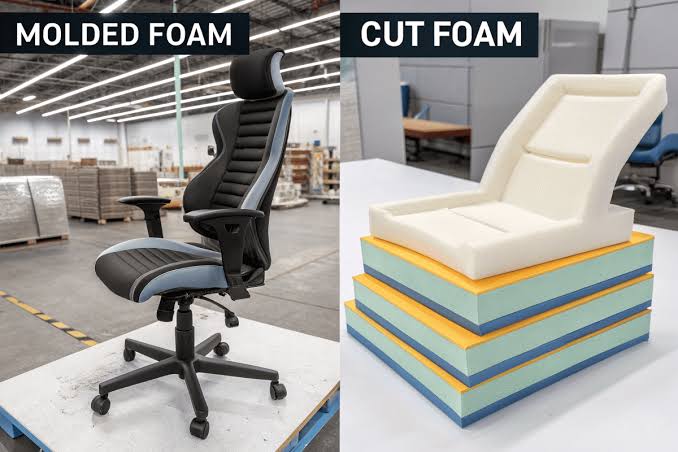
Moulded Versus Cut Foam Manufacturing and Composition
The feel and lifespan of an office chair seat are determined the moment its foam is created. The two primary manufacturing methods produce vastly different results in terms of both comfort and durability.
Cut Foam is analogous to being sliced from a large loaf of bread. A large block of foam is produced and then simply cut into seat-sized slabs. This process is inexpensive and fast. However, the foam's internal cell structure is inconsistent and open, making it highly susceptible to breaking down under the constant pressure of daily sitting.
High-Density Moulded Foam, conversely, is created like a custom-baked part. Liquid foam is injected into a seat-pan-shaped mould and allowed to cure. This process creates a dense, consistent foam cushion with a protective outer skin, engineered precisely for its intended shape and purpose. This "cold-cure" method results in a product that maintains its shape, bounce, and supportive qualities for years.
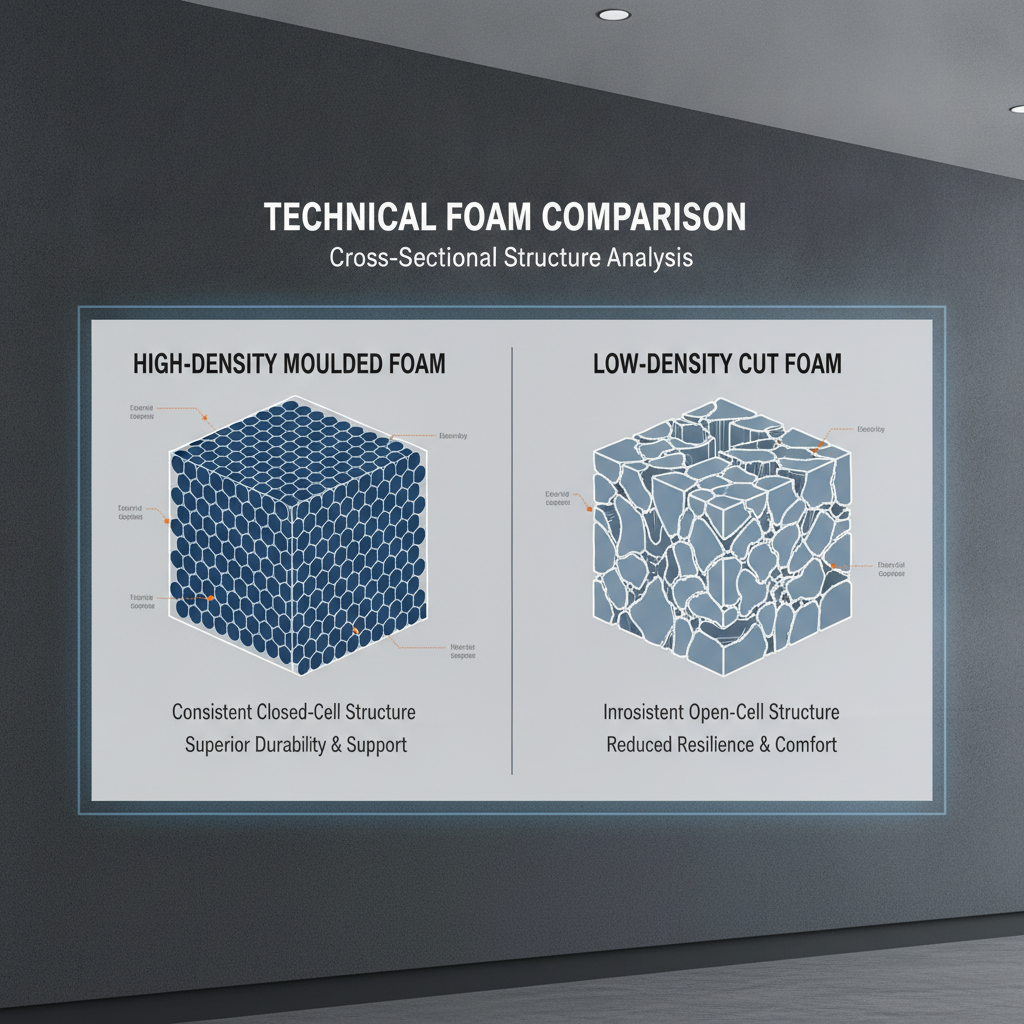
| Feature | High-Density Moulded Foam | Standard Cut Foam |
|---|---|---|
| Manufacturing | Liquid foam is injected into a seat-shaped mould and cured. | Sliced from a large, generic block of foam. |
| Density & Structure | Consistent, high density with a durable outer skin. | Inconsistent, lower density with an open-cell structure. |
| Feel Over Time | Retains its shape, support, and "bounce-back" for 5+ years. | Flattens and compresses within months, feeling hard. |
| Commonly Found In | Premium ergonomic office chairs and commercial-grade seating. | Budget, residential, and entry-level office chairs. |
How Foam Type Impacts Chair Durability and Longevity
Durability is a direct result of the foam's internal structure. The open, inconsistent cells of cut foam are easily crushed under a person's weight. With each day of use, more of these cells collapse permanently. This leads to what is known as "compression set," a condition where the foam loses its ability to return to its original shape.
High-density moulded foam's robust, closed-cell structure is far more resilient. It is designed to compress and rebound thousands of times without degrading. The chair you buy today will offer the same supportive feel in its first year as it will in its fifth. This resilience prevents you from feeling the hard plywood or plastic seat base underneath the foam.
Ergonomic Support and the Role of Foam Density
True ergonomic support is built from the seat up, not just from adjustable armrests. High-density moulded foam provides a firm, yet forgiving, foundation that distributes your body weight evenly across the entire surface of the cushion.
This even distribution reduces pressure points on your sit bones and the backs of your thighs. It promotes better blood circulation and prevents the numbness or fidgeting that often occurs during long workdays common in many Kenyan offices. A flattened cut foam seat, in contrast, creates pressure hotspots, forcing your body into an unnatural posture and leading to discomfort, fatigue, and sometimes the need for specialized orthopedic chairs.
Cost Analysis: The Long-Term Value of Moulded Foam
A chair with cut foam has a lower initial price. This initial saving is often negated by its short lifespan and poor performance. The need to replace a flattened, uncomfortable chair every 12-18 months quickly adds up in cost, disruption to your workplace, and the potential need for frequent chair repair services.
Investing in a high-density foam office chair is a sound financial decision. Its lifespan of five to ten years means the cost-per-year of use is significantly lower. You are not just buying a chair; you are investing in years of consistent comfort, support, and productivity without the recurring expense of replacements.
How to Identify Foam Quality When Purchasing
Distinguishing between foam types in a showroom can be straightforward if you know what to look for. Use your hands and your common sense to test the seat cushion.
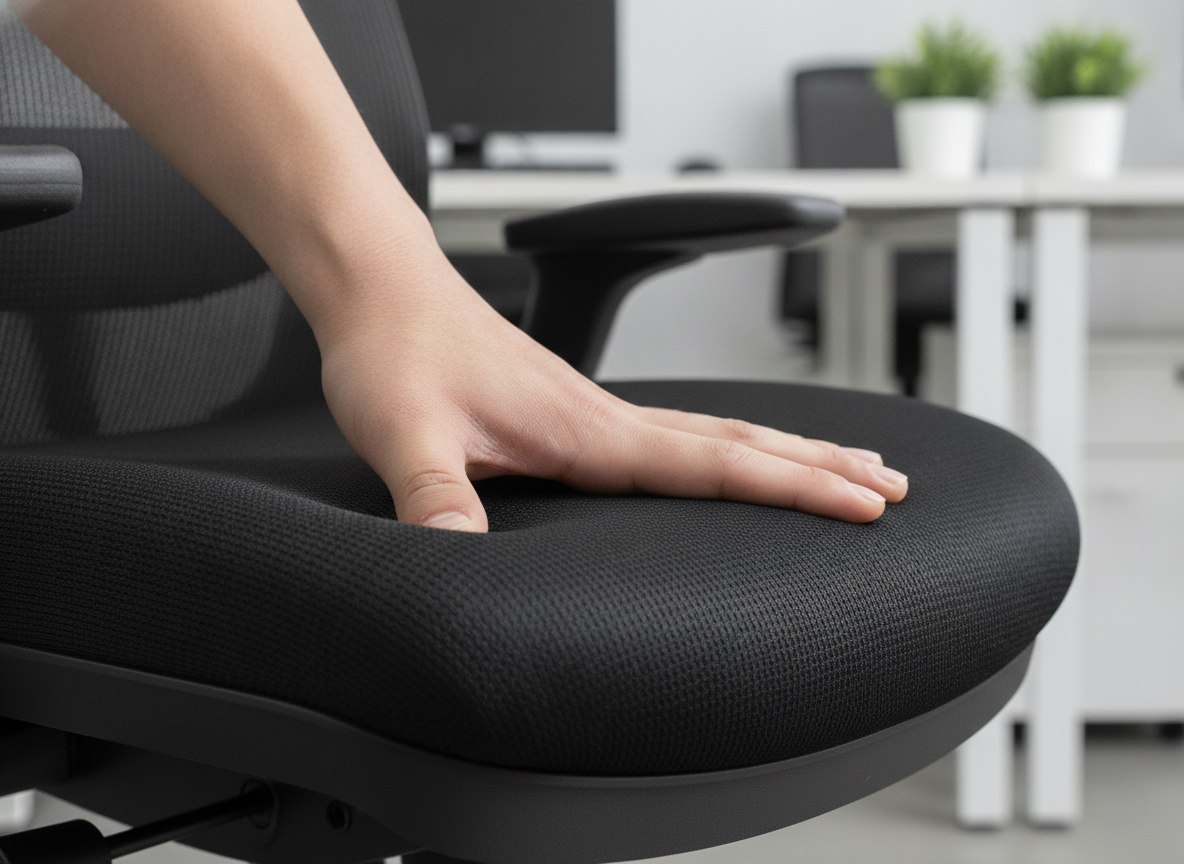
- The Press Test: Press your hand firmly into the centre of the seat and then release it quickly. High-density moulded foam will spring back to its original shape almost instantly. Cut foam will recover much more slowly and may leave a temporary handprint.
- Check the Specifications: Reputable suppliers like Office Chairs Market Kenya are proud of their quality components. Look for terms like "moulded foam," "cold-cure foam," or "high-density foam" in the product description or technical specifications.
- Feel the Weight: A chair with a moulded foam seat is often noticeably heavier and feels more substantial than its cut-foam counterpart. This indicates a denser, higher-quality core.
Common Chair Complaints: The Flattened Seat Problem
The single most common complaint about budget office chairs is that the "seat went flat." This issue is almost exclusively the fault of low-density cut foam. It simply lacks the structural integrity to withstand the repetitive load of a person sitting for eight hours a day.
When the foam collapses, your body weight is no longer cushioned. You are effectively sitting directly on the rigid seat pan. This leads to pain, poor posture, and the frustrating feeling of having wasted money on a product that failed to perform its most basic function.
The Seat as the Foundation of Chair Construction
The seat foam is the heart of an office chair's comfort system. Features like adjustable lumbar support, synchro-tilt mechanisms, and 4D armrests are vital for a personalised fit, but they are all undermined if the seat itself fails. Often, these components can be improved or replaced with quality office chair spare parts.
A high-quality moulded foam seat provides the stable, supportive base upon which all other ergonomic features depend. It ensures you are positioned correctly to benefit from the chair's other adjustments, making it the non-negotiable foundation of any good ergonomic office chair.
Why Kenyan Businesses Prioritize BIFMA Certified High-Density Foam Chairs
Forward-thinking businesses in Kenya, often selecting high-quality executive office chairs, are increasingly looking past the initial price tag to focus on long-term value and employee well-being. A chair that causes discomfort is a drain on productivity. Providing supportive, durable seating is a direct investment in staff performance and satisfaction.
This is why certifications from the Business and Institutional Furniture Manufacturers Association (BIFMA) are so important. BIFMA testing includes durability standards for components like seat foam, ensuring they can withstand rigorous, continuous use in a commercial environment. A BIFMA-certified chair almost certainly uses high-density moulded foam to pass these demanding tests.
Key Considerations Beyond Foam Type
The foam is critical, but it is part of a larger system. When selecting your chair, consider these related factors to ensure a wise investment.
The Importance of BIFMA Standards
BIFMA certification is a mark of commercial-grade quality. It tests the entire chair for safety, durability, and structural integrity. This process includes the castors, base, gas lift, and mechanism. Opting for a BIFMA-certified chair provides peace of mind that every component is built to last.
Warranty and After-Sales Support
A manufacturer's confidence in its product is reflected in its warranty. Chairs with high-density moulded foam typically come with long warranties of 5 years or more, often covering all components. This guarantees support and protects your investment should any part fail prematurely.
Sustainable Choices and Environmental Impact
Choosing a durable chair is also a more sustainable choice. A chair that lasts ten years prevents multiple cheaper chairs from ending up in a landfill. Look for manufacturers who use environmentally friendly processes and materials for a truly responsible purchase.
Upholstery Options for High-Density Foam Seats
Once you have confirmed the chair has a supportive high-density foam core, the next choice is the material that covers it. The upholstery affects breathability, maintenance, and the overall aesthetic of your workspace.
Fabric upholstered chairs offer excellent breathability, preventing heat build-up during long sessions, and come in a wide variety of colours. Mesh is even more breathable but can feel less cushioned. Leather office chairs and PU-leather alternatives provide a premium look and are easy to wipe clean, but can be less breathable in warmer climates. Your choice depends on balancing practical needs with the desired office environment.
Finding High-Density Foam Chairs in Kenya
Locating genuine high-density foam office chairs requires partnering with a reputable supplier who understands commercial-grade furniture. A knowledgeable dealer can guide you through their range, explain the technical specifications, and allow you to test the chairs yourself.
Prioritise suppliers who are transparent about their materials and who offer solid warranties. An investment in quality seating is an investment in the health and productivity of your team, and choosing the right foam is the first and most important step. For expert guidance on your specific needs, please contact us.
Need Office Chairs?
Browse our collection of office chairs at competitive prices. Fast delivery anywhere in Kenya.