Orthopaedic Chairs Nairobi: Medically Certified Pain Relief
Finding medically certified orthopaedic chairs in Nairobi requires looking beyond standard furniture stores to specialised suppliers who understand specific spinal health needs. For anyone recovering from back surgery or managing chronic pain, the distinction between a generic 'ergonomic' chair and a true orthopaedic one is the difference between daily discomfort and supported, productive work. These chairs are not just about comfort; they are essential tools for health management in the workplace.
The Difference: True Orthopaedic vs. Standard Ergonomic Chairs
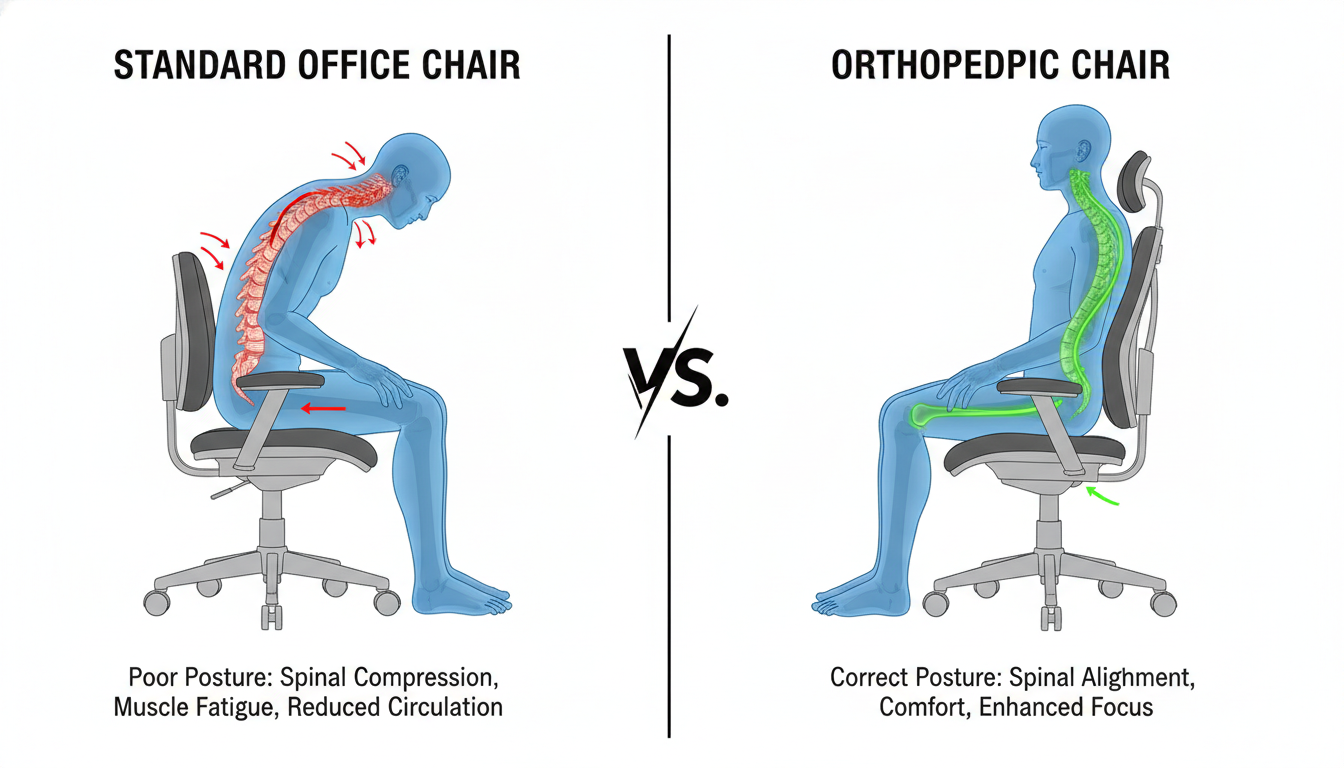
Many chairs are marketed as 'ergonomic', but this term is often used loosely. A standard ergonomic office chair offers basic adjustability like seat height and back tilt, which is a significant improvement over a static chair. A true orthopaedic chair, however, is engineered from a clinical perspective to correct or accommodate specific musculoskeletal problems.
Orthopaedic chairs are designed with medical conditions in mind, providing targeted support that goes far beyond general comfort. They are built to alleviate pressure on the spine, promote healthy posture, and support recovery from injury. The difference is in the precision and purpose of each adjustment and feature.
| Feature | Standard Ergonomic Chair | True Orthopaedic Chair |
|---|---|---|
| Primary Goal | General comfort and posture improvement. | Targeted medical support, pain alleviation, and posture correction. |
| Lumbar Support | Often a fixed curve or a height-adjustable pad. | Dynamic, inflatable, or highly contoured support targeting specific lumbar regions. |
| Seat Pan | Standard foam or mesh cushion. | May include memory foam, gel, or specialised cut-outs (e.g., coccyx relief). |
| Specialised Functions | Typically limited to tilt and height adjustments. | Often includes forward pelvic tilt, seat slide, and independent backrest angle control. |
| Certification | Rarely has medical certification. | Often comes with medical or physiotherapy endorsements and certifications. |
Support for Specific Medical Needs: Spinal Surgery and Herniated Discs
After spinal surgery, the body is incredibly sensitive to pressure and poor posture. A standard office chair can place direct strain on the surgical site, impeding recovery. Orthopaedic chairs designed for post-operative care focus on offloading pressure from the spine and supporting the body in a neutral, healing position.
For those managing a chronic herniated or slipped disc, sitting for long periods can cause sharp, radiating pain. A true orthopaedic chair helps by maintaining correct spinal alignment, which reduces the pressure on the affected nerve. Features like a forward pelvic tilt and pronounced lumbar support are not luxuries; they are essential tools for managing the condition and remaining productive.
Essential Orthopaedic Chair Features for Pain Relief
When assessing an orthopaedic chair, you must feel how its specialised features interact with your body. These mechanisms are designed to solve specific physical problems that standard chairs ignore.
Adjustable Pelvic Tilt Mechanism
A forward pelvic tilt function is one of the most significant features of a high-end orthopaedic chair. This mechanism allows the seat pan to tilt slightly forward, which gently rotates your pelvis. This encourages your spine to adopt its natural 'S' curve and immediately reduces the slouch that puts immense pressure on your lower back discs.
Coccyx Cut-outs for Pressure Relief
For individuals with tailbone (coccyx) pain or those recovering from spinal surgery, direct pressure on this area can be excruciating. A coccyx cut-out is a U-shaped gap at the back of the seat cushion. This simple modification completely removes contact with the tailbone, providing instant relief the moment you sit down and allowing you to focus on your work instead of the pain.
Dynamic Lumbar Support Systems
Unlike a static foam bump, advanced orthopaedic lumbar support is often adjustable in both height and depth. Some models use an inflatable air cell, allowing you to pump it up to the exact pressure and shape that fits the unique curve of your lower back. This tailored support fills the gap between your back and the chair, preventing the spine from collapsing into a 'C' shape.
Adjustable Armrests and Seat Depth
Properly adjusted armrests take the weight of your arms off your shoulders and neck, reducing tension. Four-directional (4D) armrests that adjust up/down, forwards/backwards, and in/out are ideal. Seat depth adjustment, also known as a seat slide, ensures your thighs are fully supported without the edge of the seat pressing into the back of your knees. This is crucial for maintaining good circulation during long work sessions.
How to Find Specialist Orthopaedic Chair Retailers in Nairobi
You are unlikely to find medically certified orthopaedic chairs at general furniture hypermarkets. You need to seek out suppliers who specialise in ergonomic and healthcare seating solutions. These retailers often work directly with occupational therapists and corporate wellness programmes.
Look for suppliers who can demonstrate a deep understanding of ergonomics and ask probing questions about your specific condition. True specialists will guide you to a solution rather than just sell you a product.
Online Research vs. In-Store Fittings
Online catalogues are useful for initial research, but an orthopaedic chair is a highly personal piece of medical equipment that should be tested before purchase. The ability to sit in a chair, feel its support, and operate its adjustments is non-negotiable.
A physical showroom allows you to compare different models and receive a professional fitting from a trained consultant. This hands-on experience ensures the chair is a perfect match for your body and your medical needs, preventing a costly mistake.
Retailer Expertise and Specialised Inventory
A reputable retailer will stock chairs from well-known international orthopaedic brands. Ask about the brands they carry and their reputation in the medical community. The best suppliers in Nairobi will have demonstration models available that feature the specific mechanisms we have discussed, such as pelvic tilt and coccyx cut-outs.
Medical Certifications and Product Warranties
Always ask for proof of certification. A genuine orthopaedic chair may be endorsed by physiotherapists, chiropractors, or other medical bodies. These endorsements confirm that the chair's design is based on sound medical principles.
Given the investment, a comprehensive warranty is essential. Look for warranties that cover the chair's mechanisms, frame, and gas lift for at least 5-10 years. This reflects the manufacturer's confidence in the product's durability and long-term performance. Reliable access to office chair spare parts is also a sign of a good supplier.
Cost vs. Health: The Investment in an Orthopaedic Chair
Medically certified orthopaedic chairs are a significant investment, with prices in Nairobi typically starting much higher than standard ergonomic models. It is vital to frame this cost not as an expense but as an investment in your health, well-being, and ability to work without pain.
Consider the potential cost of ongoing physiotherapy, lost productivity, and the reduced quality of life that comes with chronic back pain. In that context, the one-time cost of a chair designed to alleviate these issues offers substantial long-term value. You can browse products to understand the available options and their features.
Post-Purchase Support and Ergonomic Consultations
Leading suppliers in Nairobi do not just sell you a box. They offer delivery, assembly, and, most importantly, a post-purchase ergonomic consultation. A specialist should help you set up the chair correctly at your own desk, ensuring all adjustments are tailored perfectly to your workstation and body.
The Role of Physiotherapist and Chiropractor Recommendations
Before you begin shopping, consult your physiotherapist or chiropractor. They understand the specifics of your condition and can provide a prescription or a list of essential features your chair must have. You can find additional expert advice and resources to help guide your conversation with them. Many medical professionals in Nairobi have relationships with reputable suppliers and can offer a trusted recommendation.
Bringing a recommendation from your doctor to a supplier ensures you are having a focused, productive conversation about your needs. It helps the consultant immediately identify the most suitable models for your condition.
Correct Setup for Your New Orthopaedic Chair
Once your new chair arrives, correct setup is crucial to activating its full potential. An incorrect setup can negate the benefits of even the most advanced chair. Follow a simple ergonomic checklist to ensure you are positioned for comfort and support.
First, adjust the seat height so your feet are flat on the floor and your knees are at a roughly 90-degree angle. Next, adjust the seat depth so you have two to three fingers of space between the back of your knees and the edge of the seat. Finally, position the lumbar support to fit snugly into the curve of your lower back and set the armrests so your shoulders are relaxed and your forearms are parallel to the floor. Proper setup is especially important for home office chairs where professional guidance may not be available.
Need Office Chairs?
Browse our collection of office chairs at competitive prices. Fast delivery anywhere in Kenya.