Squeaky Office Chair Fix Guide: Silence Your Chair Fast (2024)
A fast squeaky office chair fix almost always involves tightening loose bolts and lubricating moving joints. That persistent, grating noise disrupts focus and adds irritation to your workday. Thankfully, the solution is usually simple and requires only basic tools.
The Cause of Office Chair Squeaks
A squeak is the sound of friction. It is the sound of two parts rubbing together that should not be, or that lack lubrication for smooth movement. Over time, the constant shifting of your weight as you sit, lean, and reach causes bolts and screws to loosen by tiny increments. This loosening creates just enough space for components to move against each other, producing squeaks, creaks, and groans. The most common culprits are the tilt mechanism, where springs and plates move under tension, and the points where the seat, backrest, and mechanism are bolted together.
How to Locate the Source of the Squeak
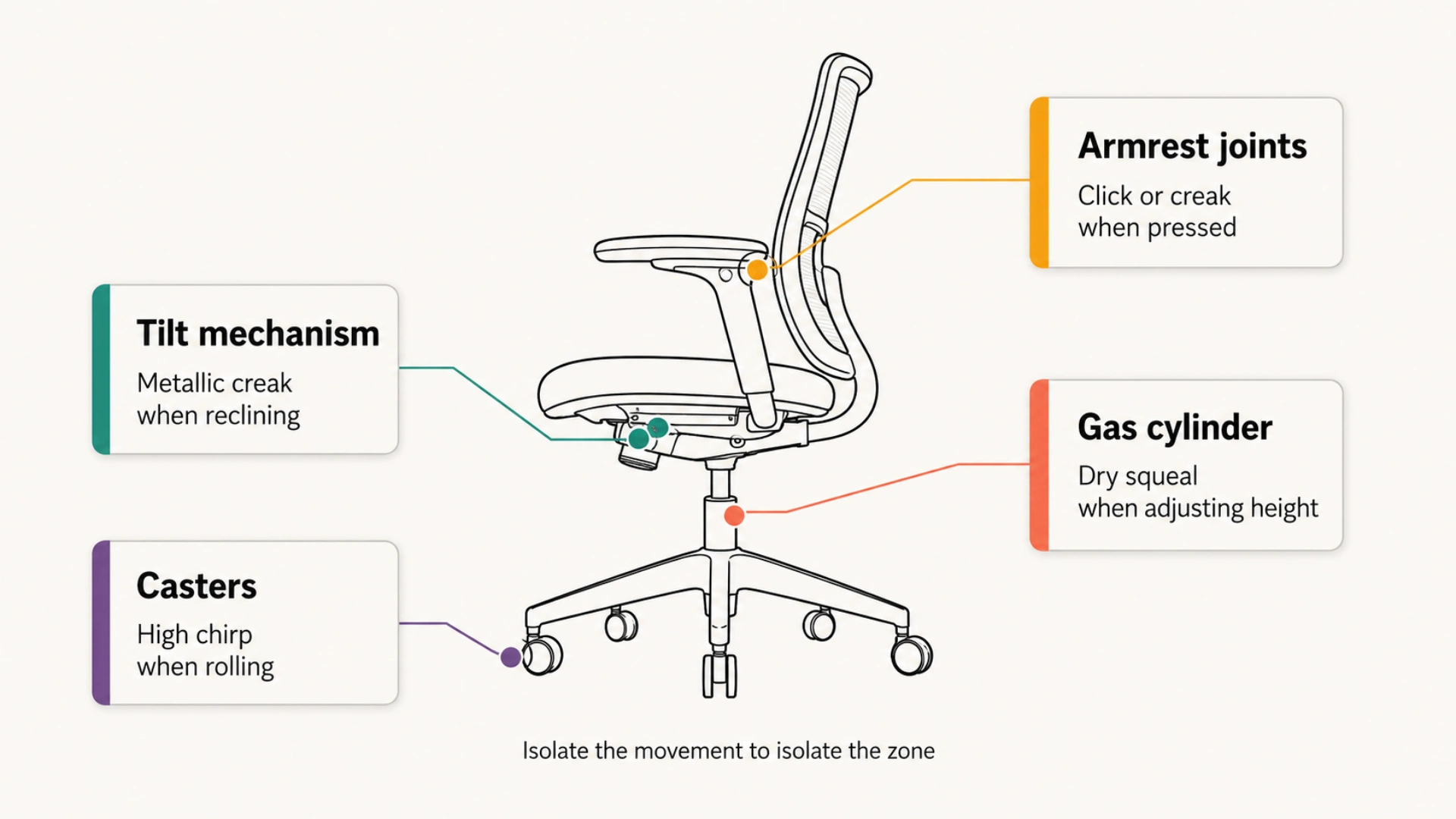
Locating the exact source of the noise is the first step to silencing it. Sit in the chair and try to replicate the sound by moving in different ways. Listen carefully to isolate where the noise is coming from. Is it low down by the wheels, or directly beneath your seat? A methodical approach saves time and ensures you treat the right spot. A small squeak can be a warning sign of a loose component that, if ignored, could lead to more significant wear or instability.
Examine the Chair Base and Casters
Roll the chair back and forth on the floor. If the squeak occurs only when the chair is in motion, the problem likely lies with the casters. Flip the chair over and spin each wheel by hand. Listen for individual squeaks and check if the axles are clogged with hair or debris, which can cause binding and noise. Worn-out or damaged wheels can be replaced with new soft PU castor wheels to protect your floors.
Check the Seat Pan and Backrest Connections
These connections are a major source of noise. With the chair upside down, locate all the bolts that attach the seat pan to the central mechanism, which usually require an Allen key. Also, check the bolts that secure the armrests and the backrest support column. A loose bolt here will cause a groaning sound whenever you shift your weight or lean back.
Inspect the Tilt Mechanism and Gas Lift
The tilt mechanism is a complex assembly of springs, plates, and levers directly under your seat, and it is a prime suspect for squeaks. Rock back and forth to see if the sound originates here. You can also try adjusting the tension knob; if the sound changes pitch or intensity, you have found your culprit. Squeaks from the gas lift cylinder are less common but can occur where it inserts into the mechanism or the base.
Tools and Lubricants for Chair Repair
You do not need a professional workshop to fix a squeaky chair. A few basic items are all that is required to tighten and lubricate your way to a quiet work environment. Having these on hand makes routine maintenance a quick and easy task.
Basic Toolkit: Allen Keys and Wrenches
Most office chairs are assembled with a standard set of bolts. A good multi-size Allen key set and an adjustable wrench will cover almost any fastener you encounter. A Phillips head screwdriver may also be necessary for some armrest or plastic cover attachments.
Select the Correct Lubricant
Selecting the correct lubricant is critical for a lasting fix. Using the wrong type can attract dust and grime, which makes the problem worse over time. Each lubricant has a specific purpose for different chair components.
| Lubricant Type | Best For | Application Tip |
|---|---|---|
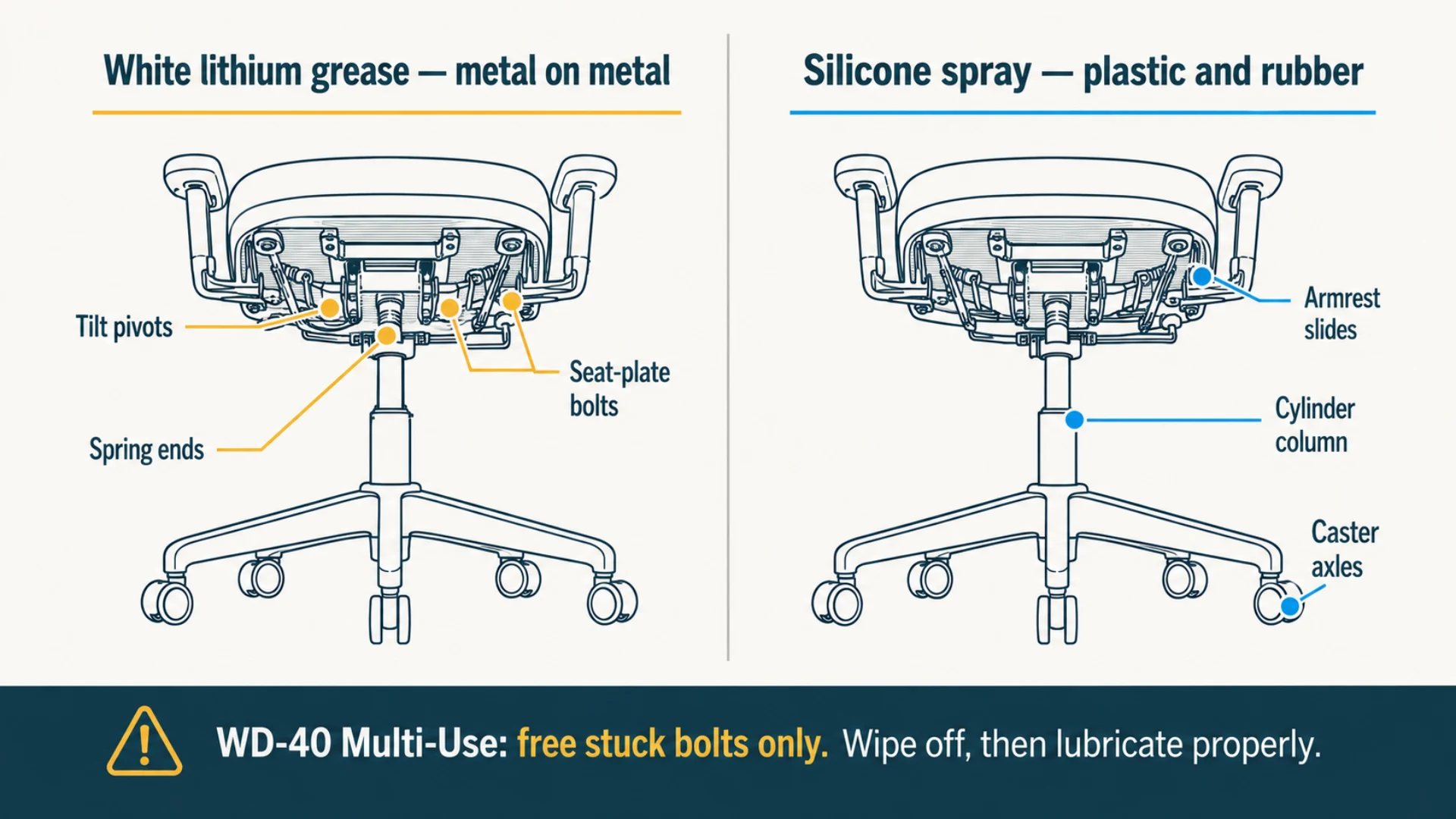
| WD-40 Multi-Use Product | Cleaning grime and displacing water from joints before proper lubrication. Not a long-term lubricant. | Spray onto a cloth to wipe down parts. Use it to clean, then apply a proper lubricant. |
| Silicone Spray | Plastic-on-plastic or plastic-on-metal joints. Ideal for caster wheels and plastic bushings. | Use the thin straw for precise application. A light mist is all that is needed. |
| White Lithium Grease | Metal-on-metal components under high pressure, such as the main tilt mechanism spring and lever joints. | Apply a small bead directly to the contact points. It is thick and stays in place. |
A Guide to Tightening Loose Bolts
A systematic tightening sequence is the most effective way to eliminate squeaks caused by loose hardware. This simple process often solves the problem without any need for lubricants. Turn the chair upside down or on its side to get easy access to the underside.
Secure All Bolts and Screws
Using the appropriate Allen key or wrench, work your way around the chair, tightening every single bolt you can find. Pay special attention to the four or more large bolts holding the mechanism to the bottom of the seat pan. Do not use excessive force, but ensure each one is firm and snug. A quarter-turn is often enough to silence a creak.
Fix Wobbly Arms and Backrests
Wobbly armrests or a wobbly backrest almost certainly contribute to noise. Locate the bolts that attach them to the main frame or seat. Tighten these securely to create a solid, unified structure. A firm connection prevents the micro-movements that generate friction and sound.
How to Lubricate Chair Mechanisms
With all components tightened, lubrication is the next step to ensure smooth, silent movement. The key is to apply the right lubricant sparingly and only where it is needed. Over-spraying can create a sticky mess that attracts dust.
Lubricate the Tilt Mechanism and Springs
Identify the moving parts within the tilt mechanism. This includes the large tension spring and the pivot points. Apply a small amount of white lithium grease to the spring where it makes contact with the housing and to any metal pivot joints. Operate the tilt function a few times to work the grease into the mechanism.
Apply Grease to the Gas Lift and Bushings
The gas lift cylinder itself is a sealed unit, but noise can come from where it fits into the base or the mechanism. A light application of silicone spray or lithium grease at these insertion points can quiet a creak that occurs when you swivel. Wipe away any excess immediately.
Treat Noisy Casters and Wheel Axles
For squeaky wheels, flip the chair over. Use a cloth and perhaps a small brush to clean any hair, dust, or carpet fibres from the wheel axles. Once clean, apply a quick spray of silicone lubricant directly onto each axle and spin the wheel to distribute it evenly. You can find replacement office chair spare parts if cleaning and lubrication do not solve the issue.
Common Squeaking Office Chair Components
Understanding the specific sound each component makes helps you diagnose the problem faster. Different parts require slightly different approaches for a successful and lasting repair.
Silence the Tilt Mechanism and Tension Springs
A deep groan when you lean back points directly to the tilt mechanism. This is a high-friction area. After tightening the mounting bolts, lubricate all pivot points and the main tension spring with white lithium grease for a smooth, silent recline.
Resolve Gas Lift Squeaks and Wobbles
A click or squeak when you swivel or when the chair takes your weight could be the gas lift's seating. A loose fit in the five-star base is a common cause. Sometimes, standing up and dropping the chair a few inches onto its wheels can help reseat it firmly, but lubrication is a more reliable fix.
Quiet Noisy Casters and Wheels
A high-pitched, repetitive squeak that corresponds with rolling is a clear sign of a caster issue. Cleaning the axles of tangled debris is the first and most important step. Follow up with a silicone spray to ensure the wheels spin freely and silently on their axles.
Preventative Maintenance for a Quiet Chair
The best way to fix a squeaky chair is to prevent it from squeaking. A small amount of attention every few months can stop noises before they start and prolong the life of your chair.
Establish a Cleaning and Inspection Schedule
Set a reminder to inspect your chair every six months. Flip it over, check all bolts for tightness, and give the casters a quick clean. This five-minute check-up prevents the gradual loosening that leads to most common office chair problems.
Best Practices for a Longer Chair Lifespan
Avoid plopping down into your chair with excessive force, as this puts a sudden strain on all components. When moving the chair, push or pull it by the frame or armrests rather than the backrest. These simple habits reduce wear and tear on the joints and fasteners.
Fixing Plastic-on-Plastic Squeaks in Kenya
In warmer climates like Kenya, plastic components can behave differently. Heat can cause plastics to expand and contract slightly, leading to creaks where plastic parts, like shrouds or armrest casings, rub together.
Why Silicone is Superior for Plastic Components in Warm Climates
Petroleum-based lubricants like WD-40 or lithium grease can degrade certain types of plastic over time, making them brittle. Silicone spray is inert and will not harm plastics. It provides a durable, slick surface that eliminates friction without causing long-term material damage, making it the perfect choice for office chairs used in consistently warm environments.
Prevent Material Degradation with the Correct Lubricant
Using the correct lubricant is a form of preventative care. By choosing a silicone-based product for all plastic and vinyl parts, you not only stop the current squeak but also condition the material. This helps to prevent it from drying out or becoming brittle due to heat exposure.
When to Repair Versus Replace a Squeaking Office Chair
Most squeaks are easily fixable, but sometimes a noise can be a symptom of a more serious structural problem. Knowing when to attempt a repair and when to invest in a new chair is a key consideration for both safety and value.
Assess the Cost-Benefit of a Repair
A fix that requires basic tools and a can of lubricant costing a few hundred shillings is a clear win for repair. However, if a key component like the gas lift or tilt mechanism has failed, check the price of a replacement part. For a budget chair, the cost of a new mechanism can often be more than half the price of a brand-new chair from our range of task chairs.
Signs You Need a New Office Chair
A persistent wobble that cannot be fixed by tightening bolts may indicate a crack in the metal frame or a failed weld. If the gas lift no longer holds its height, or if the foam cushioning is completely compressed, the chair no longer provides ergonomic support. These are clear signals that a replacement is the safest and most productive option. For demanding work environments, consider upgrading to purpose-built heavy duty chairs.
Where to Find Tools and Lubricants in Kenya
Having the right products makes the job much easier. The tools and lubricants needed for chair maintenance are widely available from various retailers.
Recommended Suppliers for Maintenance Products in Kenya
For essential supplies like Allen key sets, wrenches, and lubricants, look to major hardware stores and automotive supply shops across the country. Online marketplaces also offer a wide selection of silicone sprays and lithium grease, often with convenient delivery options in major cities like Nairobi.
DIY Kits versus Individual Component Purchases
Pre-packaged chair repair kits are rare, but buying the items individually is simple and cost-effective. An Allen key set is a versatile tool for many household tasks. A can of silicone spray and a small tube of lithium grease will last for years and dozens of applications, representing excellent value.
When to Seek Professional Help for Stubborn Office Chair Squeaks
Most issues are simple DIY fixes, but some problems require an expert touch. Trying to force a repair on a complex mechanism without the right knowledge can cause further damage.
Identify Complex Mechanical Issues
If you have tightened and lubricated everything and the chair still makes noise or feels unstable, the problem may be internal. A failure inside the sealed gas lift or a broken spring within the tilt mechanism is not a user-serviceable issue. If you see metal fatigue, cracks, or broken welds, stop using the chair immediately.
Find Office Furniture Repair Specialists in Nairobi
For businesses with many chairs or for high-value models like executive office chairs, professional help is a sound investment. A quick online search for office furniture repair in Nairobi will yield local technicians. Our team also offers professional chair repair services to diagnose and fix complex problems, often sourcing and fitting specific replacement parts for you.
Perfect Your Ergonomic Setup
With the distracting squeaks gone, you can now focus on optimising your chair for comfort and support. A quiet chair is good, but a quiet and ergonomic chair is the foundation of a productive, pain-free workday. Taking a moment to adjust it properly can prevent back, neck, and shoulder strain. Ensure your feet are flat on the floor, with your knees at a 90-degree angle. Adjust the chair height to achieve this. Set the lumbar support, a key feature in quality orthopedic chairs, to fit the natural curve of your lower back. Position the armrests so your shoulders are relaxed and your elbows rest at a comfortable angle while typing.
Need Office Chairs?
Browse our collection of office chairs at competitive prices. Fast delivery anywhere in Kenya.