How to Fix a Broken Office Chair Height Adjustment Lever
Office chair repair starts with finding the root cause. When a chair will not go up, will not stay up or sinks under you, the fault is almost always in the external lever mechanism or the internal gas cylinder. A loose lever points to a mechanical issue, while a lever that works with no height change points to a failed gas cylinder.
Finding the right faulty part saves you from paying for the wrong one. This check is the first step Office Chairs Market Kenya recommends to maintain office furniture and extend its service life.
How to Diagnose a Broken Office Chair Height Adjustment Lever
An accurate diagnosis saves time and money before you order office chair spare parts. The fault sits either in the external lever assembly or in the internal gas cylinder, and one simple test shows which.
Turn the chair on its side or upside down for a clear view of the mechanism. Follow the height adjustment lever to its connection point on the mechanism. A small release pin on top of the central gas cylinder extends up into the mechanism.
Lever Action Test
Pull the height adjustment lever as you normally would. Watch the part of the mechanism that should press down on the release pin of the gas cylinder. The result shows the source of the fault.
- Symptom 1 (lever or mechanism fault): The lever feels loose, or a clear gap is visible. The actuator tongue of the mechanism does not touch the release pin, or barely scrapes it. The problem is the lever connection, a bent actuator or a loose mechanism, and the gas cylinder is likely fine.
- Symptom 2 (gas cylinder fault): The lever feels firm and the actuator tongue presses down firmly on the release pin, yet the chair does not rise, or it sinks when you sit. The gas cylinder has lost pressure and needs replacement parts. Our guide to gas lift classes explains which cylinder suits your chair.
Signs of a Failed Gas Cylinder
A gas cylinder uses pressurised gas and internal seals to hold the seat at your chosen height. Once the seals wear and pressure escapes, you will notice one or more of these signs:
- Gradual sinking: the seat slowly drops while you sit, so you keep raising it.
- Sudden dropping: the chair loses height without warning during use.
- Stuck at the lowest position: the chair stays down even though the lever presses the release pin.
Spraying lubricant on the outside of the cylinder does not restore lost pressure. Grinding or crunching sounds, or a seat mechanism that will not lock, point to a separate mechanical fault, so a new cylinder alone may not fix those.
Repair or Replace a Faulty Height Adjustment Lever
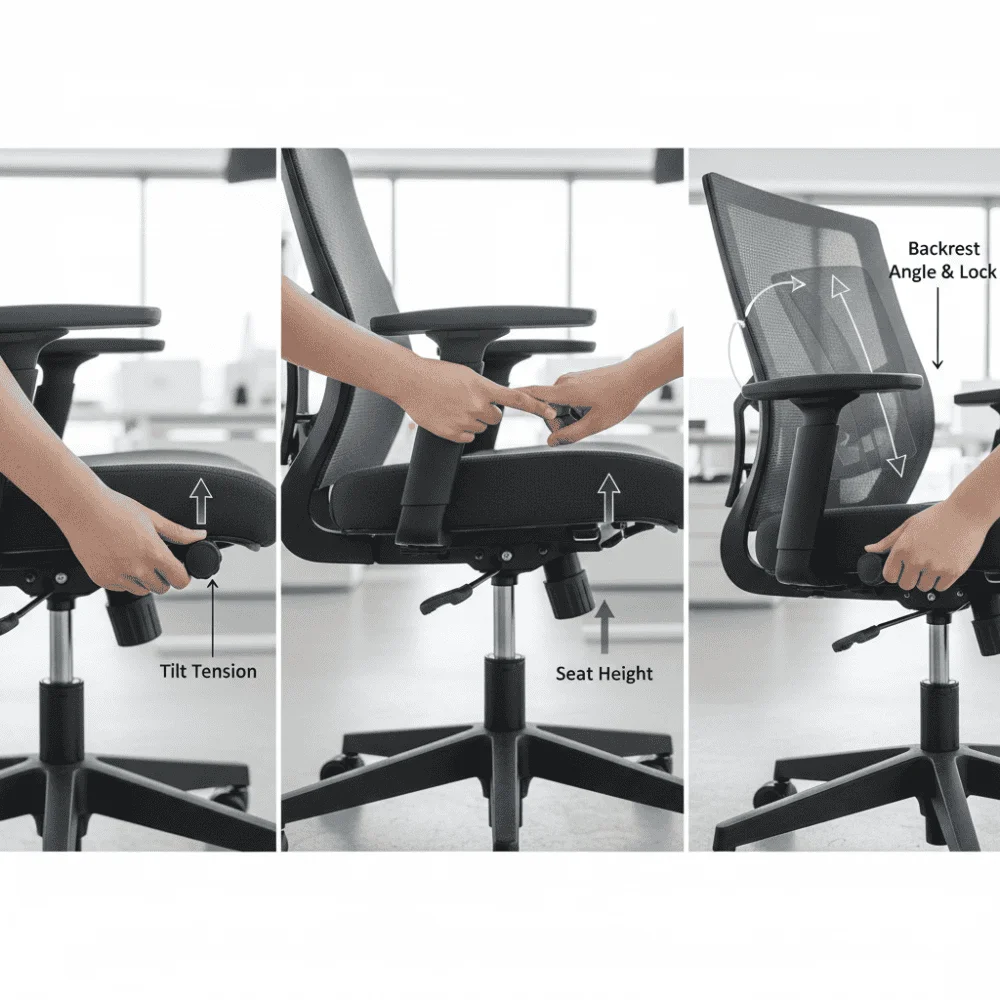
Fixing a faulty lever or mechanism is often simple and costs less than buying a replacement gas lift. The repair usually means tightening or realigning a loose part, or replacing the mechanism plate.
Repairing a Loose or Misaligned Lever
- Inspect fasteners: Find the screws or bolts that hold the lever handle and mechanism plate to the underside of the seat. Tighten any loose ones with a screwdriver or hex key.
- Check the actuator: The lever moves a small metal tongue that presses the release pin. Confirm the tongue is not bent or broken. A slightly bent tongue can sometimes be bent back into position with pliers.
- Realign the plate: If the mechanism plate has slotted holes, loosen its mounting screws slightly and slide it until the actuator sits directly above the release pin. Do not force or bend the mechanism into place.
- Test the repair: Tighten everything, stand the chair upright and operate the lever to confirm it now makes solid contact with the pin.
Replacing a Broken Lever or Mechanism
- Remove the old mechanism: Use a screwdriver or hex key to remove the four or more bolts that attach the metal seat plate to the seat cushion.
- Buy a matching replacement: Take the old mechanism to an office chair parts supplier in Nairobi, or measure the bolt pattern (for example 15cm x 25cm) before ordering from an online office chair shop. The new mechanism must have the same height adjustment function.
- Install the new mechanism: Align it with the bolt holes under the seat and fasten it with the original bolts. Place the seat back onto the gas cylinder and sit down to secure the connection.
How to Safely Remove and Install an Office Chair Gas Cylinder
A failed cylinder, including one behind a sinking office chair, has to be replaced. The job needs some force but is manageable with the right tools and care. The main challenge is separating the old cylinder from the seat mechanism and the base, because these parts are pressure fitted.
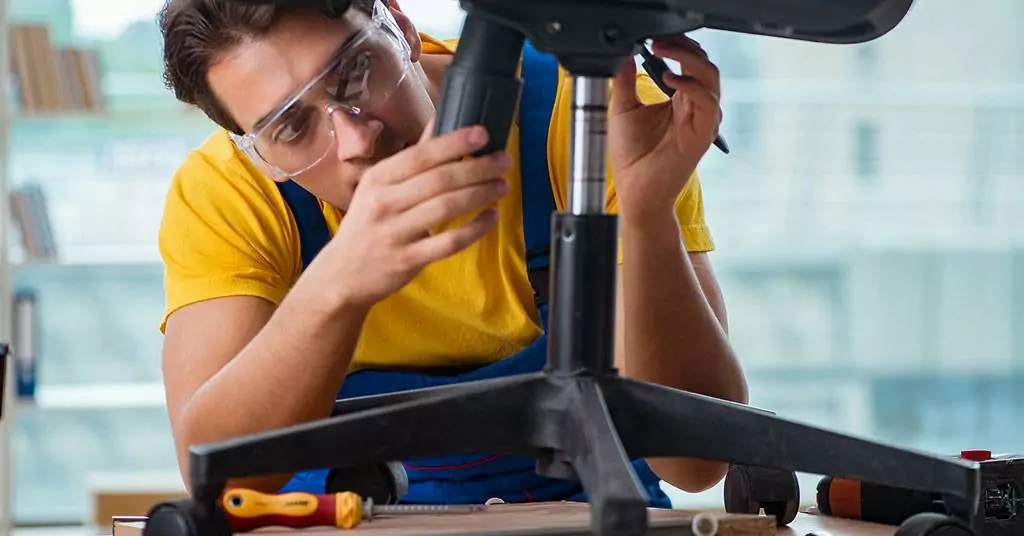
Safety first: Wear safety goggles and work gloves. Never cut, drill, heat, puncture or try to open a gas cylinder, because it is a pressurised part.
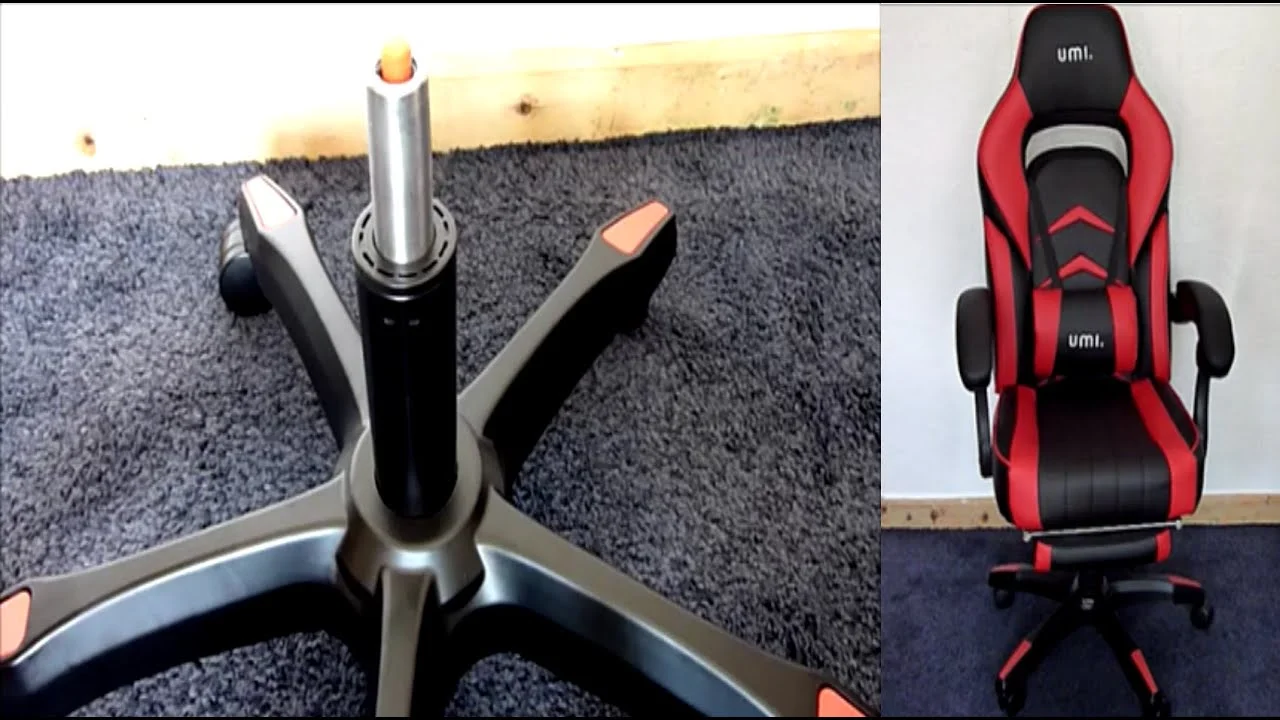
- Remove the chair base: Turn the chair upside down. Tap firmly with a rubber mallet around the hub of the five star base where it meets the bottom of the cylinder. Work evenly around the chair base until it comes off, and avoid hitting the castor wheels. Once it is off, check the base for cracks around the hub and castor sockets.
- Separate the cylinder from the seat: With the chair still upside down, grip the top of the cylinder tightly with a pipe wrench and twist firmly to work it loose from the mechanism. Penetrating oil (such as WD-40) applied at the joint helps loosen it.
- Install the new cylinder: Drop the new cylinder into the centre hole of the base. Place the seat mechanism onto the top of the cylinder and make sure it sits straight.
- Secure the fit: Sit on the chair carefully. Your body weight creates the pressure fit that locks the parts together. Test the height adjustment, and stop using the chair if it wobbles or the cylinder does not seat properly.
Choosing the Correct Replacement Gas Cylinder
A replacement cylinder must match your chair. Compare the new part with the old one on these points before you buy:
- Stroke length: how far the cylinder travels between its lowest and highest positions, which sets the height range.
- Extended and compressed lengths: these decide whether the chair will reach the right working height for your desk.
- Body diameter and tapered ends: both ends must fit the existing seat mechanism and base.
- Class and load rating: Class 3 and Class 4 cylinders are common. Check the rating the chair needs and the user's weight.
"Universal" cylinders fit many standard chairs, but do not assume they fit yours. Taking the old cylinder to the supplier allows a direct comparison. We stock a Class 4 replacement gas lift that suits most standard office chairs.
Tools Needed for Office Chair Height Adjustment Repair
The right tools make the repair much easier. Most are available from local hardware stores in Kenya.
- Screwdriver or hex key set: removes the seat mechanism from the seat cushion. Most modern office chairs use hex bolts.
- Rubber mallet: safely separates the star base from the gas cylinder without damaging the parts.
- Pipe wrench: gives the grip and turning force to twist a stubborn cylinder out of the seat mechanism.
- Safety goggles: protect your eyes from debris when you apply force.
- Work gloves: improve grip and protect your hands from grease and scrapes.
- Penetrating oil (such as WD-40): helps loosen a stuck cylinder. Apply it and wait 10 to 15 minutes before trying again.
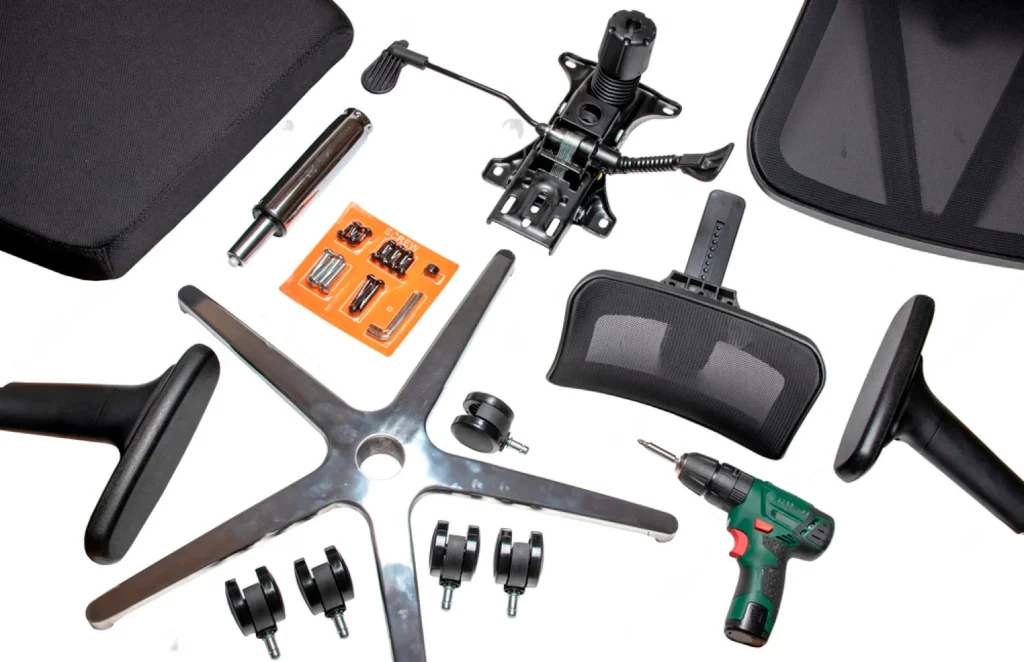
Office Chair Gas Cylinder Replacement Cost in Kenya
The cost depends on the cylinder specification, the supplier and whether fitting is included. The figures below are a budgeting guide, so confirm the current price and what it covers before you pay.
| Item or service | Typical cost in Kenya |
|---|---|
| Standard replacement gas cylinder | KES 1,500 to 3,000 (our Class 4 gas lift is KES 2,500) |
| Heavy duty or special cylinder | Can exceed KES 3,000 |
| Professional fitting | KES 1,500 to 3,000 (see our onsite gas lift replacement service) |
| Combined repair budget | About KES 3,000 to 8,000 |
When you request a quote, ask whether the price covers the part only, fitting, delivery or extra repairs. This stops you comparing a part-only price with a full repair package.
Office Chair Replacement Parts in Kenya
You can source the right office chair components in Kenya through online shops and physical stores.
Local Suppliers in Nairobi
Office furniture stores on major roads such as Mombasa Road and in industrial areas often stock common chair parts such as gas cylinders and chair bases. Furniture repair workshops can also source these office chair parts for you.
Buying Parts Online in Kenya
An online office chair shop will often list universal gas cylinders, castors and chair mechanisms. Check seller reviews and confirm the dimensions, especially the cylinder travel height, before you buy. Most suppliers accept M-Pesa.
When you order spare parts from us, delivery is free within Nairobi CBD and Westlands. Other areas get a delivery quote based on order size and location, and you can pay on delivery.
Repair vs Replace an Office Chair in Kenya
Whether to repair or replace a faulty chair comes down to cost against benefit. Repairing is the sustainable choice, but it is not always the cheapest one for Kenyan businesses.
If a chair needs several repairs, such as a new gas lift, new armrests and new foam, the combined cost often justifies a new ergonomic chair. A new chair also brings a fresh warranty and the health and productivity benefits of modern ergonomic seating.
| Factor | Consider Repairing | Consider Replacing |
|---|---|---|
| Repair Cost | The part (about KES 2,500 to 4,500) costs less than 30% of a new, comparable chair. | The part plus labour costs more than 50% of a new chair's price. |
| Overall Condition | Upholstery is intact, armrests work and castors roll smoothly. The chair was good quality to begin with. | Fabric is torn, foam is compressed, or other ergonomic adjustments are also failing. |
| Age and Warranty | The chair is only a few years old and was a significant investment. | The chair is over 5 to 7 years old, is a basic model and is out of warranty. |
Chair Condition Checks Before a Repair
Before you spend money on a new cylinder, check the rest of the chair:
- Five star base: look for cracks around the centre hole and castor sockets. A cracked base is a safety risk.
- Seat mechanism: test the tilt, recline and locking functions. A damaged mechanism needs its own repair.
- Upholstery and cushioning: badly torn covers and flattened foam reduce comfort and support.
- Castors: check that every wheel rolls freely and stays firmly attached.
- Armrests and backrest: look for fractures, loose fittings and other structural damage.
A chair with one failed cylinder and otherwise sound parts is a far better repair candidate than one with several structural problems.
Common Height Adjustment Problems and Prevention
Smaller issues can affect a chair long before it fails completely. A creak or grinding noise during height adjustment, for example, is often caused by debris in the mechanism or a lack of lubrication. Regular preventative maintenance helps avoid these problems.
- Proper use: Lower yourself gently into the chair instead of dropping your full weight. This reduces stress on the seals of the gas cylinder.
- Weight capacity: Stay within the chair's rated load. Where users need a higher load rating, choose heavy duty chairs.
- Regular cleaning: Clear dust and debris from the mechanism and castors every few months with compressed air or a stiff brush.
- Check fasteners: Tighten the bolts on the mechanism, armrests and base from time to time. Daily use slowly loosens them.
- Lubrication: Apply a little silicone-based lubricant to the moving parts of a stiff lever mechanism. Avoid oil-based products, which attract dust. Lubricant is not a fix for a cylinder that has lost pressure.
- Act early: Inspect a chair as soon as it starts sinking or becomes hard to adjust.
Office Chair Repair Services in Kenya
A professional repair suits office managers and anyone who prefers not to do it themselves. Finding a reliable repair service in Nairobi, Mombasa or Kisumu takes some vetting.
Search online for furniture repair in Nairobi or ask other businesses for recommendations. Before you book, confirm these points with the provider:
- Experience: they have repaired your brand or type of chair before.
- Parts sourcing: they stock common replacement parts such as gas cylinders, or they tell you how long sourcing will take.
- Pricing: the call-out fee is stated, and you get a clear written quote before work starts.
- Warranty: the parts and labour carry a warranty.
A reputable repair service is open about costs and gives a clear timeline. Professional fitting is especially useful when a stuck cylinder could damage the mechanism or base during removal, or when several chairs need servicing at once.
Contact for Office Chair Repair
Ergonomic Features to Look for in a New Office Chair
When a repair does not make financial sense, replacing the chair is the logical next step. Focus on the features that give the best support for long hours of sitting.
A true ergonomic office chair adjusts to fit your body. Prioritise chairs with these features:
- Adjustable lumbar support: support that adjusts in height and depth helps prevent lower back pain.
- Multi-function mechanism: a synchro-tilt mechanism, where the backrest and seat tilt at a set ratio, supports better posture than the simple tilt on basic task chairs.
- Adjustable seat depth: a sliding seat pan supports your back fully while leaving a small gap behind your knees for circulation.
- Adjustable armrests: height-adjustable armrests relieve shoulder strain, and better models add width and pivot adjustment.
Balance these features against your budget. A mid-range ergonomic office chair with these adjustments is a better long-term buy than a basic chair without proper support. Before you order for a team, test the ergonomic chair with the people who will use it.
Office Chair Height Repair FAQs
Why does my office chair keep sinking?
A chair that sinks while you sit almost always has a gas cylinder that has lost pressure. If the lever presses the release pin firmly and the seat still drops, replace the cylinder. Lubricant will not fix it.
Can I fix an office chair height lever myself?
Yes, in most cases. Tightening the mechanism bolts, straightening a slightly bent actuator or realigning the mechanism plate needs only a hex key, a screwdriver and pliers.
How much does it cost to replace an office chair gas lift in Kenya?
A standard cylinder costs about KES 1,500 to 3,000, and fitting adds about KES 1,500 to 3,000. Our Class 4 gas lift is KES 2,500, and we also offer an onsite replacement service.
When is a new chair better than a repair?
Replace the chair when the part plus labour costs more than half the price of a comparable new chair, or when the base, foam or mechanism is also worn or damaged.
Shop Office Chairs in Kenya
Browse our collection of office chairs at competitive prices. Same-day delivery within Nairobi and nearby areas, and delivery across Kenya.