How to Fix Common Office Chair Tilt Lock Problems
To unlock a stuck office chair tilt mechanism, lean forward to remove your body weight from the backrest before operating the release lever. This action unloads the internal locking pin, allowing the pin to retract.
A freely moving lever that fails to unlock the backrest indicates a damaged internal component, like a locking pin, cable, or tilt plate. This diagnostic distinction helps Kenyan office managers avoid breaking the external lever by applying force when the mechanism is simply under load.

What Causes an Office Chair Tilt Lock to Get Stuck?
A stuck office chair tilt lock results from either user-induced pressure or internal mechanical failure. User-induced pressure is the most common cause, occurring when body weight locks the internal pin in place.
Forcing the release lever while the mechanism is loaded can break the lever. The internal locking pin is physically blocked by body weight and cannot retract under force.
Mechanical failures in a tilt lock mechanism often stem from wear, damage, or environmental factors. In busy Kenyan offices, accumulated dust and debris can clog the mechanism, which causes components to jam.
Internal components like pins and cables can wear out, bend, or snap over time with regular use. An overly tightened tilt tension knob also makes the mechanism feel locked by making it too stiff to operate.
Sudden impacts, like dropping heavily into the seat, can shear a locking pin or crack the tilt plate. This type of damage results in a permanent mechanical failure.
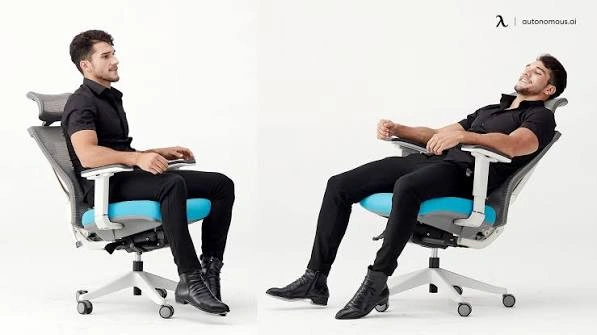
How to Unload an Engaged Office Chair Tilt Lock Mechanism
- Lean Forward: Shift your full body weight forward, leaning towards your desk. This action takes the pressure off the backrest and the internal locking pin. You may hear a slight click as the pressure is released.
- Operate the Lever Gently: While still leaning forward, operate the tilt lock release lever. The lever should now move with much less resistance. If it moves and the backrest unlocks, the problem is solved.
- Adjust Tension if Needed: If the chair feels stiff even after unlocking, locate the large round knob under the seat. The knob is the tilt tension control. Turning it anti-clockwise will reduce the tension required to tilt, making the mechanism operate more smoothly.
- Rock Back to Confirm: Gently lean back to confirm that the tilt function is now active. If the backrest locks again immediately, repeat the process, ensuring you lean far enough forward.
What if the Tilt Lock Lever Moves but the Chair Stays Locked?
A tilt lock lever that moves freely without unlocking the backrest points to a serious internal failure. The free movement signifies a disconnection between the external lever and the internal locking mechanism.
This symptom confirms that the 'lean forward' technique will not work. Ergonomic chair users in Kenya should recognise this as a sign of component failure, requiring a different troubleshooting approach.
A freely moving lever indicates a failed component. Common failures include a snapped internal cable, a broken plastic actuator, or a sheared locking pin that no longer engages with the lever’s cam.
Forcing the lever further at this stage will not work and risks breaking the handle. A visual inspection under the seat is the correct next step to identify the specific point of failure.
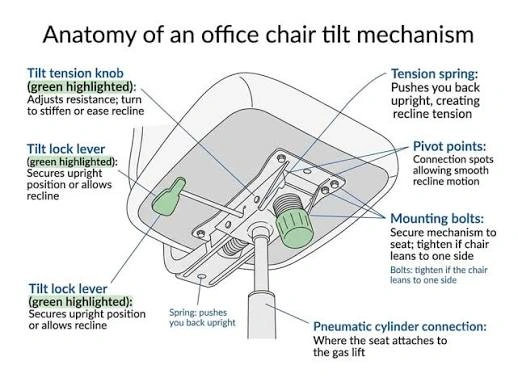
How to Identify and Replace Damaged Office Chair Tilt Lock Parts
To diagnose a damaged tilt lock, turn the chair upside down to get a clear view of the mechanism. The inspection should focus on common weak points that show obvious signs of failure, particularly on older chairs.
Check the Actuator Cable
Inspect the thin metal cable that connects the lever to the locking pin. A frayed, kinked, or snapped cable cannot pull the pin and must be replaced.
Examine the Locking Pin and Tilt Plate
Locate the metal locking pin or bar that slides into a notch on the tilt plate. Check if the pin is bent, sheared, or has come out of its guide. The tilt plate, a flat metal piece with locking positions, should be inspected for cracks or bends.
Assess the Repair Feasibility
Minor damage, such as a slipped cable, can sometimes be re-secured. A broken pin or a cracked tilt plate almost always requires a complete component replacement.
What Tools Are Needed for Office Chair Tilt Mechanism Repair?
- Screwdrivers: Phillips (cross-head) and flat-head screwdrivers are used for removing plastic covers or accessing the mechanism housing.
- Allen Wrenches (Hex Keys): Many office chairs use hex bolts. A metric set of Allen wrenches is standard for most models in the Kenyan market.
- Pliers: Needle-nose pliers help re-seat slipped cables or manipulate small components like cotter pins.
- Lubricant Spray: A silicone-based or white lithium grease spray can free a stiff mechanism but will not fix a broken part.
- Safety Equipment: Wear gloves to protect your hands from grease and sharp metal edges. Eye protection is also recommended.
Challenges of Sourcing Office Chair Tilt Lock Parts in Kenya
Procurement teams in Kenya should consider the difficulty of finding correct spare parts before attempting a chair repair. Many affordable or locally assembled chairs use non-standardised tilt mechanisms.
A part from one chair model is unlikely to fit another due to this lack of standardisation. The difference in parts makes sourcing direct replacements a significant challenge.
Generic chair models often lack accessible spare parts catalogues, unlike major international brands with established supply chains. The cost and time to import a specific mechanism from overseas can exceed the chair's value.
A local 'jua kali' artisan may fabricate a simple replacement pin. However, finding a compatible part for a complex cable-actuated system remains a major obstacle in the Kenyan market, frequently making replacement the more practical decision.
When to Seek Professional Repair for an Office Chair Tilt Lock
Professional help is required when tilt lock damage is extensive. A cracked main tilt plate or a failed internal spring makes a DIY repair unsafe or impractical.
Attempting complex repairs without correct knowledge can cause more damage or create an unsafe chair.
Furniture repair services in Nairobi that specialise in office equipment can help diagnose the problem. These services may have access to a wider range of generic parts or the tools needed for the repair.
A professional quote enables a clear cost-benefit analysis. A repair cost that exceeds 50% of the price of a new, comparable chair suggests that replacement is the better financial decision.
[Get a professional chair repair quote] [Browse new ergonomic chairs]How to Maintain an Office Chair Tilt Lock Mechanism
- Regular Cleaning: Every few months, turn the chair over and use compressed air or a stiff brush to clean dust and debris from the mechanism.
- Proper Lubrication: Apply a small amount of silicone lubricant spray to the moving pivot points and springs annually to ensure smooth operation.
- Correct Usage: Instruct users to lean forward before operating the tilt lock to reduce strain. Avoid dropping into the chair suddenly.
- Periodic Inspection: Briefly check that all bolts and screws on the underside are tight. Loose fittings can cause misalignment and put stress on the tilt mechanism.
Office Chair Tilt Lock Repair vs Replace Analysis
| Symptom | Likely Cause | Recommended Action |
|---|---|---|
| Stuck, but unlocks after leaning forward | User-induced pressure on the lock | Unload mechanism by leaning forward |
| Lever moves freely, backrest stays locked | Broken internal part (cable or pin) | Inspect; replacement is likely needed |
| Loud grinding or cracking noise | Cracked tilt plate or failed spring | Seek professional repair or replace chair |
| Repeated failures after a repair | General end-of-life wear | Replace the entire chair |
When to Invest in a New Ergonomic Office Chair in Kenya
Repairing an old office chair becomes a poor investment when the cost is high or the chair fails repeatedly. These situations indicate that it is time to replace the chair.
Replacing a faulty chair provides an opportunity to upgrade to a model with better ergonomic features. Improved ergonomics can increase user comfort and productivity.
Modern ergonomic chairs include features like adjustable lumbar support, seat depth control, and multi-dimensional armrests. These features help reduce physical strain during the workday.
Procurement managers in Kenya should balance the initial purchase price with the long-term value of employee health and reduced equipment downtime.
Selecting a new chair from a supplier with clear warranty terms and local support helps address the spare parts challenge. A local presence ensures better service throughout the product's life cycle.
Shop Office Chairs in Kenya
Browse our collection of office chairs at competitive prices. Same-day delivery within Nairobi and nearby areas, and delivery across Kenya.