How to Set Your Office Chair Height for Long Work Hours
The correct office chair height is determined by the relationship between the user's seat, foot support, and desk height. This principle helps achieve ergonomic comfort during long working hours in Kenyan offices and home setups.
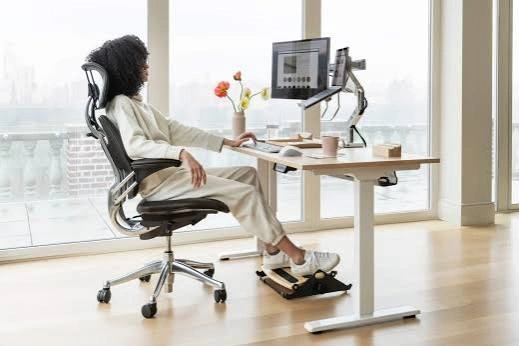
Your feet must be fully supported, either flat on the floor or on a quality footrest. Foot support is necessary when fixed-height desks or an individual's stature prevent achieving the ideal working height and keeping feet flat on the floor.
How Does Desk Height Affect Office Chair Height?
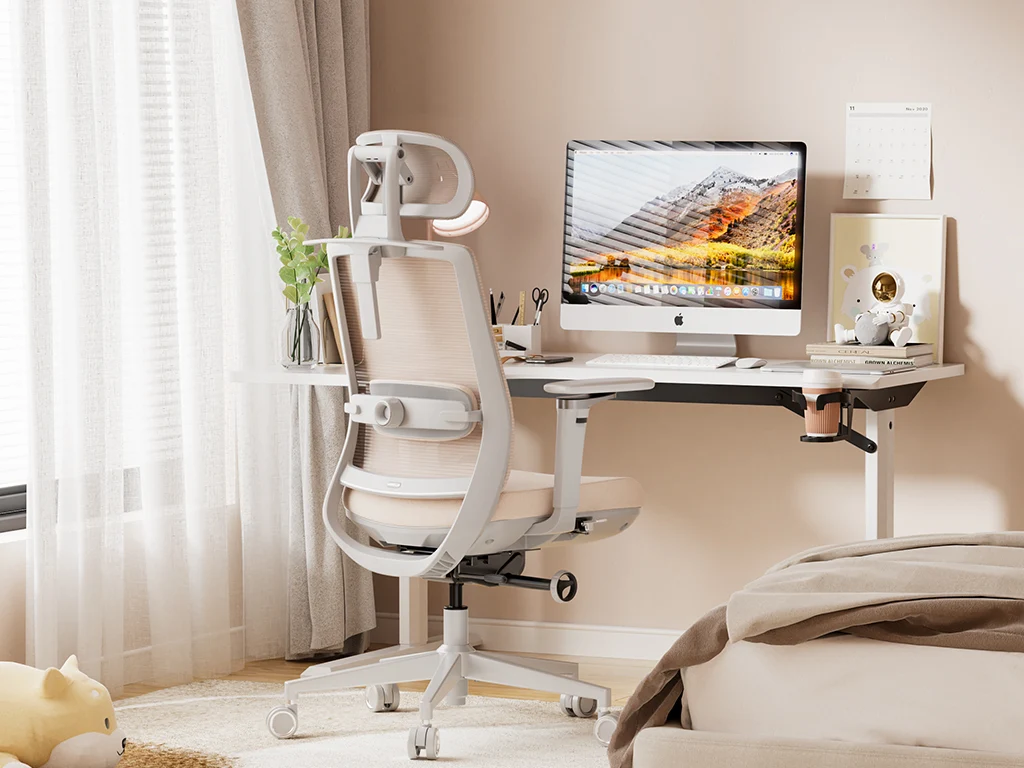
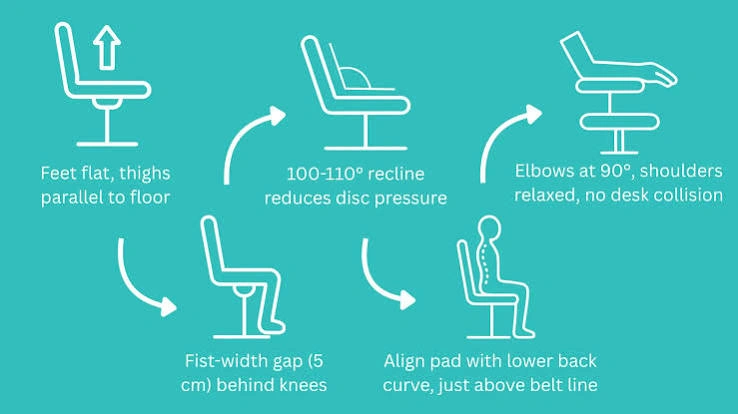
Desk height is the primary anchor point for your workstation setup. A user must adjust their chair height in relation to the desk, not in isolation. The correct ergonomic position requires elbows bent at a 90-degree angle with forearms parallel to the floor when typing.
This upper body alignment ensures shoulders remain relaxed and not hunched. In many Kenyan offices, fixed-height desks are common, making the chair's height adjustment the main compensatory tool available for proper posture.
First, raise or lower your chair until your arms are in the correct position relative to the desk. After establishing this working height, you can then address the positioning of your lower body and feet.
When Should You Use a Footrest and How Do You Select One in Kenya?
A footrest is a necessary ergonomic tool when your feet cannot rest flat on the floor after adjusting your chair to the correct desk height. This scenario often affects shorter individuals or anyone using a high, fixed-height desk.
Dangling feet or resting them on the chair's casters puts strain on the lower back and restricts leg circulation. A footrest prevents this strain by providing stable support.
Key Footrest Features for the Kenyan Market
- Adjustability: A footrest should offer both height and angle adjustments. This feature allows you to position the footrest to support your feet and maintain a neutral ankle position.
- Non-Slip Surface: A textured or rubberised surface prevents your feet from sliding off during the day.
- Sturdy Construction: The footrest must be wide enough for both feet and robust enough to handle daily pressure without moving.
- Durable Materials: Materials should be easy to clean and resist degradation from dust or heat. Footrest models with ventilation can also improve comfort in warmer environments.
What is the Correct Knee and Hip Position for an Office Chair?
The correct ergonomic position requires setting the seat height so your feet are flat, your knees are bent at a 90-degree angle, and your hips are slightly higher than your knees. This specific alignment creates a healthy posture for long work periods.
Positioning hips slightly above the knees creates an open angle of 90 to 110 degrees. The open angle helps maintain the natural curve of your lower spine and reduces pressure on spinal discs.
A chair set too low raises your knees above your hips, tilting the pelvis backward and forcing the spine into a 'C' shape. A chair set too high makes your feet dangle and requires a footrest for support.
Correct knee positioning also requires a gap of two to three fingers between the seat edge and the back of your knees. The gap prevents the seat pan from restricting circulation. A seat depth adjustment feature is a non-negotiable chair component for achieving this fit.
What Office Chair Features Control Height Adjustment?
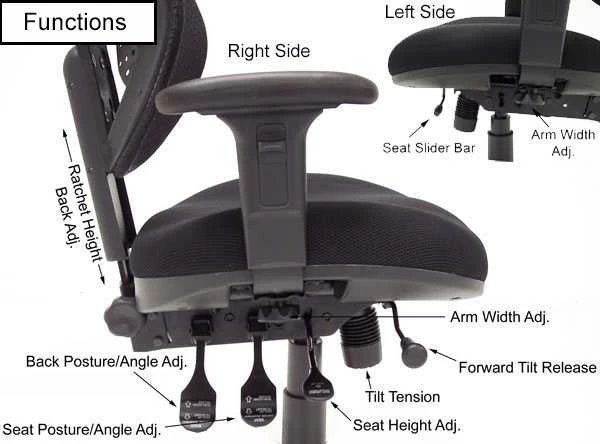
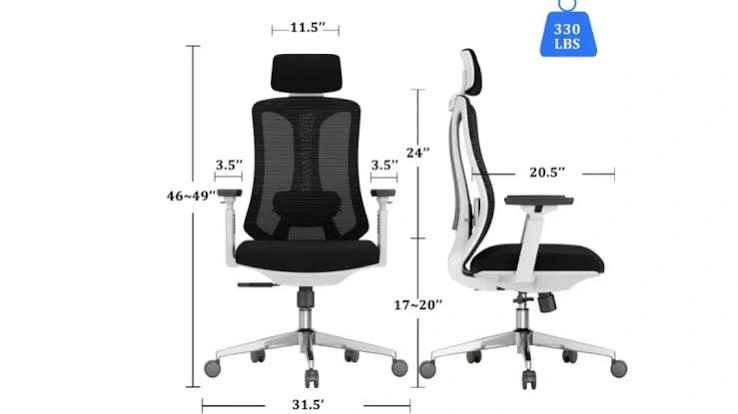
Three office chair features control precise height adjustment: a pneumatic gas lift, seat depth adjustment, and height-adjustable armrests. Procurement teams in Kenya should consider these three features as non-negotiable for employee well-being and productivity.
Pneumatic Gas Lift and Seat Depth
A reliable pneumatic gas lift allows a user to change seat height smoothly to match their desk. A wide height range on the gas lift accommodates diverse body types. Seat depth adjustment complements the gas lift by allowing the user to slide the seat pan, which creates clearance behind the knees and ensures back support.
Height-Adjustable Armrests
Height-adjustable armrests synchronise arm position with the desk surface. The armrests should be set to a level that lightly supports the elbows. This support keeps shoulders relaxed and prevents neck strain from hunching or reaching.
What are the Signs of Incorrect Office Chair Height?
The main indicators of an incorrect office chair height include physical discomfort, poor posture, and reduced performance. Recognising these signs in your team in Kenya allows for corrective action.
Physical Discomfort
Physical symptoms are the most common indicator of poor chair height. Symptoms include lower back pain, neck and shoulder stiffness, or numbness in the legs from poor circulation. Wrist and forearm discomfort can also signal an incorrect chair-to-desk height ratio.
Postural and Performance Issues
Visual cues of incorrect height include feet dangling above the floor or feet wrapped around the chair base. Other postural mistakes are hunched shoulders, slouching forward, or perching on the seat's edge. These issues often lead to fatigue and difficulty concentrating as the body uses more energy to maintain an unsupported posture.
Key Ergonomic Positions for Office Chair Setup
| Body Part | Correct Position | Ergonomic Purpose |
|---|---|---|
| Elbows & Arms | Bent at 90 degrees, parallel to floor | Reduces shoulder and neck strain |
| Hips & Knees | Hips slightly higher than knees | Maintains natural lower back curve |
| Feet | Flat on floor or footrest | Supports lower back and aids circulation |
| Knee Clearance | 2-3 finger gap from seat edge | Prevents restricted blood flow to legs |
What Health Problems Result from Incorrect Office Chair Height?
An incorrect office chair height in Kenya can lead to musculoskeletal disorders (MSDs), circulatory problems, and repetitive strain injuries (RSIs). These health issues result in chronic pain, lower productivity, and higher employee absenteeism.
Musculoskeletal and Circulatory Disorders
MSDs are a direct consequence of poor chair height. Sustained poor posture causes chronic lower back pain, sciatica, and neck strain. Circulatory issues arise when a seat is too high, which compresses blood vessels under the thighs and can cause numbness or swelling in the lower legs.
Repetitive Strain Injuries (RSIs)
An incorrect chair height forces an unnatural angle between the arms and the desk. This posture contributes to RSIs like carpal tunnel syndrome and tendonitis. For Kenyan businesses, these health consequences represent a significant cost, making ergonomic investments a sound business decision.
Are There Official Ergonomic Standards for Office Chairs in Kenya?
Kenya's Occupational Safety and Health Act (OSHA, 2007) mandates a safe working environment but does not specify exact measurements for office chairs or desk heights. The Act provides a general framework, leaving the details of office ergonomics to the employer's discretion.
Many Kenyan organisations adopt international standards as a benchmark for best practice. These companies reference guidelines from the International Organization for Standardization (ISO) or health and safety bodies in the UK and US. This approach demonstrates proactive ergonomic planning and responsible employer conduct.
How to Optimise the Entire Office Workstation
A complete ergonomic setup requires optimising the monitor, armrests, and input devices in addition to chair height. These elements must work together to support a neutral posture.
Monitor and Armrest Positioning
Position your monitor directly in front of you at an arm's length. The top of the screen should be at or just below eye level to keep your neck in a neutral posture. Laptop users in Kenya should use a separate monitor or a laptop stand with an external keyboard to achieve this height.
Adjust the chair's armrests to lightly support your elbows. This support allows your shoulders to remain relaxed.
Keyboard and Mouse Placement
Place your keyboard and mouse close enough to use them with straight wrists and elbows near your body. Over-reaching for input devices introduces strain to the shoulders, neck, and back. Proper placement of these devices is necessary to receive the full benefit of an ergonomic chair.

How to Make Smart Ergonomic Chair Procurement Decisions in Kenya
An informed ergonomic chair procurement decision in Kenya requires three actions: prioritising adjustable features, justifying the investment, and evaluating local suppliers.
Prioritise Non-Negotiable Chair Features
Your procurement checklist must include non-negotiable features. These are a durable gas lift with a wide height range, seat depth adjustment, adjustable lumbar support, and height-adjustable armrests. The chair's construction must also be durable enough for a busy office environment.
Justify the Investment
Frame the budget as an investment, not a cost. The higher initial price of an ergonomic chair is offset by reduced employee absenteeism and increased productivity. These long-term benefits provide a clear return on investment.
Evaluate Local Kenyan Suppliers
Vet Kenyan suppliers on their ability to offer product demonstrations, after-sales support, and a clear warranty. Confirm delivery and assembly services, especially for locations outside Nairobi. Ask about payment options like corporate accounts or M-Pesa to ensure smooth transactions for any business size.
[Contact us for corporate accounts or M-Pesa payment options]
Shop Office Chairs in Kenya
Browse our collection of office chairs at competitive prices. Same-day delivery within Nairobi and nearby areas, and delivery across Kenya.