Best Office Chairs Kenya: High vs Mid Back for Long Shifts
Superior ergonomic support in a high back office chair or mid back office chair comes from adjustable features, not the backrest height label. Key adjustments for long shifts include lumbar position, seat depth, and armrest height that align with a user's torso. True ergonomic value is determined by how a chair fits a specific person's body, a factor often overlooked in product marketing.

How Does Torso Height Affect Office Chair Choice?
A user's torso height directly affects the choice of office chair because the backrest must match the person's seated height to support the spine's natural curve. A backrest that is too short or too tall for the user's torso will fail to provide correct spinal support. This mismatch can compromise alignment and lead to discomfort.
A taller person with a long torso, for example, may find a mid-back chair offers no support for their upper back and shoulders. The chair's support structure would end too low on their back. This lack of upper support can cause slouching during long shifts.
A shorter person using a high-back chair with a fixed headrest may experience negative effects. The headrest can push their head forward into an unhealthy posture. The chair's built-in lumbar curve might also be too high, failing to support the lower back correctly.
Office furniture listings in Kenya often lack detailed dimension specifications, making remote assessment difficult. Procurement teams and individuals should physically test chairs or request exact measurements from suppliers. This step ensures the chair's backrest correctly matches the user's torso height.
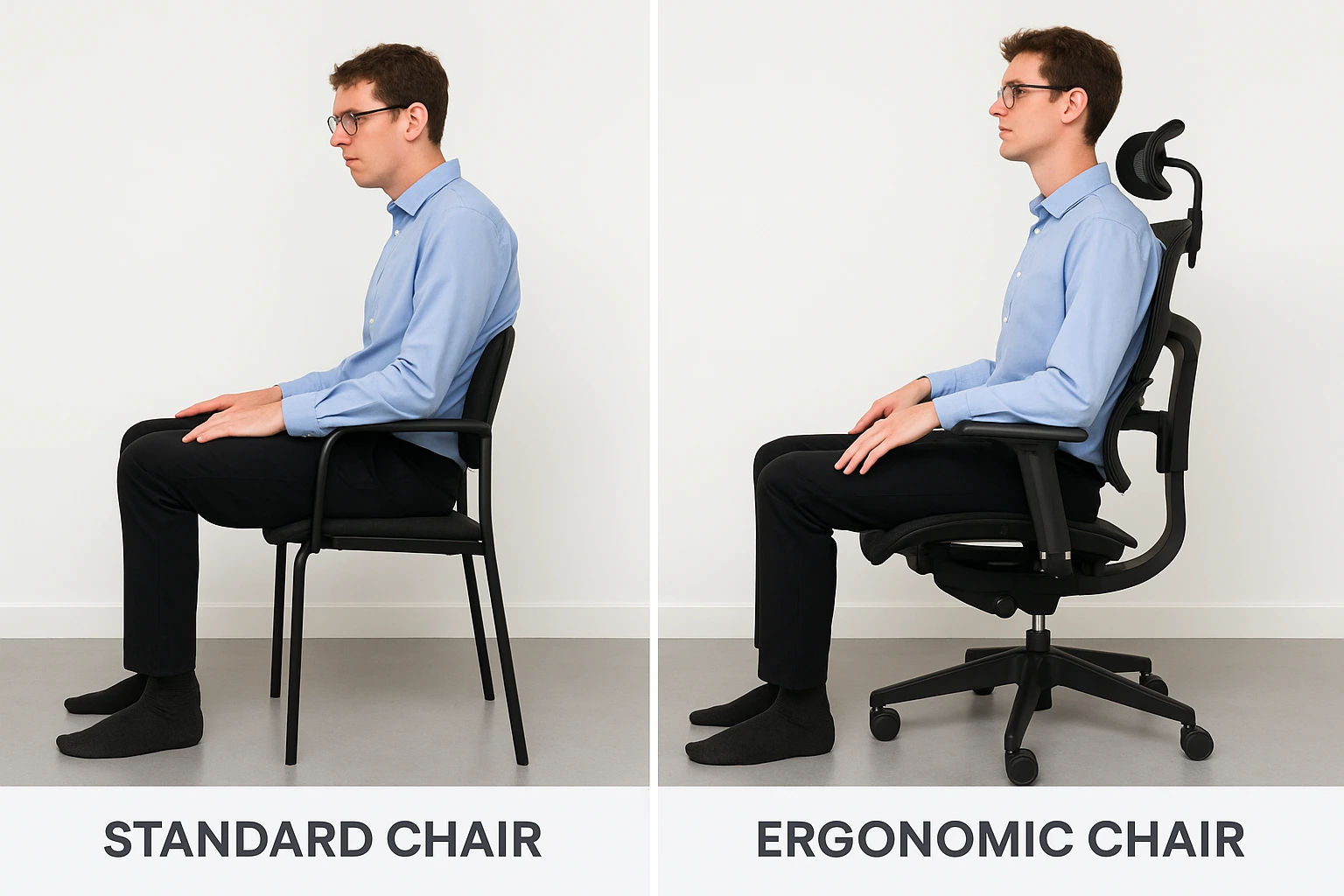
Key Ergonomic Adjustments for Office Chairs
A chair's ergonomic quality depends on specific adjustable features that provide sustained comfort. These mechanisms allow a single chair model to fit multiple users correctly. The following adjustments are the most important for long-term support.
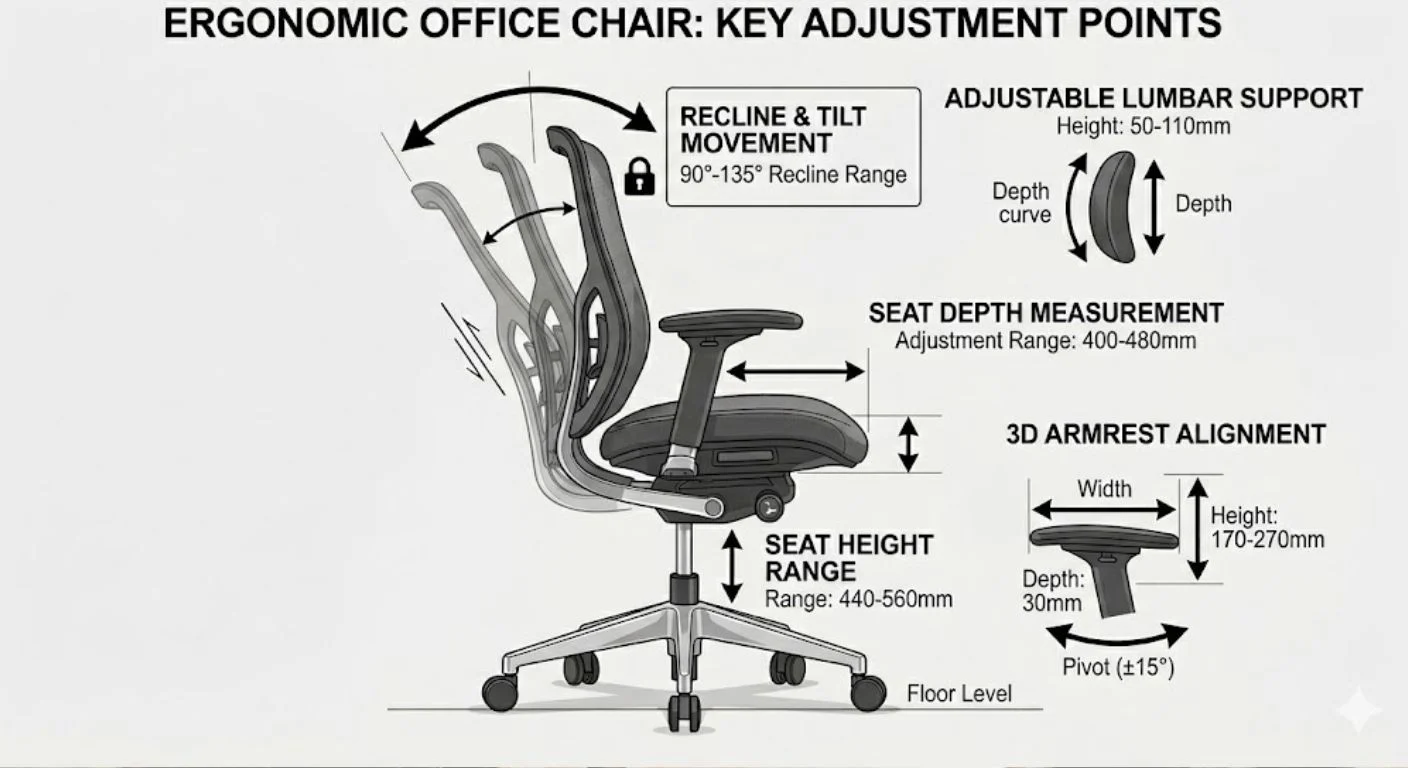
- Adjustable Lumbar Support: An adjustable lumbar support helps prevent lower back pain by maintaining the spine's natural S-curve. The height should be adjustable to fit the small of the user's back, and some models offer depth adjustment for customised pressure.
- Seat Depth Adjustment: This feature allows the user to leave a gap of two to three fingers between the seat edge and the back of their knees. Correct seat depth supports the thighs without impeding circulation to the lower legs.
- Adjustable Armrests: Height, width, and pivot adjustments on armrests allow the user's arms to rest comfortably and shoulders to remain relaxed. Proper armrest positioning reduces strain on the neck, shoulders, and upper back.
- Recline Mechanism and Tension Control: A recline function encourages dynamic movement, which is healthier than static sitting. Tension control adjusts the recline resistance to match the user's body weight for smooth, supported motion.
What Are the Benefits of a High Back Office Chair?
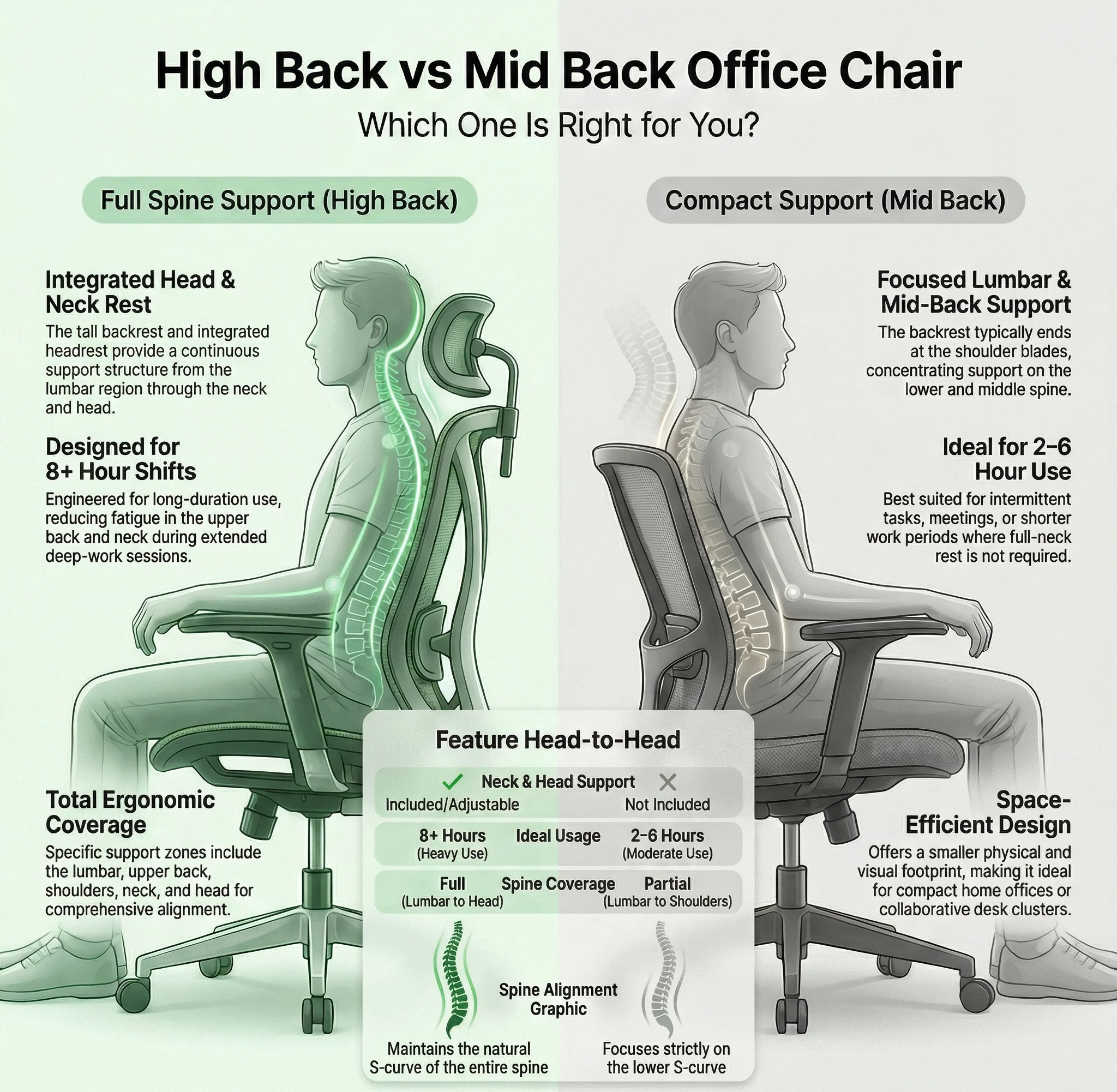
A high-back office chair provides support for the entire back, including the shoulders, neck, and head. This extended coverage is the primary benefit of a high-back design, offering more complete body support when a user reclines. These chairs are often marketed as 'executive chairs' in Kenya.
Taller users often find high-back chairs more comfortable, especially models with an adjustable headrest and a correctly positioned lumbar curve. The full-back support helps reduce strain during short breaks or tasks that require leaning back.
The benefits of a high-back chair depend entirely on the user's fit. A poorly designed or non-adjustable model can be detrimental for shorter users. A fixed headrest that is too high, for instance, offers no support and can become an obstruction.
Procurement managers in Kenya should evaluate the chair's adjustability, not just its "executive" label. The shoulder contours and headrest must align with the intended user's body to prevent pressure points and ensure comfort. The chair's value comes from its fit, not its perceived status.
What Are the Advantages of a Mid Back Office Chair?
A mid-back office chair supports the user up to the shoulder blades, and its main advantage is promoting upper-body movement. The design is well-suited for active roles that involve frequent turning and reaching. A mid-back chair feels less confining and supports a dynamic posture by not restricting the shoulders.
A mid-back chair's ergonomic value depends on its lumbar support mechanism. A mid-back model with highly adjustable lumbar support is superior to a high-back chair with fixed, poor support. For users of average height, a mid-back chair often provides a more precise fit for the lumbar region.
Kenyan businesses seeking versatile seating for a general office floor can find better ergonomic and cost-effective value in quality mid-back chairs. This context applies to purchasing functional chairs for a diverse team.
How to Choose Between High Back and Mid Back Office Chairs
The choice between a high-back and a mid-back office chair depends on user needs and the chair's adjustable features, not its category label. A chair must fit the person using it. A high-back chair only benefits a tall person if its dimensions align with their torso, while a mid-back chair with excellent lumbar support is often better for task-focused work.
| Feature | High-Back Office Chair | Mid-Back Office Chair |
|---|---|---|
| Primary Support Area | Full back, shoulders, neck, head | Lower and middle back, up to shoulders |
| Best Suited User | Taller individuals; roles involving reclining | Average height users; active, task-based roles |
| Key Benefit | Full-body support when reclining | Greater upper body freedom of movement |
| Potential Drawback | Poor fit for shorter users (fixed headrest) | Lacks upper back and neck support |
Before buying an office chair, buyers should use an evaluation checklist. Confirm the chair has adjustable lumbar, seat depth, and armrest features. Check if the material suits the local climate and if the supplier provides a warranty and reliable delivery. A pilot programme using a few chair models can provide valuable feedback before a large purchase.
How to Assess Office Chairs for Long Shifts in Kenya
A practical assessment is required to evaluate an office chair's suitability for long shifts. Buyers should not rely solely on online photos and must physically test the chair if possible. Sit in the chair for 15-20 minutes to test all adjustment controls and ensure the levers are easy to reach while seated.
Procurement teams making large purchases should arrange a trial period with a supplier for sample chairs. This process allows employees to give direct feedback on comfort and fit before the company commits to a large order. This strategy minimises the risk of a poor investment.
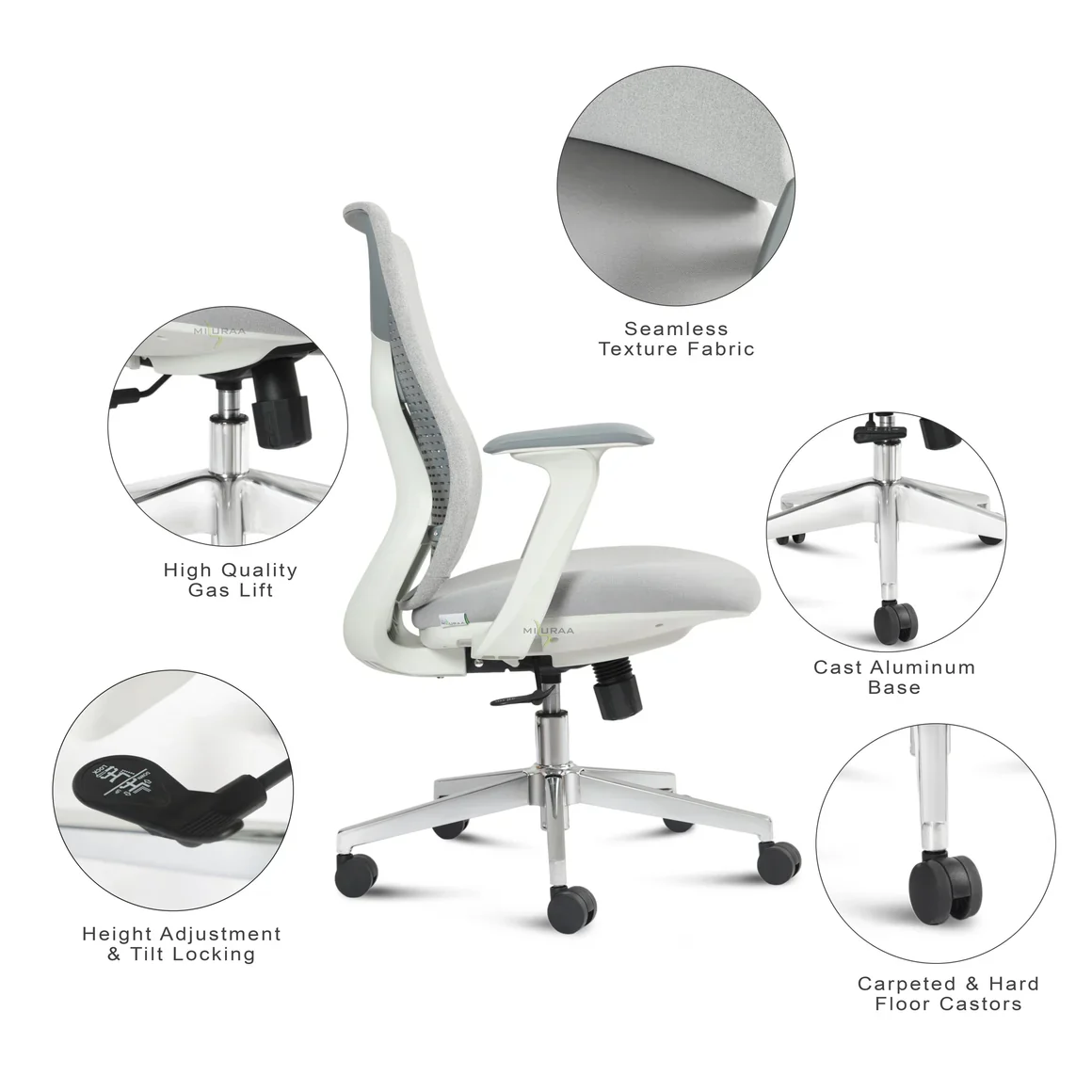
Chair materials should suit Kenya's varied climate. A breathable mesh back offers better air circulation and comfort than solid leather, especially in offices without air conditioning. Buyers should also inspect the durability of the casters, base, and gas lift to confirm the chair is built for daily use.
Why Are Detailed Specifications for Office Chairs Important in Kenya?
Detailed product specifications are important because many Kenyan supplier websites lack the measurements needed for an informed decision. Listings frequently use generic terms like "ergonomic" but omit key dimensions. Missing data includes seat depth range, backrest height, and the lumbar adjustment range.
This lack of data makes it nearly impossible to compare chairs or assess their fit for different users remotely. Buyers must proactively contact suppliers to request a detailed specification sheet. An in-person demonstration remains the most reliable method for guaranteeing a good fit for office staff.
How to Start Sourcing the Right Office Chairs in Kenya
To begin sourcing ergonomic chairs, first assess the needs and body types of your team. Create a list of required features, such as adjustable lumbar support and armrests. Use this requirements list to engage with office furniture suppliers in Kenya and ask for models that meet your criteria.
Arrange for product demonstrations or visit showrooms in Nairobi to test chairs in person. Do not make purchasing decisions based on images alone. Focusing on detailed specifications and individual fit will help you find seating that provides long-lasting support. This approach applies to all ergonomic furniture procurement in Kenya. [Find your perfect ergonomic chair today]
Need Office Chairs?
Browse our collection of office chairs at competitive prices. Fast delivery anywhere in Kenya.