Office Chair Total Cost of Ownership in Kenya Over 5 Years
The total cost of an office chair in Kenya exceeds its initial purchase price over a five-year lifespan. Repeatedly buying KES 6,000 chairs results in a total replacement cost of KES 30,000, making a single KES 25,000 ergonomic chair a more cost-effective investment.
A chair's total cost of ownership (TCO) includes the purchase price, repairs, and disposal fees. An ergonomic chair with an extended warranty and local spare parts reduces long-term costs. This model helps Kenyan businesses avoid the replacement cycle of budget imports that are difficult to repair.
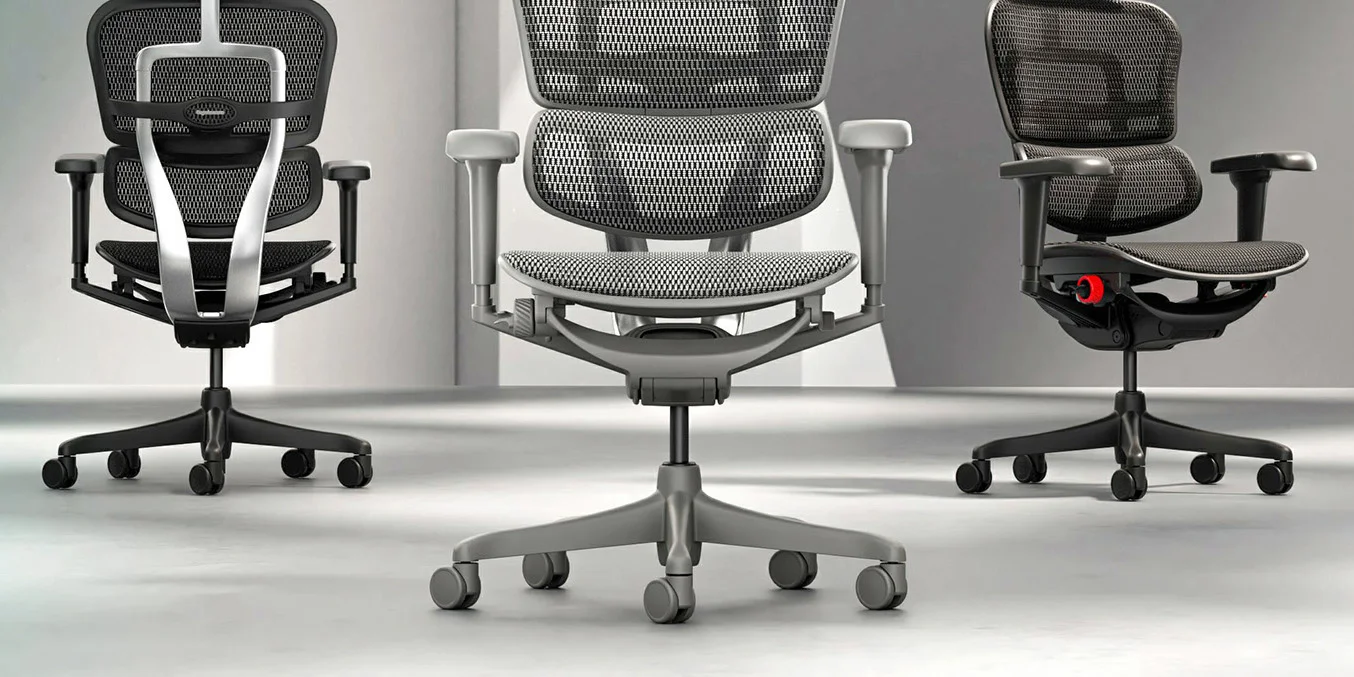
What Are the Initial Purchase Prices for Office Chairs in Kenya?
| Chair Category | Typical Price Range (KES) | Common Features & Expected Build |
|---|---|---|
| Basic / Entry-Level | KES 6,000 – KES 12,000 | Fixed armrests, basic tilt, thin foam padding, low-grade fabric or PU leather, plastic base. Lifespan is often 12-18 months. |
| Mid-Range Ergonomic | KES 20,000 – KES 35,000 | Adjustable lumbar support, height-adjustable armrests, synchro-tilt mechanism, high-density foam, durable mesh or fabric, nylon or polished aluminium base. Built to last 3-5+ years. |
| High-End Ergonomic | KES 40,000+ | Advanced adjustments (seat depth, 4D armrests), premium materials, sophisticated mechanisms, extended warranties (5-10 years), and superior build quality for intensive daily use. |
A low initial price often guides purchasing decisions toward basic chairs. This upfront saving frequently leads to higher long-term expenditure because the poor build quality necessitates frequent replacement.
How Do Repair Costs Affect an Office Chair's 5-Year TCO?
The Total Cost of Ownership (TCO) reveals the full financial impact of an office chair beyond its purchase price. A low initial cost often masks future expenses for businesses that manage multiple workstations.
A five-year cost model for a single chair demonstrates the difference. An entry-level KES 6,000 chair with a one-year lifespan requires four replacements. This cycle results in a minimum purchase expenditure of KES 30,000, excluding repairs or administrative time.
A mid-range KES 25,000 ergonomic chair is designed to last the full five years. The ergonomic chair's TCO is its initial purchase price plus minor repair costs.
Common failure points in cheap chairs include failing gas lifts (KES 1,500-2,500 to replace), broken castors (KES 1,000 per set), and cracked armrests. For a quality chair, these repairs are infrequent, but for a cheap chair, component failure often means the entire chair requires replacement.
What Ergonomic Features Deliver Long-Term Value?
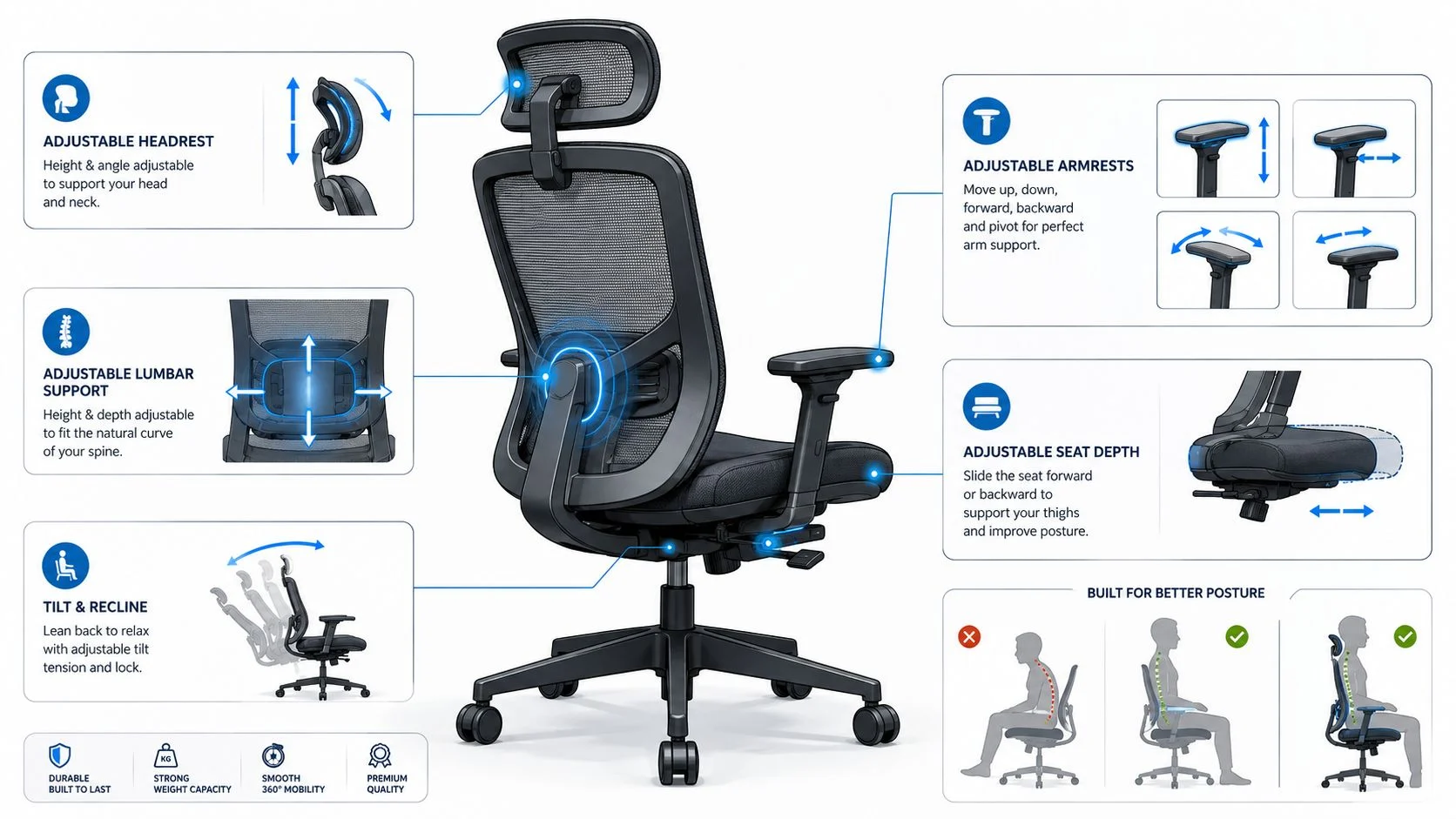
Ergonomic features determine a chair's long-term value, user health, and durability. A chair with proper adjustments supports different body types, which reduces physical strain and component failure.
- Adjustable Lumbar Support: This feature fits the natural curve of the lower back to prevent slouching and reduce lower back pain, a primary cause of workplace discomfort.
- Seat Height and Depth Adjustment: This adjustment allows users to sit with feet flat on the floor, improving posture and reducing wear on the seat edge.
- Multi-Directional Armrests: Armrests that adjust for height, width, and angle support the arms and shoulders. Well-built adjustable armrests are more durable than fixed plastic alternatives.
- Synchro-Tilt Mechanism: This mechanism allows the backrest and seat to tilt in a synchronised ratio, promoting movement. A quality mechanism maintains tension for years, unlike basic tilt functions which often fail.
- Durable, Breathable Materials: High-quality mesh or commercial-grade fabric allows air circulation and withstands daily friction. These materials extend the chair's aesthetic and functional life.
How Office Chair Quality Affects Productivity in Kenya
Inadequate office seating creates significant indirect costs for a Kenyan business. A non-durable, uncomfortable chair impedes productivity. An employee's concentration diminishes when they constantly shift to find a comfortable position or manage discomfort.
Persistent physical discomfort contributes to presenteeism, where employees perform at a reduced capacity. Chronic musculoskeletal issues from poor seating increase sick days and absenteeism, which impacts project timelines. Investing in durable, ergonomic chairs supports employee well-being and reduces these productivity losses.
What Do Office Chair Warranties Cover in Kenya?
A manufacturer's warranty indicates a chair's quality and the supplier's confidence in its durability. Standard warranties for quality office chairs in Kenya range from one to five years. Most warranties cover structural components like the gas lift, mechanism, frame, and base against manufacturing defects.
Warranty exclusions typically include normal upholstery wear, damage from misuse, or unauthorised alterations. The value for procurement teams is in the after-sales support from the local Kenyan supplier. A reliable vendor provides clear terms and an efficient repair process to minimise downtime.
Why Are Local Spare Parts Important for Office Chairs?
The procurement 'throw-away' cycle for budget imports is an overlooked cost factor in Kenya. Finding a compatible spare part for a broken gas lift or castor on a low-cost chair is often difficult. The difficulty in finding parts means the entire chair requires disposal and replacement.
Purchasing a chair from a local supplier who stocks spare parts changes the economic equation. A broken castor becomes an affordable repair instead of a full replacement. Local parts accessibility extends the chair's lifespan and lowers its TCO. An extended warranty with local servicing secures the investment by covering these potential costs.
How to Budget for Office Chair Procurement in Kenya
A value-based approach to office chair budgeting delivers better long-term financial outcomes. Procurement teams should use Total Cost of Ownership (TCO) as the primary metric, not the initial unit price. A true comparison requires calculating the expected five-year cost, including potential replacements.
Larger offices can use a phased rollout strategy for chair replacement. The rollout should begin with employees in high-use roles or those with specific ergonomic needs.
Procurement teams should inquire about volume discounts for ergonomic chairs to make the upfront investment more manageable. Reputable B2B suppliers in Kenya often accept Local Purchase Orders (LPOs) for large purchases, while M-Pesa can be used for smaller repairs.
What Are the Disposal and Environmental Costs of Office Chairs?
The total cost of an office chair includes its disposal. Discarding furniture in Kenya involves transport expenses and potential waste management fees. This financial burden accumulates for businesses replacing budget chairs every 12-18 months.
The environmental impact of the 'throw-away' chair cycle contributes to landfill waste. Investing in a durable, repairable chair minimises a business's environmental footprint.
Responsible disposal options are available for chairs at their end of life. Local e-waste or metal recyclers may accept components. Functional chairs can be donated to schools or charities to extend their usable life within the community.
Checklist for Your Next Office Chair Investment in Kenya
A value-driven decision requires looking beyond the initial price tag. This checklist helps evaluate an office chair purchase for long-term service and team support.
- Calculate the 5-Year TCO: Factor in the initial price, the likely number of replacements for a cheaper model, and potential repair costs.
- Prioritise Ergonomic Adjustments: Ensure the chair has adjustable lumbar support, seat height/depth, and armrests to fit various users and promote good posture.
- Verify the Warranty: Confirm the duration of the warranty and understand exactly which components are covered, such as the mechanism, gas lift, and base.
- Confirm Spare Parts Availability: Ask the supplier directly if they stock common spare parts locally, as this is a key factor for long-term repairability.
- Check Supplier Reputation: Look for reviews from other Kenyan businesses that confirm the durability of the chairs and the quality of after-sales service.
How to Find Reputable Office Chair Suppliers in Kenya
Identifying a trustworthy supplier is a key part of the procurement process. A reputable provider in Kenya has an established presence, like a physical showroom in Nairobi or a professional online store. The supplier should offer clear warranty information for each product.
A good supplier demonstrates a commitment to after-sales support with a clear process for service and repairs. Ask the supplier directly about their local stock of spare parts.
Testing chairs in person helps assess build quality and comfort. Seeking referrals from other businesses is a reliable method for finding vendors with quality products and dependable service in Kenya.
[Contact us for quality office chairs]Shop Office Chairs in Kenya
Browse our collection of office chairs at competitive prices. Same-day delivery within Nairobi and nearby areas, and delivery across Kenya.