Inspect Ergonomic Office Chair Quality Kenya Before Buying 2026
Buying an ergonomic office chair in Kenya requires a hands-on quality inspection of its adjustable components and structural integrity before payment. An effective evaluation involves physically testing the seat-depth adjustment, lumbar support, recline mechanism, adjustable armrests, the five-star base, gas lift, casters, and upholstery. Labels like “ergonomic,” “orthopaedic,” or “premium” do not guarantee adjustment range or build quality; a physical check is necessary to confirm the chair’s value and suitability for long-term use in 2026.

Difference Between True Ergonomics and Marketing Hype
The term "ergonomic" is an unregulated marketing label in the Kenyan market, not a technical specification. This lack of regulation means a supplier can label a basic chair with minimal adjustability as "ergonomic" without meeting any specific performance criteria. A physical inspection is therefore necessary for any office manager or home-office buyer to verify a chair's capabilities.
True ergonomic features are specific, measurable, and adjustable. These features include a seat pan that slides forwards and backwards, lumbar support that moves up and down, or armrests that adjust in multiple directions. The adjustability allows the chair to be fitted to an individual's body, which promotes better posture and reduces physical strain.
Relying on a label alone creates the risk of paying a premium for a product that offers no real ergonomic benefit. This mistake can lead to user discomfort and a poor return on investment for the business or individual.
How to Test Seat Depth and Lumbar Support in Ergonomic Chairs
How to Test Seat Depth Adjustment
To test seat depth, use the 'two-to-three finger rule' after sitting with your back fully against the backrest. The correct gap between the back of your knees and the front edge of the seat should measure two or three fingers wide. This spacing prevents the seat edge from restricting blood flow to your lower legs.
Locate the lever to slide the seat forwards or backwards to achieve this gap. Check that the mechanism operates smoothly and not in jerky increments. This check confirms the chair's suitability for a specific user's leg length.
How to Assess Lumbar Support
To assess lumbar support, test the full range of motion for the backrest's integrated curve. A quality chair allows you to adjust the height to position this curve perfectly in the small of your back. Proper positioning supports the natural inward curve of the spine.
Higher-end models may also offer depth adjustment, which increases or decreases the pressure of the support. Test all available lumbar adjustments to ensure the support feels firm and pronounced, not flimsy. This assessment verifies the chair can provide adequate lower back support.

What Recline Mechanisms Are Best and How to Check Them
Identifying the Best Recline Mechanism
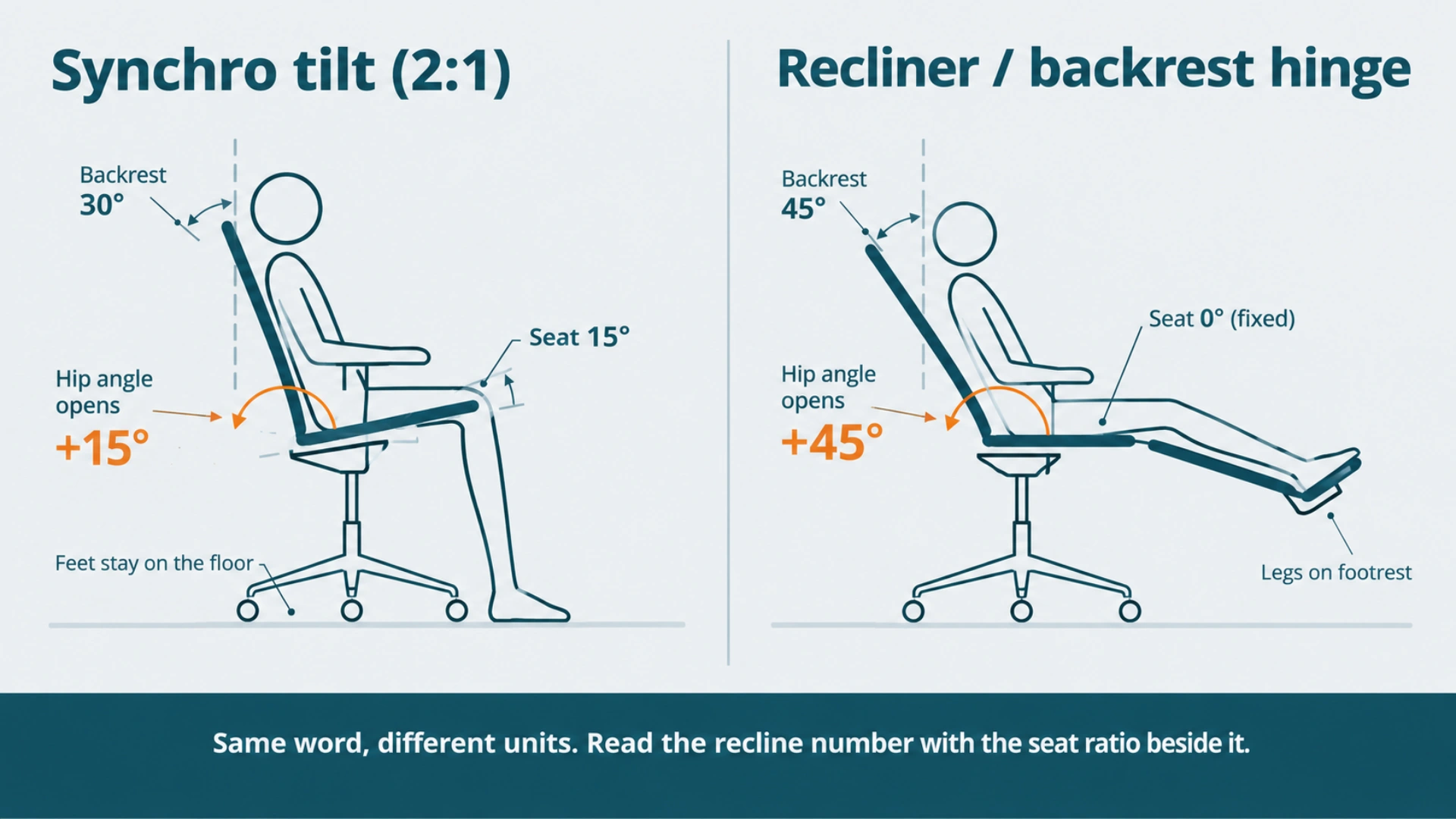
The synchro-tilt is the best recline mechanism for active ergonomic support. This mechanism reclines the backrest at a greater ratio than the seat pan, typically 2:1. This design keeps a user's feet on the floor and their posture supported even when leaning back.
How to Test Recline Motion and Locks
To check a recline mechanism, first unlock it and lean back and forwards. The motion should feel smooth and stable without any clunking noises or sudden drops. A good chair offers multiple tilt-lock positions, not just fully upright or fully reclined, allowing users to secure a comfortable angle.
How to Check the Tension Control
The tension control is usually a large knob under the seat. Turning the knob should effectively make the recline stiffer or looser to match your body weight. If adjusting the tension has little or no effect, the mechanism is low-quality and will not provide proper support.
How To Test Armrests and Five-Star Bases for Durability
Evaluating Adjustable Armrests
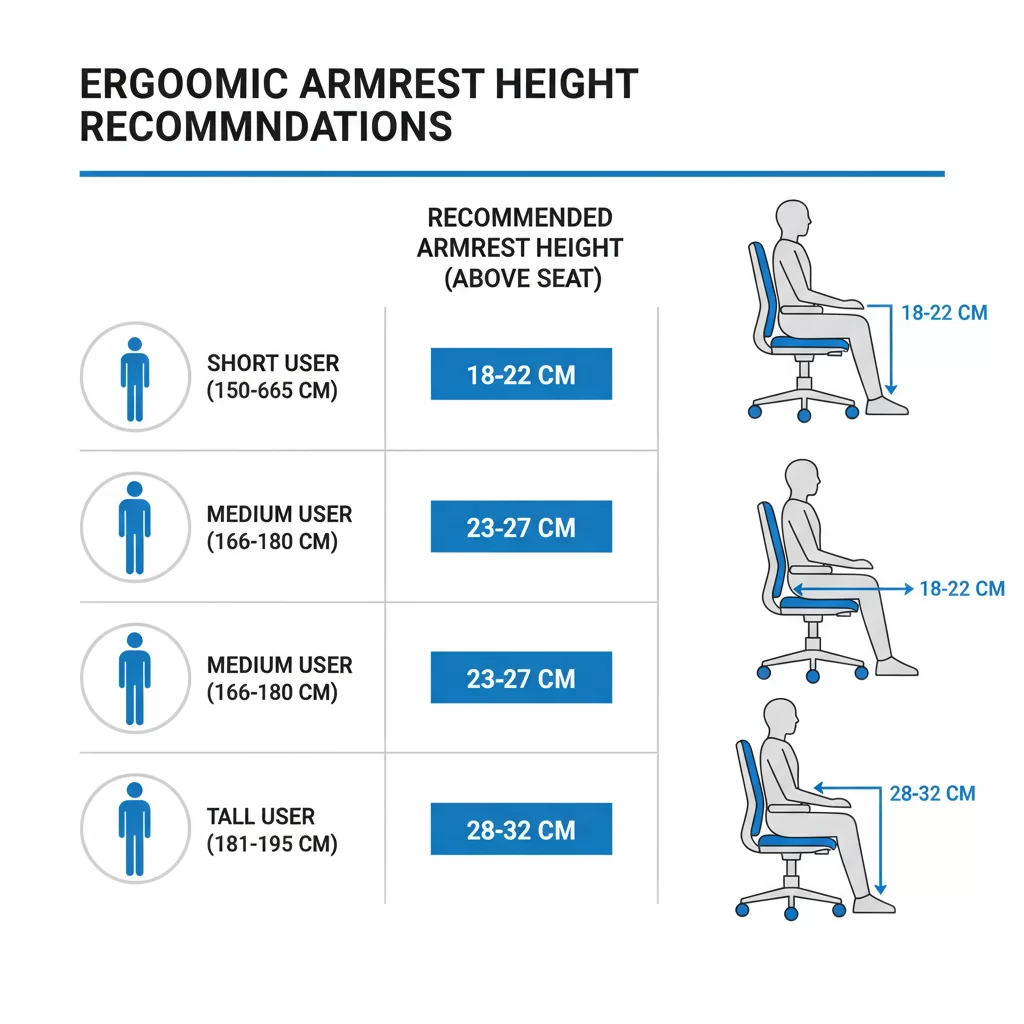
To evaluate armrests, test their lock-in stability across their full range of motion. Armrest adjustability is described in dimensions: 2D (up/down, in/out), 3D (adds forward/back), or 4D (adds pivot). Test each adjustment, ensuring the controls are easy to use and lock firmly into place without wobbling.
Inspecting the Five-Star Base
To inspect the five-star base, identify its material and check for rigidity. Polished aluminium is significantly stronger and more durable for heavy office use in Kenya than a standard nylon (plastic) base. Grab the base and try to shake it, checking for any creaks, flex, or signs of stress where the casters and gas lift connect. A rigid, solid base indicates superior construction and longevity.
What Should You Look for in Gas Lifts and Casters?
How to Test the Gas Lift
To inspect the gas lift, sit in the chair and test its height adjustment. The chair should move up and down through its vertical range without stuttering. When you get off the chair and operate the lever, the chair should rise to its full height smoothly.
Sit down again and bounce gently. A quality gas lift will not sink under your weight. Counterfeit or low-grade gas lifts can fail prematurely and pose a safety risk, making this test important.
How to Check the Casters
To check the casters, first examine the material. Hard nylon casters are designed for carpet, while softer polyurethane or rubber casters are for hard floors like tile or wood. Using the wrong type of caster can damage floors or make movement difficult.
Buying from a reputable supplier who can verify their components' quality is the best way to avoid low-grade parts common in the Kenyan market.
How Can You Evaluate Upholstery and Frame Quality?
Assessing Upholstery Material
To evaluate upholstery, assess the material’s suitability for the Kenyan climate and check the stitching quality. Breathable mesh is often ideal as it allows for air circulation. For fabric, check that it is a durable, commercial-grade weave, and for leatherette, test for pliability to avoid future cracking.
Examine the stitching on any material to ensure it is tight, straight, and consistent. Poor stitching is an early indicator of low-quality manufacturing.
Checking Padding and Frame Rigidity
Press firmly on the seat cushion to test the foam density. High-density foam will feel supportive and bounce back quickly, whereas low-density foam flattens and provides poor support over time. Finally, try to flex the chair's backrest and arms. A well-built frame will feel solid and rigid with minimal creaking, which indicates robust internal construction.
What Is BIFMA Certification for Office Chairs?
BIFMA (Business and Institutional Furniture Manufacturers Association) is an international standard that tests for safety, durability, and structural performance. A chair that is BIFMA certified has passed rigorous, standardised tests that simulate years of heavy use.
This certification provides objective, verifiable proof of quality. The label "ergonomic" is a subjective marketing term with no required testing or validation. BIFMA compliance offers a reliable measure of a chair's mechanical safety and durability.
When speaking with suppliers in Kenya, specifically ask if their chairs are BIFMA compliant or certified. A reputable seller should be able to provide documentation or point to the BIFMA rating of their products. Choosing a BIFMA-certified chair significantly reduces the risk of purchasing an unsafe or non-durable product.
How Do You Ensure Long-Term Value with a Warranty and Spare Parts?
Understanding the Warranty Coverage
To ensure long-term value, ask the supplier for specific warranty terms. A comprehensive warranty should clearly state the coverage duration for the mechanism, gas lift, casters, and frame, as these parts endure the most wear. The warranty terms define the supplier's commitment to the product's lifespan.
Confirming Local Spare Parts Availability
A warranty is only useful if the supplier maintains a local stock of replacement parts in Kenya. Importing a single gas lift or a set of casters can be prohibitively slow and expensive. Local availability of parts is necessary for timely and affordable repairs.
Ask the supplier directly: "Do you stock replacement gas lifts, casters, and armrests for this model here in Kenya?" A clear "yes" means you can maintain the chair cost-effectively, which extends its service life and protects your investment.
Ergonomic Office Chair Inspection Checklist
| Component | Key Inspection Test | Reason for Check |
|---|---|---|
| Seat Depth | Check for 2-3 finger gap behind knees | Prevents circulation issues in legs |
| Lumbar Support | Test full range of height/depth adjustment | Ensures support for the lower spine |
| Recline Mechanism | Test for smooth motion and multiple lock positions | Confirms stability and user comfort |
| Gas Lift | Check for smooth height adjustment and no sinking | Verifies component safety and quality |
| Base & Casters | Inspect base for rigidity and casters for smooth rolling | Indicates structural integrity and durability |
What Are the Final Steps Before Buying an Ergonomic Chair?
Before you finalise the purchase, run through a final product checklist and assess the vendor's service policies. Verifying these details before payment protects your investment and ensures a better ownership experience.
- Final Inspection Checklist: Re-check the seat depth, lumbar support, recline, armrests, base stability, gas lift, and casters. Sit in the display model for at least five minutes to notice any comfort issues that are not immediately apparent.
- Vendor Reputation: Research the supplier to see if they have positive reviews from other businesses in Kenya. A vendor with an established reputation is more likely to honour warranties and provide reliable after-sales service.
- Delivery and Assembly: Clarify the delivery terms, especially for locations outside Nairobi. Ask if the price includes assembly, as incorrect assembly can cause instability and premature wear.
- Return Policy: Understand the supplier's return policy. If a chair is delivered with a fault, you need to know the process for a replacement or refund to prevent future complications.
By performing this thorough due diligence on both the product and the supplier, you can confidently invest in high-quality office seating that will provide comfort, support, and durability.
[Contact us for expert advice on office chairs]Need Office Chairs?
Browse our collection of office chairs at competitive prices. Fast delivery anywhere in Kenya.