Key Features of Orthopedic and Ergonomic Chairs
An orthopedic office chair is a marketing term, not a regulated standard in Kenya. A high-quality chair is defined by its specific, verifiable adjustments and technical specifications. The key features to assess include independent lumbar support, seat-depth adjustment, recline mechanism, and armrest positioning. These elements require support from a specified gas-lift class, solid base construction, and a full warranty.

What is the Difference Between an Orthopedic and an Ergonomic Office Chair?
The terms "orthopedic" and "ergonomic office chair" are marketing descriptions for office chairs sold in Kenya, not regulated technical standards. A manufacturer can use these labels without meeting specific design or health criteria. The labels suggest a chair supports good posture, but they do not guarantee its quality or fit for any specific user.
Purchasing decisions for office chairs should focus on specific, functional features rather than marketing labels. A quality desk chair’s value is measured by its adjustability, which determines how well the chair configures to an individual’s body. This focus on specific functions ensures genuine support throughout the workday.
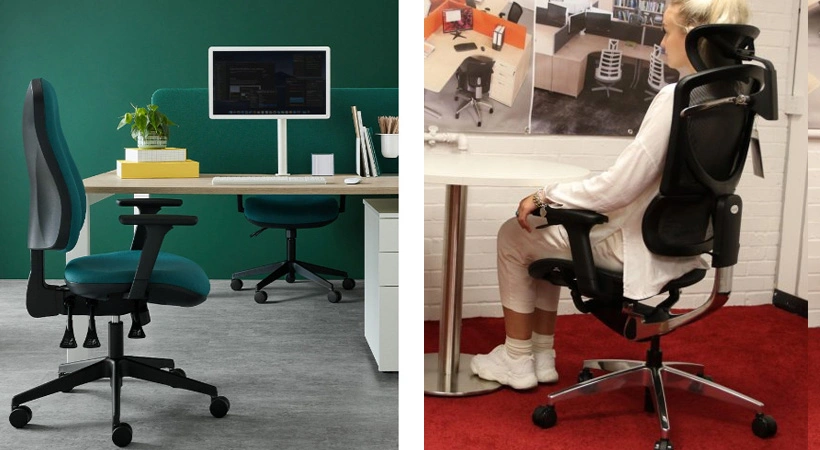
Which Adjustable Features Define a Quality Office Chair in Kenya?
Ergonomic comfort results from a chair's ability to adapt to a person's unique body shape and sitting habits. A core set of adjustable features provides the most effective support for office teams or individual home-office users. These adjustments work in combination to promote healthy posture, reduce physical strain, and prevent back pain associated with prolonged sitting.
Independently Adjustable Lumbar Support
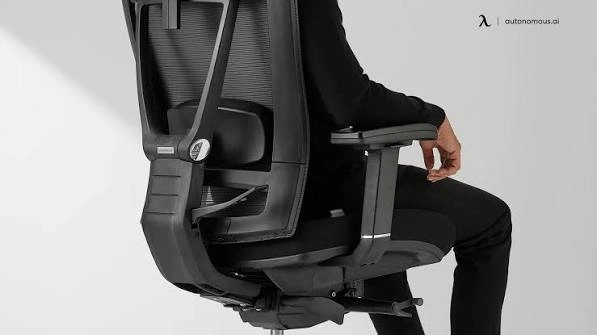
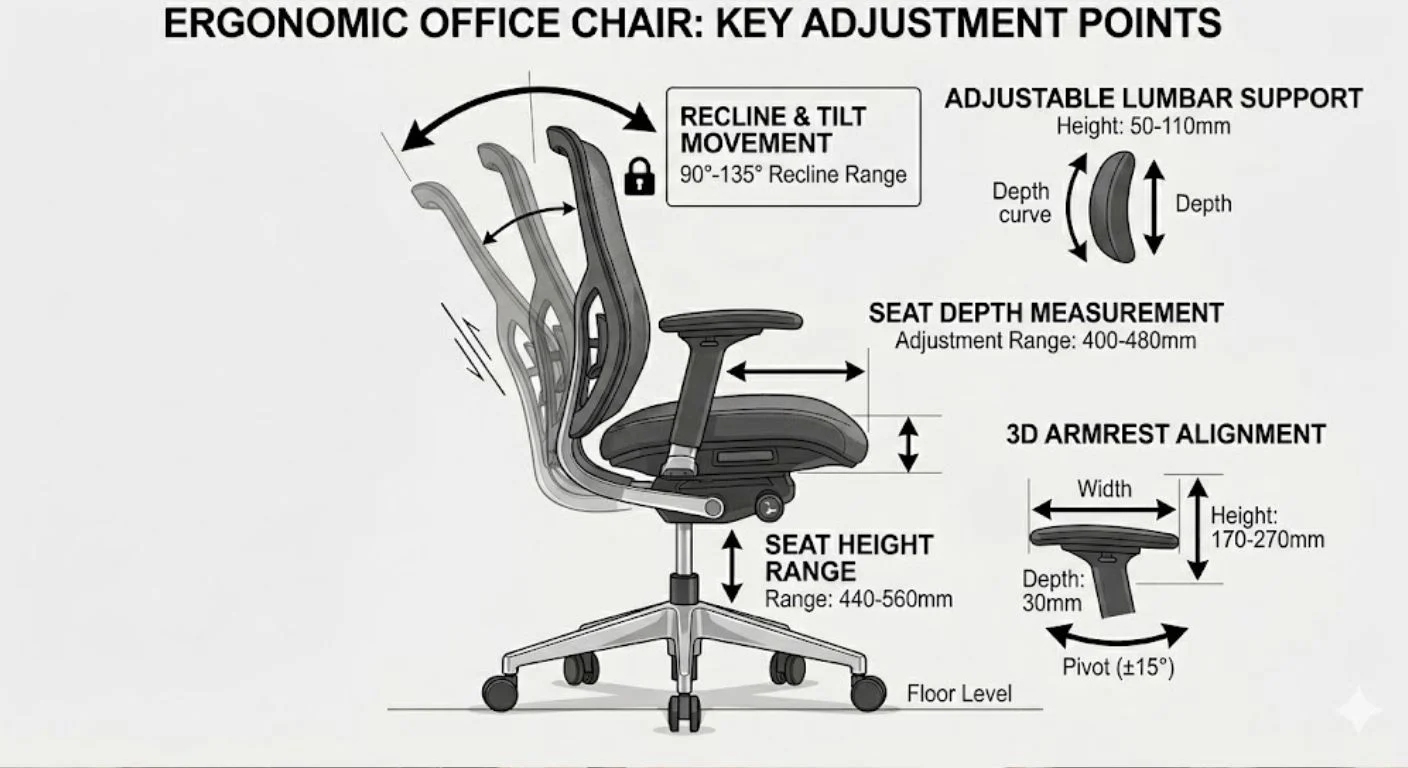
Effective lumbar support maintains the natural inward curve of the lower spine. The best systems offer independent adjustment for both height and depth. This allows a user to match the support to their spine's curve and control the pressure amount. This customisable support is superior to a fixed lumbar hump, which may not align correctly with every user's back.
Seat Depth Adjustment
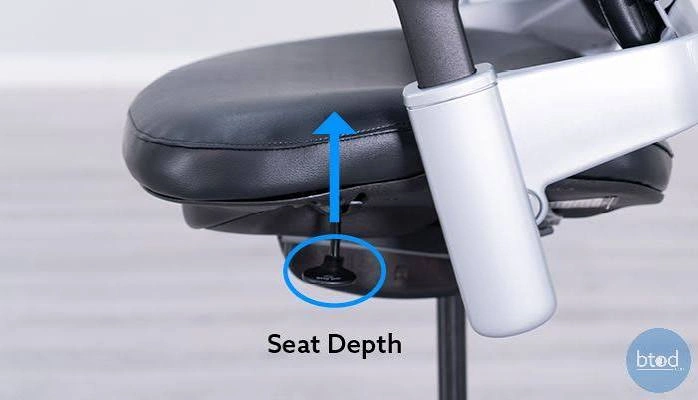
Seat depth adjustment, also known as a seat slide, alters the length of the seat pan. Correct seat depth ensures the user's back is fully supported by the backrest. A gap of two to three fingers' width should remain between the seat's front edge and the back of the knees. This design prevents pressure on nerves and blood vessels, promoting good circulation over long periods.
Dynamic Recline Mechanisms
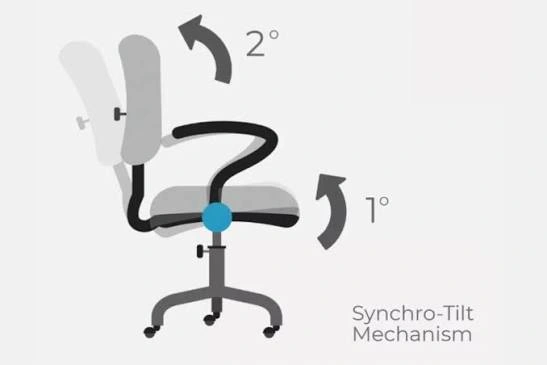
A high-quality office chair should move with the user's body. A dynamic recline mechanism allows the backrest to tilt, which relieves pressure on spinal discs and encourages small movements. The synchro-tilt mechanism is a leading example, reclining the backrest and seat at a coordinated ratio (e.g., 2:1). This movement keeps the user’s feet on the floor and maintains their line of sight, providing active support that is better than a fixed-back chair.
Multi-Dimensional Armrest Positioning
Adjustable armrests help reduce strain on the neck, shoulders, and upper back. Armrests should be set at a height that keeps the user's shoulders relaxed and their elbows at a 90-degree angle. Multi-dimensional options offer more precise control.
- 2D: Adjusts for height and width.
- 3D: Adds forward and backward adjustment.
- 4D: Adds pivoting (inward and outward) adjustment.
Correctly positioned armrests support the arms during computer work, helping to prevent shrugging and slouching.
How Does Independent Lumbar Adjustment Compare to Fixed Lumbar Support?
A fixed lumbar support is a non-movable curve built into a chair's backrest. Its effectiveness depends entirely on chance. The fixed support only works if an individual's spinal curve happens to align with the chair's shape. This one-size-fits-all approach is often unsuitable for diverse office environments.
An independently adjustable lumbar system gives the user control over the support's height and depth. This customisation is necessary because every person's spine has a different curve. An employee can position the support in the small of their back and apply the correct pressure. This tailored fit discourages slouching, reduces muscle fatigue, and directly lowers the risk of chronic back pain.
What Are the Key Differences in Office Chair Recline Mechanisms?
The recline mechanism determines how a chair leans back, affecting comfort and support during various tasks. Understanding the main types helps buyers select a chair appropriate for specific work demands.
Centre Tilt
A Centre Tilt mechanism pivots from a point under the centre of the seat. When the user reclines, their feet may lift from the floor, which can disrupt circulation. This mechanism is common in entry-level task chairs.
Knee Tilt
A Knee Tilt mechanism moves the pivot point forward towards the user's knees. This design allows the user to recline while keeping their feet flat on the ground. The result is better stability and comfort for tasks like reading or taking calls.
Synchro-Tilt
The Synchro-Tilt mechanism is the standard for high-performance task chairs. The backrest and seat tilt at a set ratio, such as 2:1. As the user leans back, the seat pan tilts up slightly, opening the hip angle while maintaining ergonomic alignment with the desk. This dynamic movement supports posture and can help maintain focus.
How to Verify Quality and Durability in Kenyan Office Chairs
A chair's underlying component quality determines its safety, lifespan, and long-term value. Buyers in Kenya should inspect technical specifications beyond surface aesthetics. This verification process ensures a chair can withstand daily commercial use without premature failure. A reputable supplier should provide documentation for these quality indicators.
BIFMA Certification for Commercial Use
BIFMA (Business and Institutional Furniture Manufacturers Association) sets safety and performance standards. A BIFMA-certified chair has passed tests for stability, strength, and durability. Certification is a strong indicator that the chair is built for commercial-grade use. Buyers should ask suppliers if their chairs are BIFMA compliant and request documentation.
Base Construction and Gas Lift Specifications
The chair's base and gas lift cylinder form its foundation. Cast aluminium or heavy-duty steel bases offer superior strength compared to nylon or plastic bases, which can crack. The gas lift is rated by class. A Class 3 or Class 4 gas lift is the standard for a quality chair, indicating it supports higher weight capacities and has been tested for more cycles of use.
Warranty Terms and Conditions
A warranty reflects a manufacturer's confidence in its product. A low-quality chair may have a warranty of one year or less. A reliable office chair should offer a warranty of at least three to five years. Buyers should check what the warranty covers, including the frame, gas lift, and all moving parts. A clear warranty from a Kenyan supplier protects the investment.
What Are Typical Price Ranges for Adjustable Office Chairs in Kenya?
Office chair prices in Kenya directly relate to the level of adjustability, material quality, and certifications. Understanding the market tiers helps with budgeting and value assessment.
Entry-level adjustable chairs typically range from KES 15,000 to KES 30,000. These models usually offer basic adjustments and come with 1 to 2-year warranties. Their components may include Class 2 gas lifts and nylon bases.
Mid-range, fully adjustable chairs generally cost between KES 35,000 and KES 70,000. Chairs in this bracket should feature seat depth adjustment, 3D armrests, synchro-tilt recline, and a Class 3 or 4 gas lift. A warranty of three to five years is standard for this tier.
Premium ergonomic chairs with BIFMA certification can cost KES 80,000 or more. These chairs often come with warranties of 7 to 12 years. Their durability and advanced support provide a significant long-term return on investment for users with back conditions.
Office Chair Feature Comparison by Price Tier in Kenya
| Tier | Price Range (KES) | Expected Features & Warranty |
|---|---|---|
| Entry-Level | 15,000 - 30,000 | Basic height/recline, fixed armrests, Class 2 gas lift, 1-2 year warranty. |
| Mid-Range | 35,000 - 70,000 | Synchro-tilt, seat depth adjustment, 3D armrests, Class 3/4 gas lift, 3-5 year warranty. |
| Premium | 80,000+ | Advanced mechanisms, BIFMA certified, superior materials, 4D armrests, 7-12 year warranty. |
Where to Purchase Quality Adjustable Chairs in Kenya
Finding quality adjustable chairs requires sourcing from specialised office furniture suppliers who provide detailed product specifications. Buyers in Nairobi, Mombasa, and other major towns should visit a showroom to test a chair's adjustments and assess its build quality. Staff should be able to demonstrate features and provide technical data.
Reputable online office furniture stores are another good source, particularly for buyers outside major cities. A reliable online supplier will provide clear product pages with detailed specifications, warranty information, and BIFMA compliance status. Buyers should confirm the supplier offers nationwide delivery and has a service centre in Kenya to handle warranty claims.
How to Evaluate an Ergonomic Office Chair in Kenya
A systematic checklist helps evaluate each potential office chair. This approach ensures the focus remains on tangible quality and long-term value, not marketing labels or initial price.
- Test Adjustments: Confirm independent lumbar support (height/depth), seat depth adjustment, and multi-dimensional armrests. Verify the recline mechanism is a synchro-tilt with tension control.
- Verify Core Components: Ask for the gas lift class (aim for Class 3 or 4). Inspect the base material (cast aluminium or steel is best). Check that the casters roll smoothly.
- Confirm Quality Standards: Ask the supplier for BIFMA certification or equivalent durability test documentation. A reputable supplier can provide this information.
- Review the Warranty: Check the warranty period (minimum 3-5 years) and what it covers. Confirm who services the warranty in Kenya.
- Assess the Fit: Sit in the chair for at least 15 minutes. A proper fit allows you to sit with your feet flat on the floor and your arms resting naturally at a 90-degree angle.
Why Adjustable Chairs Are a Long-Term Health Investment
A well-chosen office chair is an investment in health, well-being, and productivity. Genuinely ergonomic seating can reduce employee absenteeism related to back pain and improve focus. A home-office buyer can create a sustainable and comfortable workspace with the right chair.
Buyers can make an informed decision by focusing on specific, adjustable features and verifiable quality indicators. An office chair built with durable components and designed for individual adjustment provides reliable support for years. This functional approach delivers a return on investment that outweighs the initial purchase cost.
Shop Office Chairs in Kenya
Browse our collection of office chairs at competitive prices. Same-day delivery within Nairobi and nearby areas, and delivery across Kenya.