Office Seats Kenya | Evaluate Components & Budget
Spotting the best office seats in Kenya within your budget requires evaluating specific structural components and features. Distinct expectations exist for chairs around KES 10,000, KES 15,000–25,000, and above KES 30,000. Comparing prices alone is a common mistake because true value lies in matching a chair's build quality, ergonomic adjustments, and materials to daily needs. This 2026 guide provides Kenyan office managers, procurement teams, and home-office buyers with expert advice focused on structural merit and functionality for the local market.
What Features Can You Expect in an Office Seat Under KES 10,000 in Kenya?
Office seats in the entry-level price bracket meet basic functional needs on a strict budget. The primary focus is providing a place to sit, which involves compromises on long-term durability, ergonomic support, and material quality. Chairs in this range are best suited for occasional use, such as in a guest office, a low-traffic workstation, or for a few hours of home work. Expecting all-day comfort or a decade of service from these models is unrealistic.
Basic Structural Components
Desk chairs under KES 10,000 are built with economy in mind. The base is almost always made of standard nylon, a material that functions adequately but can become brittle or crack under continuous heavy use. The gas lift, controlling height adjustment, is typically a lower-class model like Class 1 or 2 with a limited weight capacity. The tilt mechanism is the most basic kind, offering a simple rocking function with no ability to lock the backrest in a reclined position. This lack of robust construction means the chair's stability can degrade over time.
Limited Adjustments and Upholstery
Adjustability at this price point is minimal. You will almost always find seat height adjustment, but features like adjustable armrests, seat depth control, or lumbar support are absent. Any lumbar "support" present is usually just a fixed curve in the plastic back frame. The upholstery is typically a thin fabric or a basic mesh over low-density foam. This foam compresses quickly, losing its supportive qualities and leading to discomfort during prolonged sitting.
What Ergonomics and Materials Can You Expect for KES 15,000–25,000 in Kenya?
The mid-range price band of KES 15,000–25,000 represents a significant step-up in quality and is often the most practical investment for full-time office use in Kenya. Chairs in this category offer tangible ergonomic benefits and more durable materials. Buyers can expect a better balance between cost, comfort, and longevity, making these models suitable for a standard eight-hour workday. The focus shifts from merely providing a seat to supporting productive work.
Improved Mechanisms and Bases
The core components see a notable upgrade in this price range. Gas lifts are often more reliable Class 2 or Class 3 models, providing smoother operation and supporting a higher weight capacity. The chair base may still be nylon but is frequently a reinforced design for greater strength; some models feature entry-level steel or chrome bases. The tilt mechanism is more advanced, commonly featuring a tilt-lock function that allows you to lock the backrest in an upright or slightly reclined position for better posture support.
Enhanced Adjustability and Mesh Quality
This is the price point where meaningful ergonomic adjustments appear. Many models include fixed lumbar support or a simple height-adjustable pad to provide lower back support. Armrests often gain height adjustability, allowing users to align them with their desk height to reduce shoulder strain. The quality of mesh used for the backrest is also better. This mesh is more breathable and has a higher tensile strength, providing firm yet flexible support without sagging quickly.
Mid-Range Upholstery and Foam
The seat itself becomes much more comfortable due to better materials. The foam used is of a higher density, meaning it resists compression and provides consistent support throughout the day. Upholstery options improve, with more durable fabrics that resist wear and higher-grade PU (polyurethane) leather that is less prone to immediate peeling. The overall fit and finish, including the quality of stitching and seams, is visibly better, contributing to the chair's aesthetic lifespan.
How Do High-End Office Chairs Above KES 30,000 Differ in Build and Upholstery?
Office chairs priced above KES 30,000 are engineered for intensive use, superior comfort, and exceptional longevity. This category is defined by precision engineering, comprehensive ergonomic customisation, and premium materials. These chairs are an investment in user health and productivity, designed to withstand the demands of multi-shift environments or provide support for senior management. They often adhere to international quality standards, ensuring a higher level of safety and durability.
Advanced Mechanisms and Reinforced Components
The engineering at this level is sophisticated. You will find heavy-duty mechanisms like synchro-tilt, where the seat and backrest recline at a set ratio to promote healthy posture. Some feature multi-function mechanisms that allow independent adjustment of seat and back angles. Gas lifts are typically top-of-the-line Class 4 models. Bases are almost exclusively made of polished aluminium or heavy-duty steel for maximum stability and strength. Every component, from the wheel casters to the frame, is built for endurance.
Comprehensive Ergonomic Adjustments
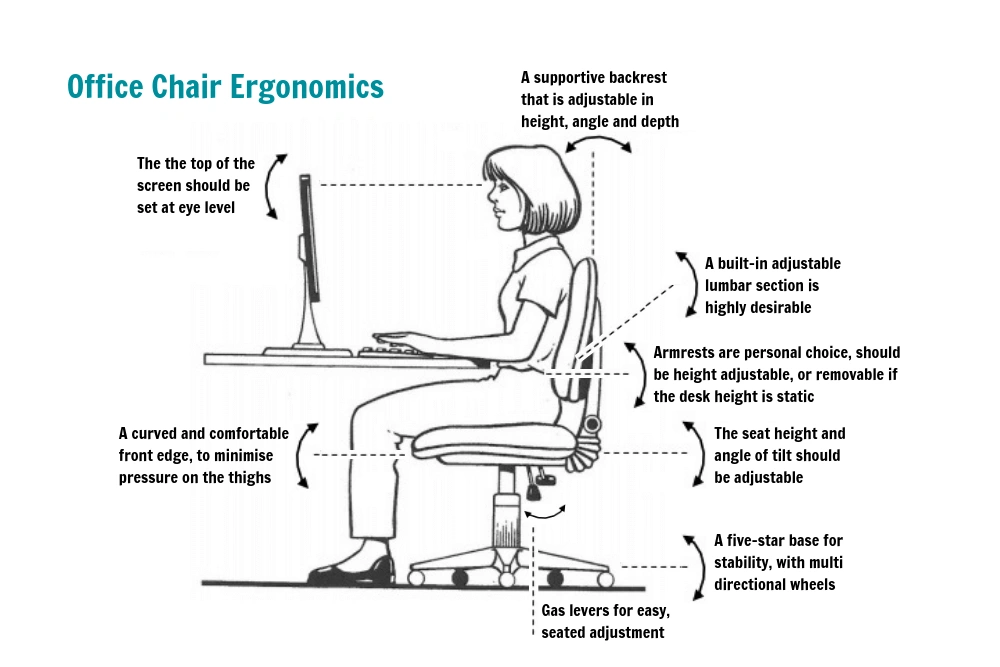
Premium chairs offer a full suite of adjustments to create a personalised fit. Premium chair adjustments include dynamic lumbar support that adjusts in both height and depth, a seat depth slide to accommodate different leg lengths, and 3D or 4D armrests that adjust for height, width, depth, and pivot. The recline tension control is also more refined, allowing for precise resistance matching the user's body weight. This level of customisation helps prevent long-term strain and accommodates a wider range of body types.
Premium Upholstery and Build Standards
Material quality is exceptional in high-end chairs. Upholstery options often include genuine leather, high-tensile premium mesh, or commercial-grade fabrics designed for high-traffic use. The seat is frequently made from high-density, contour-moulded foam that retains its shape and supportive properties for years. Many of these chairs are BIFMA (Business and Institutional Furniture Manufacturer's Association) certified, a standard that tests for safety, durability, and structural integrity, guaranteeing a high-quality product.
Comparing Office Seat Value Across Price Tiers in Kenya
| Feature / Component | Under KES 10,000 | KES 15,000 – 25,000 | Above KES 30,000 |
|---|---|---|---|
| Base Material | Standard Nylon | Reinforced Nylon / Steel | Polished Aluminium / Steel |
| Gas Lift Class | Class 1 / 2 | Class 2 / 3 | Class 4 |
| Mechanism Type | Basic Tilt (No Lock) | Tilt-Lock / Basic Synchro | Synchro-Tilt / Multi-Function |
| Lumbar Support | None / Fixed Curve | Fixed / Height-Adjustable | Dynamic (Height & Depth Adj.) |
| Armrest Adjustments | Fixed | Height-Adjustable (1D) | 3D / 4D Adjustable |
| Upholstery Quality | Basic Fabric / Thin Mesh | Durable Fabric / Good PU | Premium Mesh / Genuine Leather |
| Expected Durability | 1-2 Years (Light Use) | 3-5 Years (Standard Use) | 5-10+ Years (Heavy Use) |
| Ideal Use Case | Occasional / Guest Use | Full-Time Office / Home-Office | Intensive / Executive Use |
What Key Structural Components Define an Office Chair's Quality?
A few core components determine an office chair's stability and lifespan, regardless of its price. Before purchasing, physically inspect these areas. First, examine the base. A five-point base is standard, but check if it feels solid or flexible. For nylon bases, look for thick, reinforced moulding; for metal bases, check the quality of the welds.
Second, test the gas lift by sitting down and adjusting the height several times. A good gas lift moves smoothly without creaking or sinking. Next, test the mechanism. Try the tilt and lock functions to ensure they engage securely. Excessive wobble or grinding noises signal a poorly manufactured mechanism.
Check the wheel casters to ensure they roll smoothly. Hard casters are for carpet, while softer, rubberised casters are better for hard floors to prevent scratching. Finally, assess the overall frame construction. Sit in the chair and shift your weight; a well-built chair will feel stable, not wobbly or loose. This assessment of physical components provides a reliable indicator of the chair's construction quality.
Why 'Affordable Ergonomics' Can Be a False Economy in Kenya
Many chairs in the Kenyan market are advertised as 'ergonomic' at very low prices, but this labelling can be misleading. True ergonomics comes from quality, adjustable components, which have a baseline manufacturing cost. To reach a sub-KES 15,000 price point, many chairs use non-BIFMA certified parts, particularly the gas lift and mechanism. A low-grade gas lift can fail, causing the chair to drop, while a weak mechanism can break, leaving the backrest without support.
These component failures create a safety risk and turn the chair into a false economy. A chair that costs KES 12,000 but needs replacing every 18 months is more expensive over time than a KES 22,000 chair that provides proper support for five years. The hidden costs also include lost productivity from discomfort and potential health issues stemming from inadequate support. Investing more upfront in a chair with certified, durable components provides better long-term value and protects user well-being.
How to Assess True Value for Money in Office Seating for Kenyan Buyers
The true value of an office seat is not its initial price but its total cost of ownership and suitability for your specific needs in Kenya. To accurately assess value, evaluate three factors: usage demands, warranty with local serviceability, and the overall cost of ownership.
First, match the chair to its real-world use. Consider how many hours a day it will be occupied. A chair for a full-time, eight-hour-a-day job requires more robust components than one for occasional use. The user's weight and height are also important. A chair with a certified higher weight capacity and a Class 3 or 4 gas lift is a necessity for heavier individuals.
Second, examine the warranty and after-sales support. A multi-year warranty is only valuable if a local Kenyan service team backs it. Ask the vendor directly: "If the gas lift fails, do you have a technician in Kenya who can replace it?" The availability of spare parts like casters, armrests, and mechanisms is important, as it allows for affordable repairs instead of costly full replacements.
Finally, calculate the true cost of ownership. A KES 25,000 chair with a 3-year local warranty might last 6 years, costing about KES 4,167 per year. In contrast, a KES 12,000 chair with a 1-year warranty that needs replacing every 2 years costs KES 6,000 per year. The more expensive chair delivers superior value, comfort, and reliability, making it the smarter long-term investment for a Kenyan business or home office.
Debunking Common Office Chair Pricing and Quality Misconceptions in Kenya
Several misconceptions can lead to poor purchasing decisions in the Kenyan market. The most common is that a higher price always guarantees better quality. A general correlation exists, but some chairs are overpriced due to branding or aesthetic features that add little to ergonomic support or durability. Buyers should always evaluate specific components rather than relying on price alone.
Another myth is that all chairs labelled 'ergonomic' are equally effective. A chair with only a fixed curved back is far less ergonomic than one with adjustable lumbar support, 4D armrests, and a seat slide. Buyers also often misunderstand materials. A high-grade, breathable fabric can be more comfortable and durable in a warm climate than cheap PU leather, which can peel and crack. Always ask about the specifics of materials and adjustments to avoid paying for marketing hype over genuine function.
Where Can You Reliably Purchase Quality Office Chairs in Kenya?
Finding a reliable supplier is as important as choosing the right chair. In Kenya, your best options are established office furniture retailers, specialist ergonomic showrooms, and reputable online platforms. For buyers in Nairobi, visiting a physical showroom is highly recommended. A good vendor will have knowledgeable staff who can explain the differences between mechanisms and adjustments.
For nationwide delivery, vet online suppliers carefully. Look for vendors with a clear returns policy, detailed product specifications, and customer reviews. Check for practical conveniences like M-Pesa payment options and professional installation services, as assembling some advanced chairs can be complex. A reputable seller provides strong after-sales service and honours the product's warranty without issue, ensuring a reliable purchase.
Why Are Warranty and After-Sales Support the Final Deciding Factors?
Before you commit to a purchase, the final check should be on the warranty and after-sales support, as this is your protection for the investment. Ask the vendor to clarify the warranty terms in detail. Key questions include the length of the coverage period and which specific components are covered, such as the frame, mechanism, gas lift, and upholstery. You should also ask if labour for repairs is included.
Confirm that the warranty service is handled locally in Kenya. A warranty from an international manufacturer is of little use if there is no local agent to process a claim. A reliable supplier will have a clear, straightforward process for warranty claims and should be able to provide or source spare parts. Keeping your proof of purchase is important for making a claim. A solid, locally-backed warranty is the ultimate sign of a quality product and a trustworthy vendor in Kenya.
Need Office Chairs?
Browse our collection of office chairs at competitive prices. Fast delivery anywhere in Kenya.